
I have made dozens of pairs of wool socks with my circular sock machine in the last year and a half. I do not need to look at any instructions or notes any more, and usually I do not make any mistakes (knock on wood). Lately I have been cranking socks with some different fibers, and making a few things that are not socks.
Some people do not want wool socks. They may or may not be allergic to wool, or want something for warmer weather. Personally, I wear my wool socks most of the time, except for the hottest days of summer. And although I am sensitive to wool sweaters or pants, even with another layer underneath, I do not have any problem at all wearing wool socks.
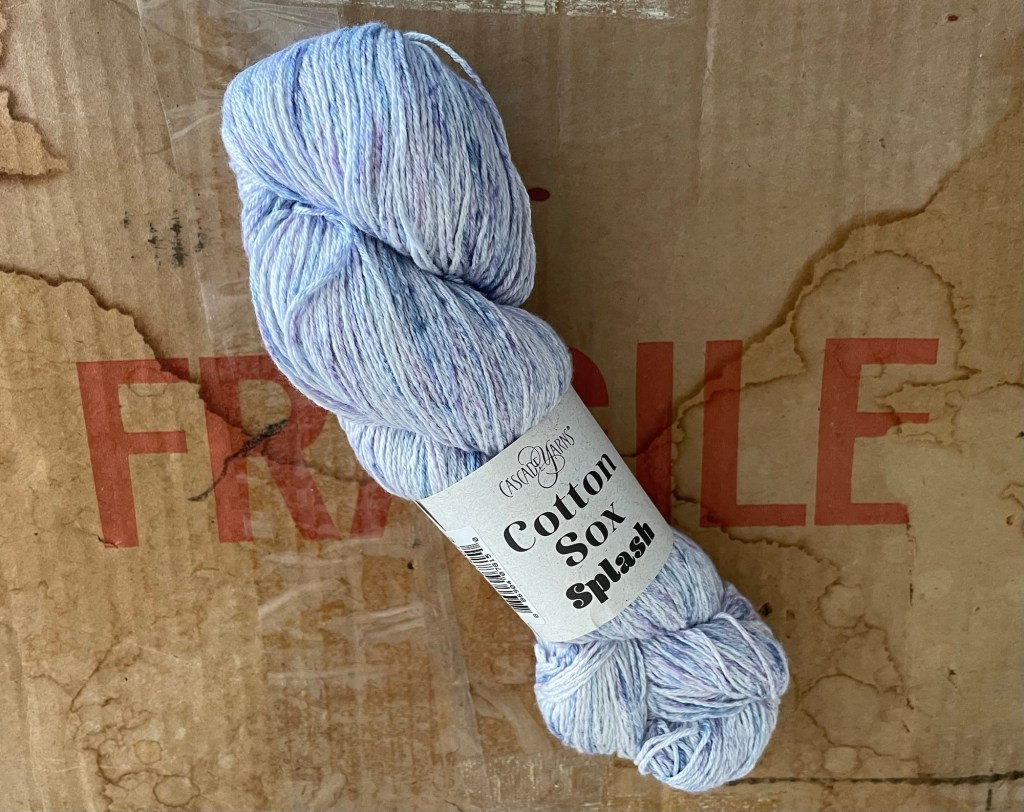
I have used a wool and cotton blend sock yarn, but that does not help the people who are actually allergic. I found some sock yarn online that is a cotton and nylon blend, without any wool. Cotton does not have any elasticity, so I was not sure how this yarn would work on the circular sock machine.
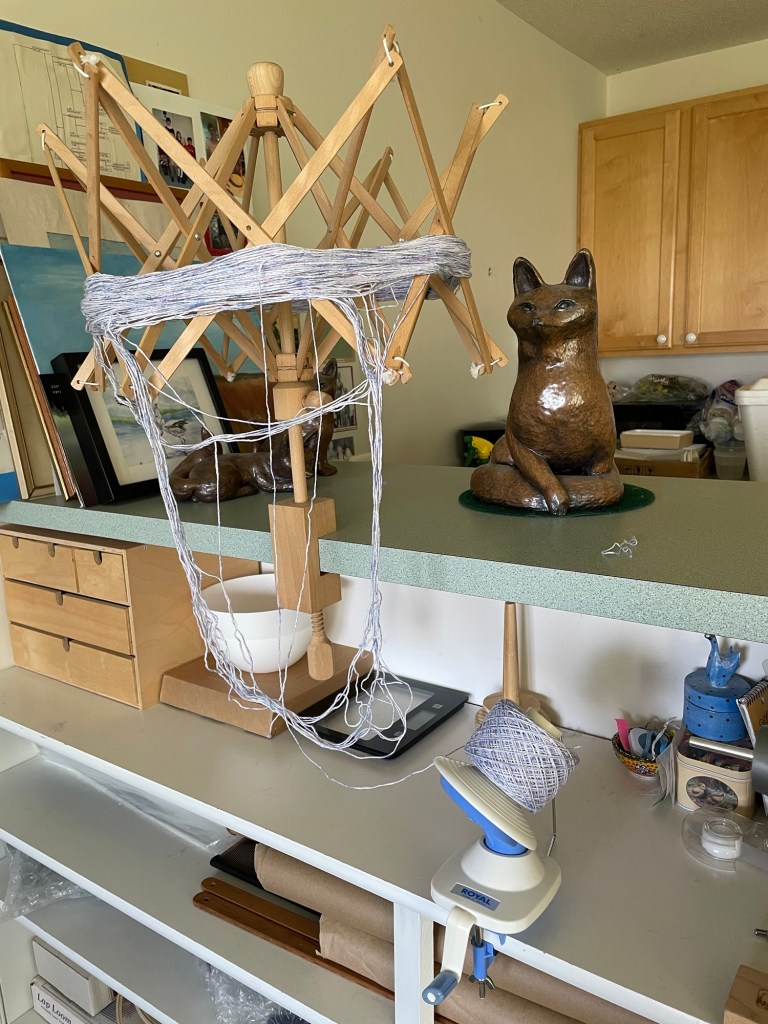
It turned out to be a challenge using my swift to wind the skein of cotton sock yarn into a ball. It was a mess.
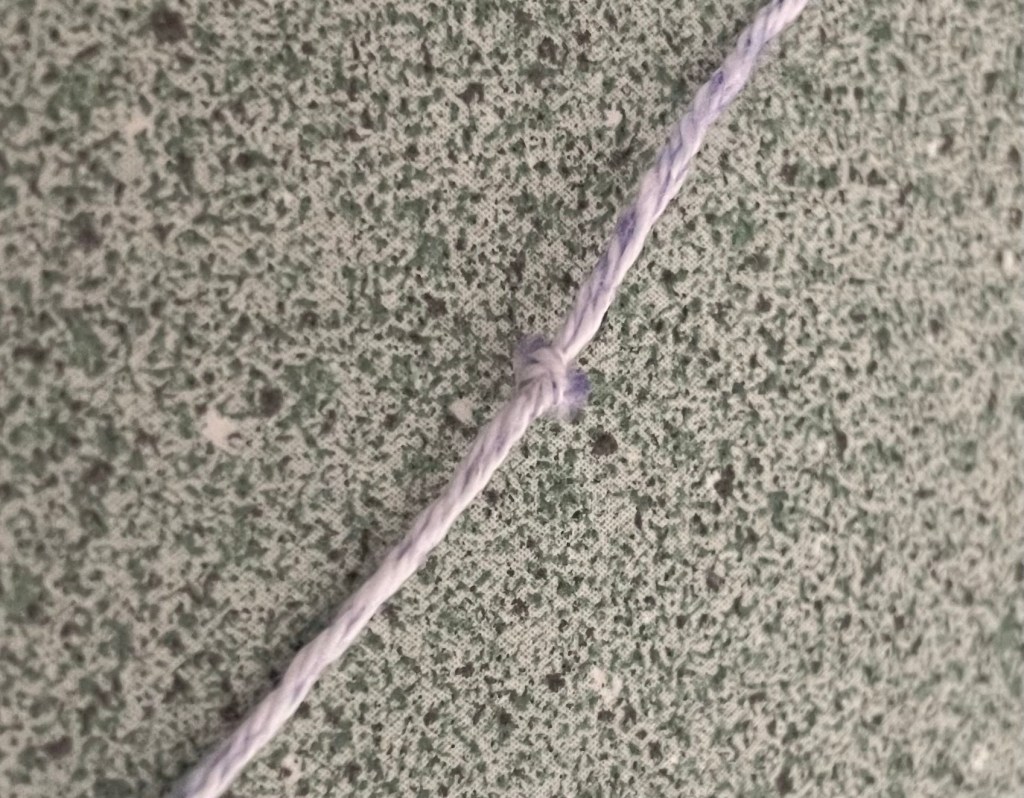
In the middle of winding, I came to a dreaded knot. I do not want to find a knot in the middle of cranking a sock. It is better to cut the yarn than risk not noticing it later.
After cutting the knot out, I started a new ball. The bigger ball will be enough for two shorty socks.
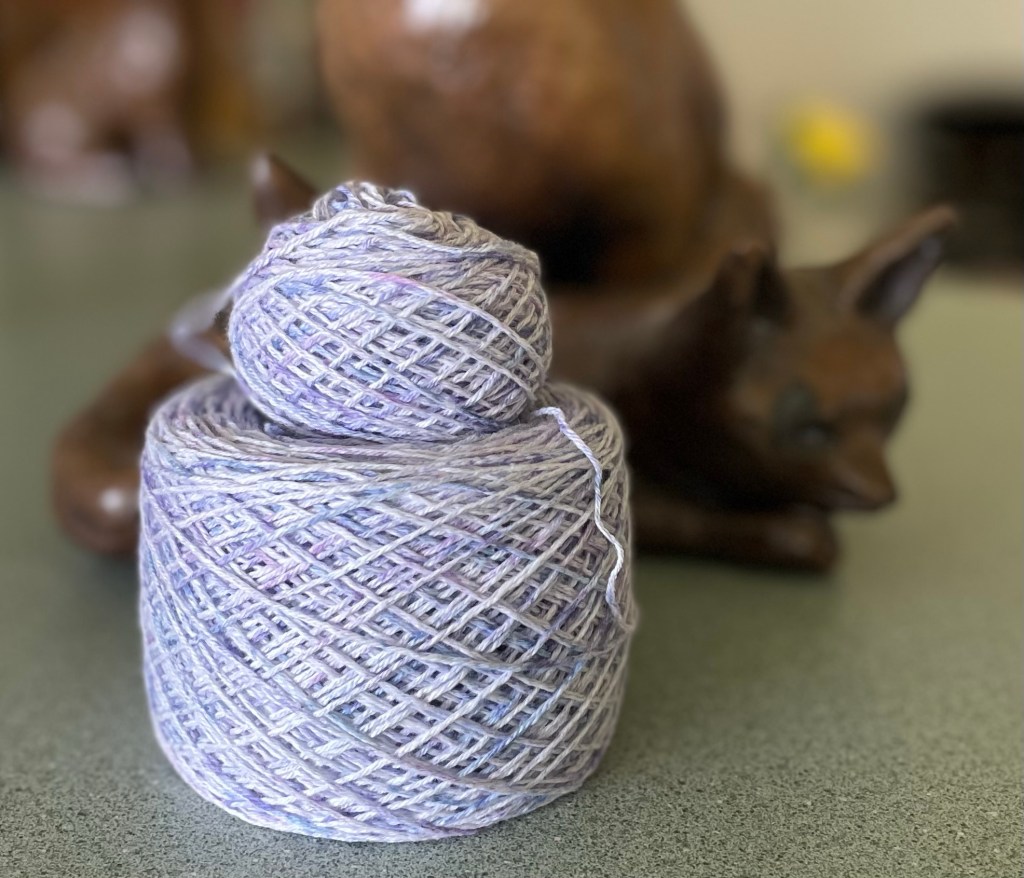
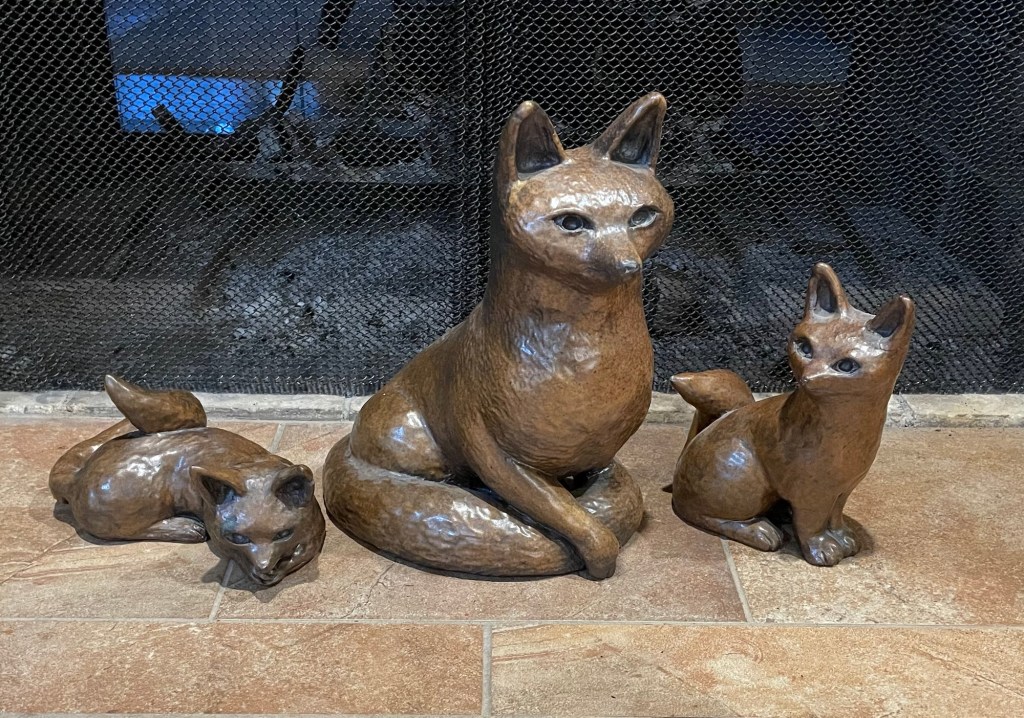
In the background of the cotton yarn photos are a set of three ceramic foxes that my mom made. I love them, and had them on display at our house when we lived in the Twin Cities. There are so many other things she made all over where we are now in my parents house, that I could not find a good place for them. Over cabin work weekend, my sister noticed the foxes in the basement work area, and decided she would like to have them. I was glad to give her a turn, and clear out more stuff from the house. Following is a photo of the foxes on display in front of her fireplace.
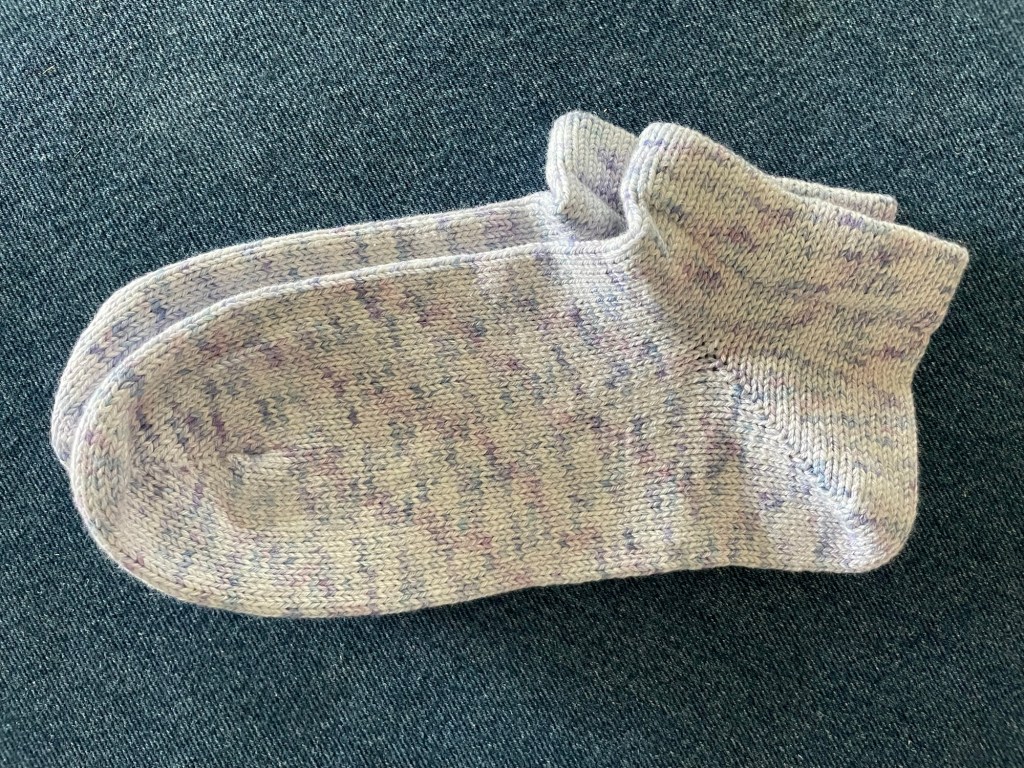
I wound the cotton yarn onto a cone for using with the circular sock machine. I looked at other socks made with a similar weight of wool yarn to decide what tension to use. Hand knit or sock machine knit socks have less elasticity than commercial socks. Cotton yarn does not have any elasticity. This was going to be an experiment to see how a cotton CSM sock turned out, and whether I would need to make any adjustments to get sock the same size and fit as a wool sock.
I cranked the sock and knew right away that it was not right. It came out looser and bigger than a wool sock at the same tension setting. I cranked another sock with the tension one notch tighter and that one was closer to the size I expected. I cranked the mate to that sock, grafted the toes shut, and washed them both.
When I wash a pair of wool socks, I squeeze the extra water out with a towel and lay them out flat to dry. It usually takes less than 24 hours for them to air dry, unless we are in Arizona when it only takes a couple of hours. The cotton socks took about two days to get dry.
They turned out a bit shorter than wool socks made with the same number of foot rows. I think of wool as being scratchy and cotton as being soft. However the cotton socks felt very stiff, compared to a pair of hand made wool socks.
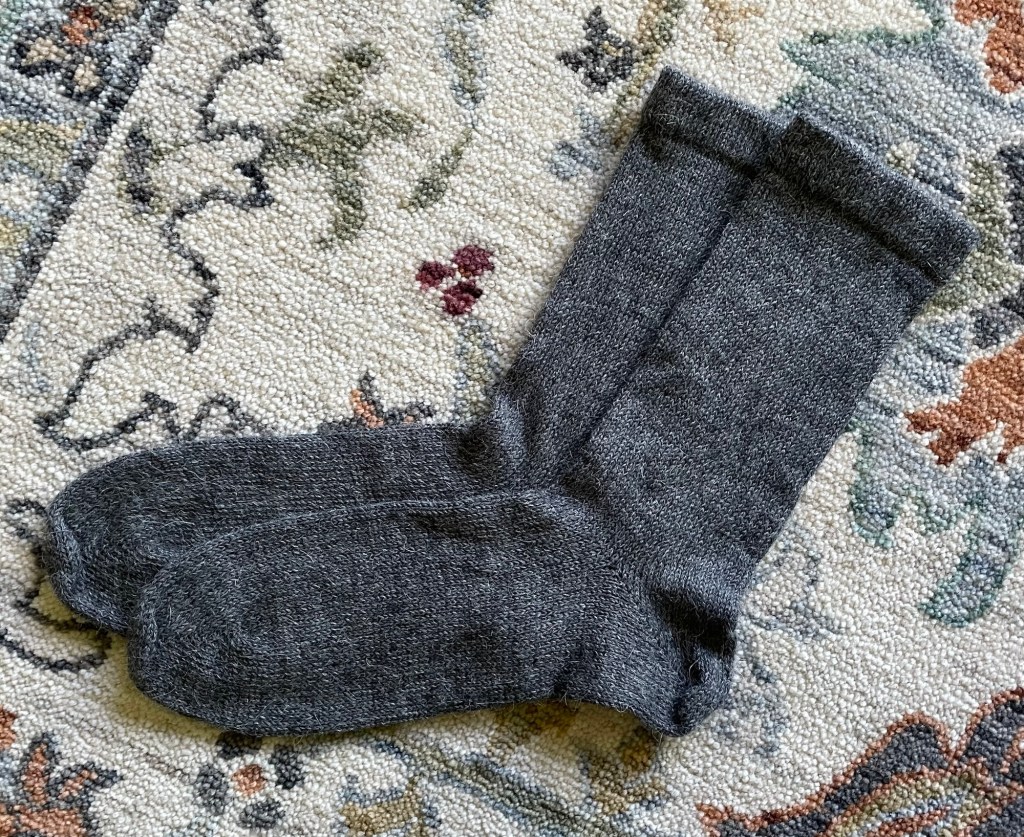
I had one skein of Rico Design Alpaca Luxury sock yarn made of 70% alpaca and 30% polyamide (nylon). It is fuzzy and soft. Alpaca is very warm, but also lightweight and breathable. It does not have the tiny scales that cause wool to be scratchy.
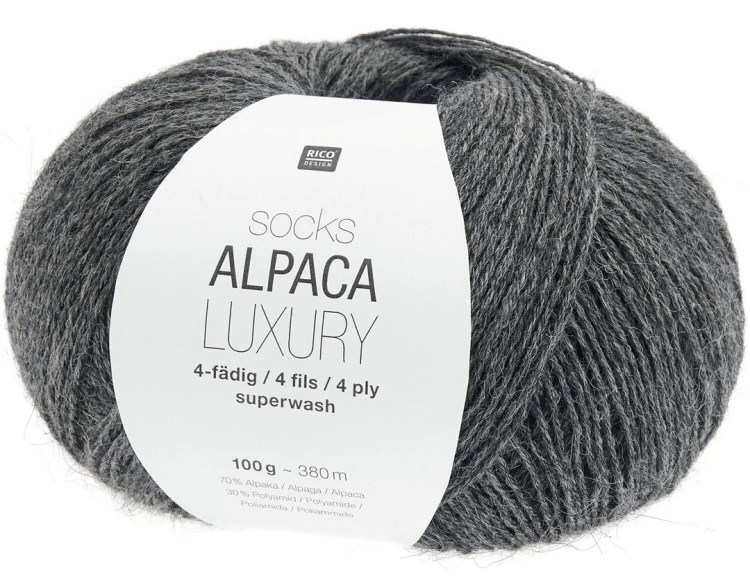
The alpaca yarn seemed like a candidate for fishing socks for Wayne, so I changed over to the 72 needle cylinder I use for men’s sized socks. The yarn behaved like regular wool/nylon sock yarn. They fit Wayne perfectly. It is way too hot for wool or alpaca socks right now, but they will be ready for cooler fall weather.
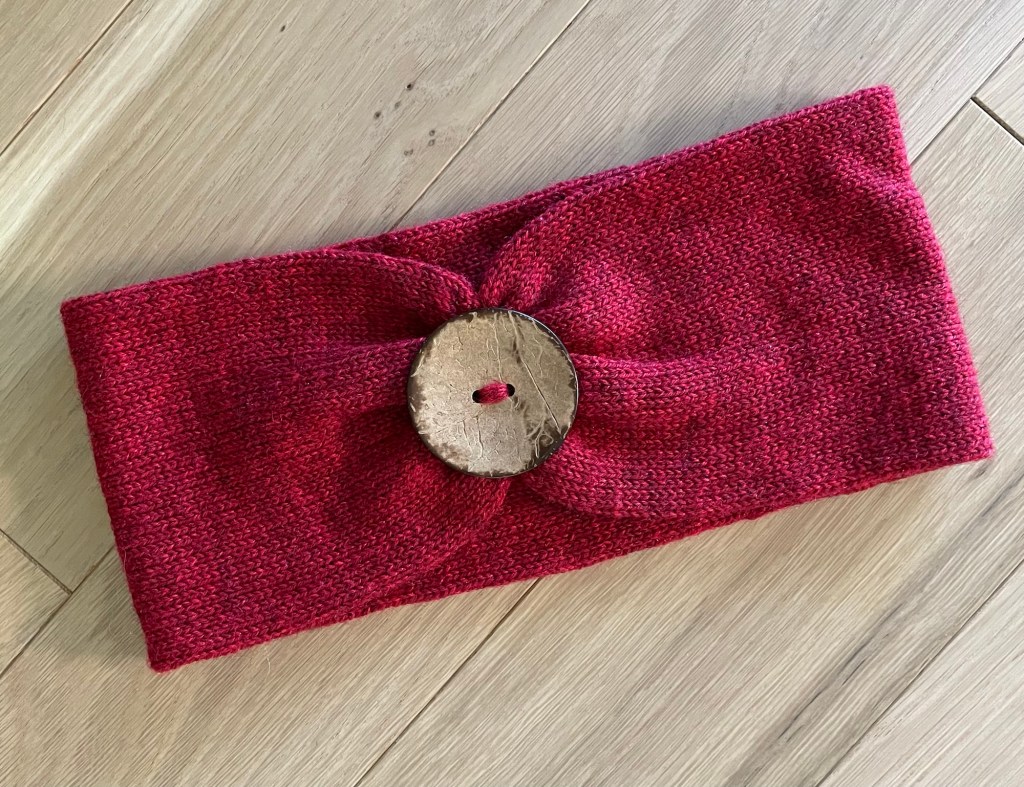
While I had the 72 needle cylinder on the sock machine, I decided to try a style of headband I saw at the last crank-in I went to at Rocking Horse Farm in St. Cloud. Instead of the taco twist, it was gathered up with a button added for interest. I used a looser tension so the tube would come out wider. After taking it off the machine, I grafted the ends of the tube together, gathered it across, and sewed on a button. I like the way this headband turned out, but possibly it is too wide.
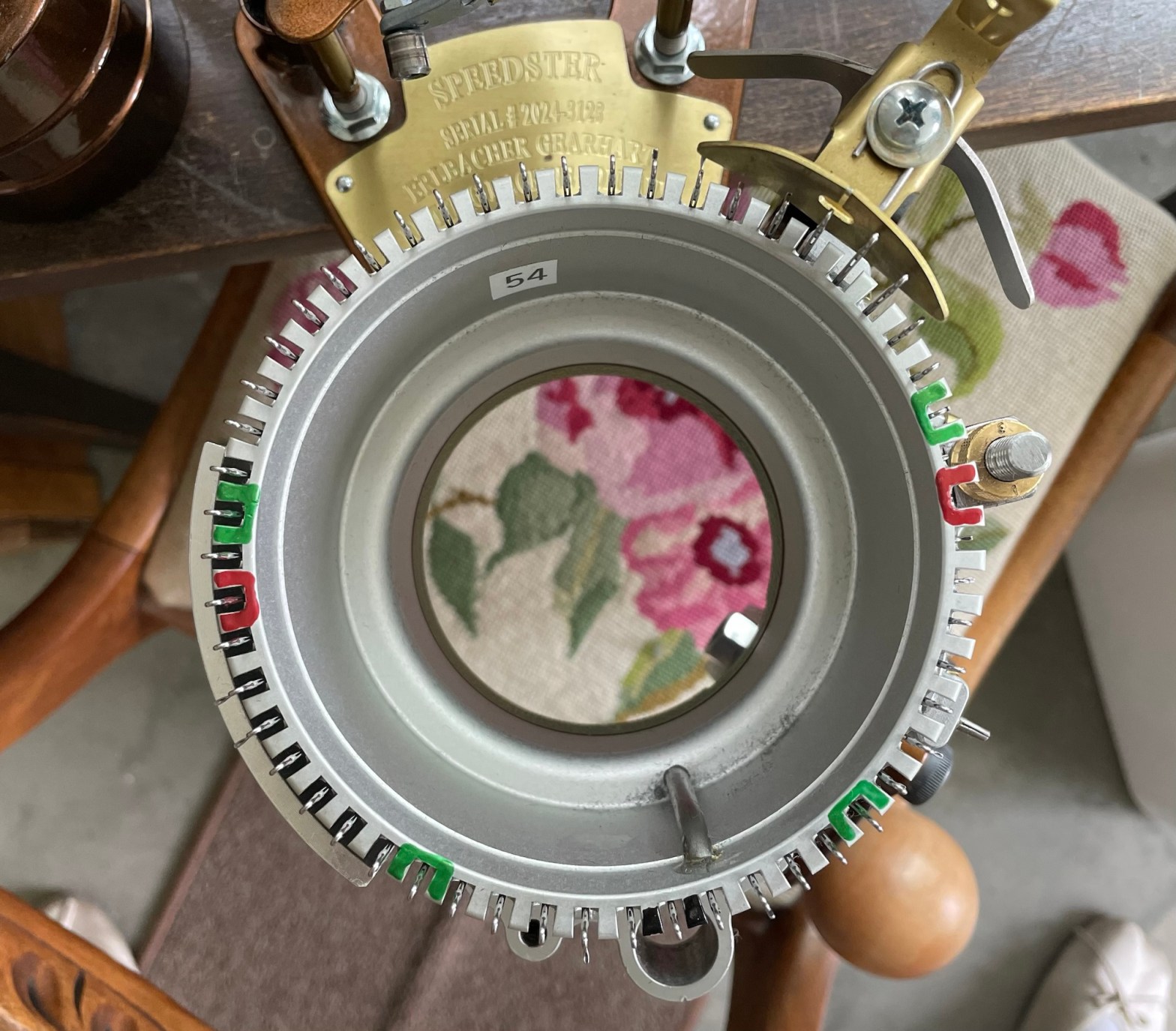
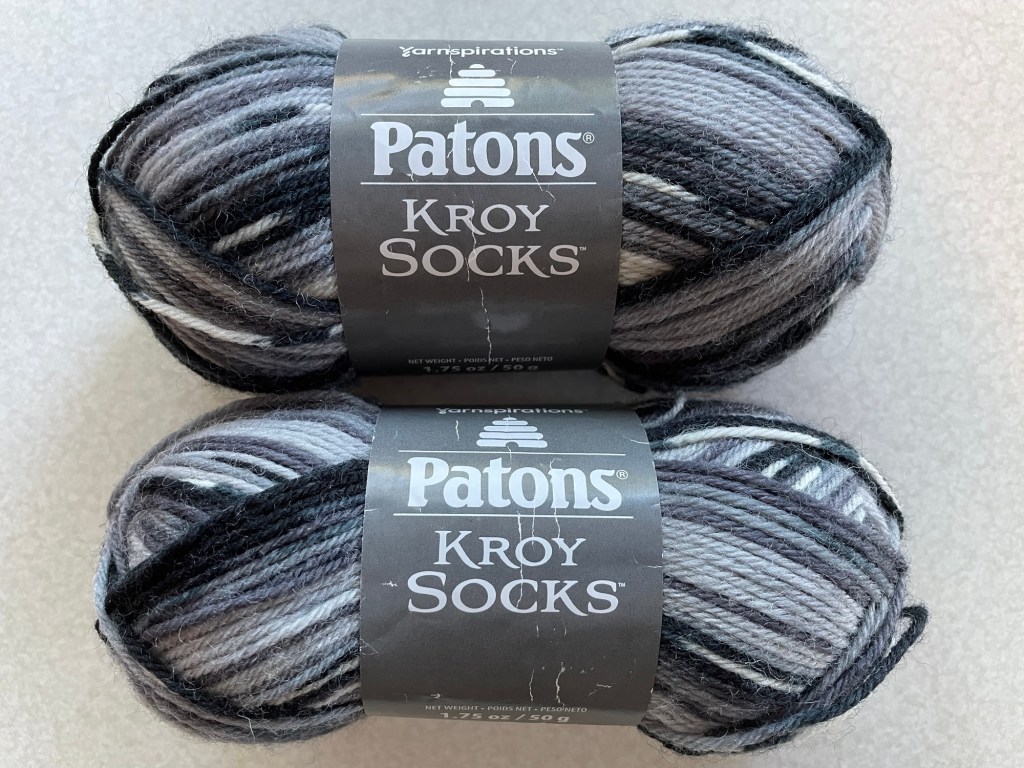
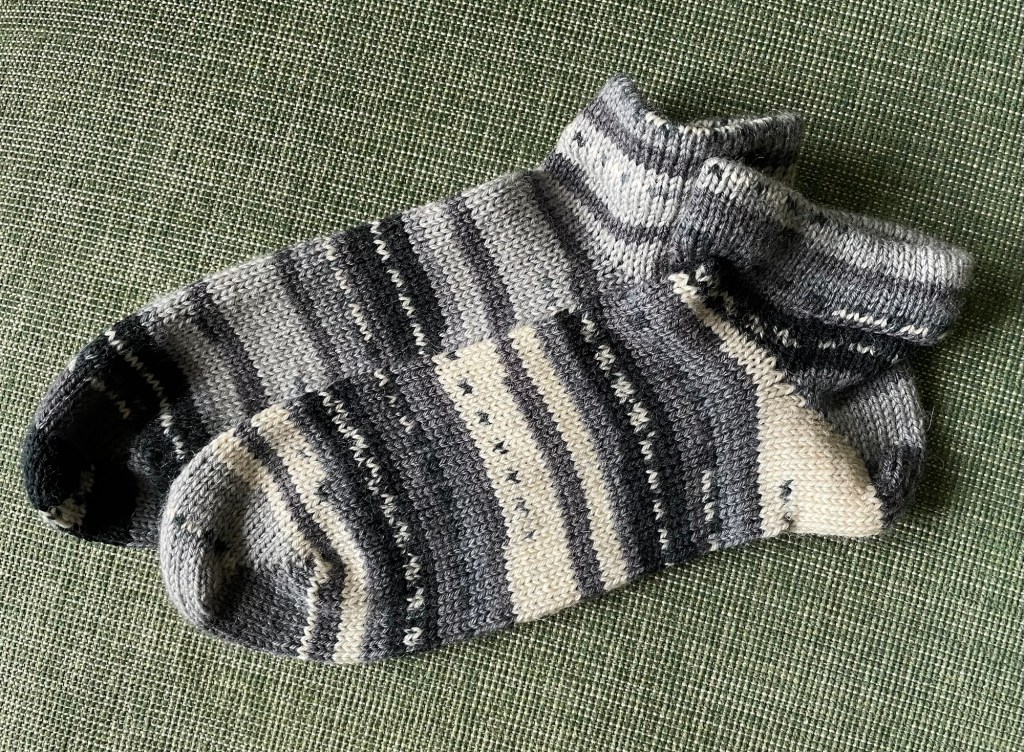
My next experiment was making socks using some blue Patons Kroy Socks yarn, which is sold as sock yarn, but is quite a bit thicker than most other sock yarn. I used the 64 needle cylinder with two different tension settings. They were both very dense, not right for a sock. I could have loosened up the tension a lot more, but instead I tried again with the 54 needle cylinder and a different colorway of gray, black and white Patons Kroy sock yarn. I have used this cylinder to make a sock with a smaller circumference. Since the needles are farther apart, it seemed like it could work for thicker yarn.
The first sock was OK but came out a little denser and narrower than what I had in mind. I loosened up the tension two notches and tried again. This time the density and measurements were good. When I was grafting the toes closed on this pair the stitches did not come out even. There should have been exactly the same number of stitches on each side but there were more on one side. I fudged and made it work on the first sock, figuring I made a mistake somewhere at the beginning of the toe. When it happened again on the second sock, I realized there was a different problem. It turned out that my one half markings on the sock machine cylinder were off, so that one side had more than half of the needles.
Sock machine cylinders are commonly marked in several places with nail polish or fabric paint at the 9:00, 6:00, and 3:00 positions, and for placement of heels and toes. I remember when I put the markings on that I might have been trying to make the number of heel and toe stitches come out even. Now with more experience, I know that it is more important to have the 9:00 and 3:00 positions marking exactly half of the needles.
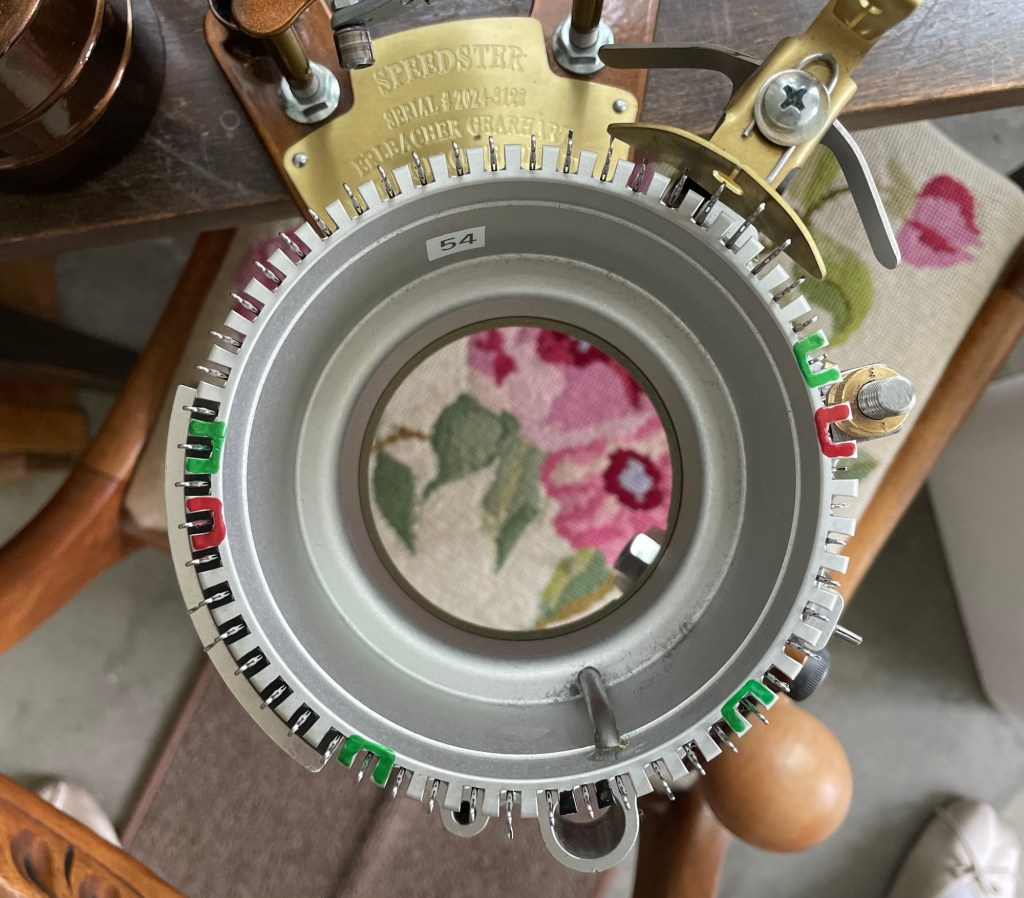
I had put the markings on using 3D fabric paint. I thought they would peel off or come off easily but NO. It took some patience and rubbing alcohol to get the offending half and heel marks off, so I could re-mark them in the correct spots. In retrospect I guess fingernail polish is a better option if you need to remove the marks later.
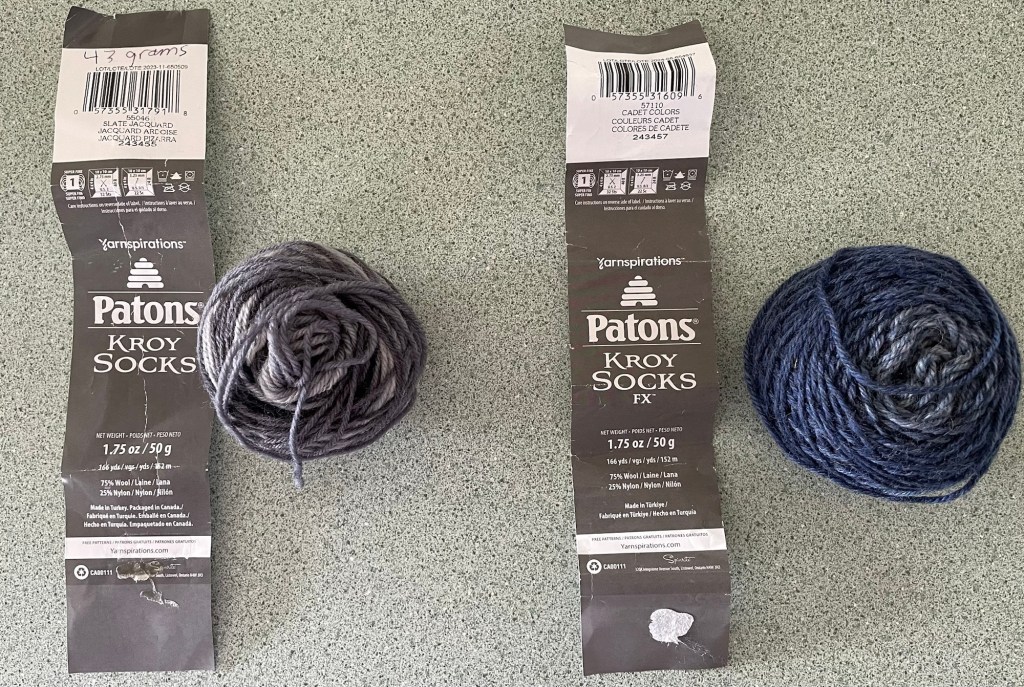
Most sock yarn comes in 100 gram skeins, the right amount for two socks. The Patons yarn comes in 50 gram skeins. At first you think it is very cheap until you realize you have to buy two skeins, but it still a good deal compared to expensive hand dyed sock yarn. When I had finished both socks, I wondered if I had accidentally bought two different colorways. I checked the labels and they were the same.
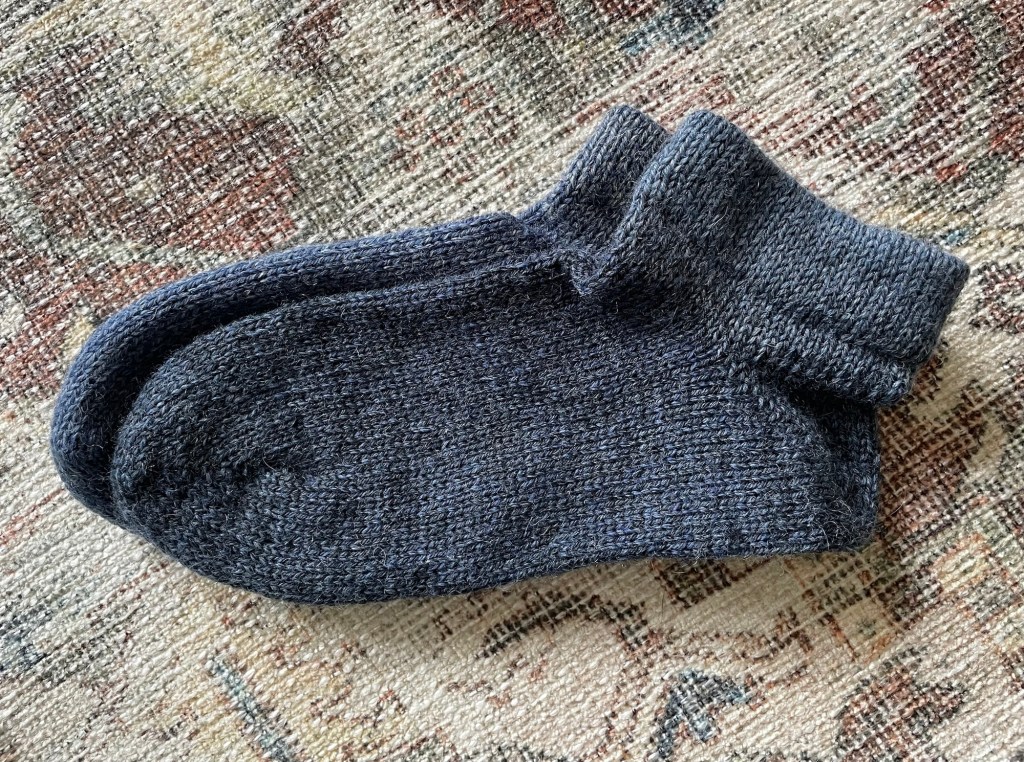
I ripped out the first socks I had cranked with blue Patons yarn that were way too dense, and re made them on the 54 cylinder, using the same tension as the black and gray pair. They came out nicely this time, but they feel different than the other Patons pair. The yarn is not as soft.
The labels on the two yarns are a bit different, but the weight, yardage and fiber content are the same. The blue skeins have “FX” after “Kroy Socks”. I could not find any information on the label or online that explained the difference. It may be that the marketing team updated the label, but that does not explain why they feel so different. It is a mystery.
Sock yarn is in the “fingering weight” category, sometimes marked as weight “1” on the label. While the 54 needle cylinder was on the sock machine, I tried cranking some DK weight yarn, which is thicker than sock yarn. I bought this yarn from Northcroft Farm, the sheep farm where I attend Fiber Day twice a year, made at a mill from their sheep. It it 100% wool, a mixture of breeds and without any nylon.
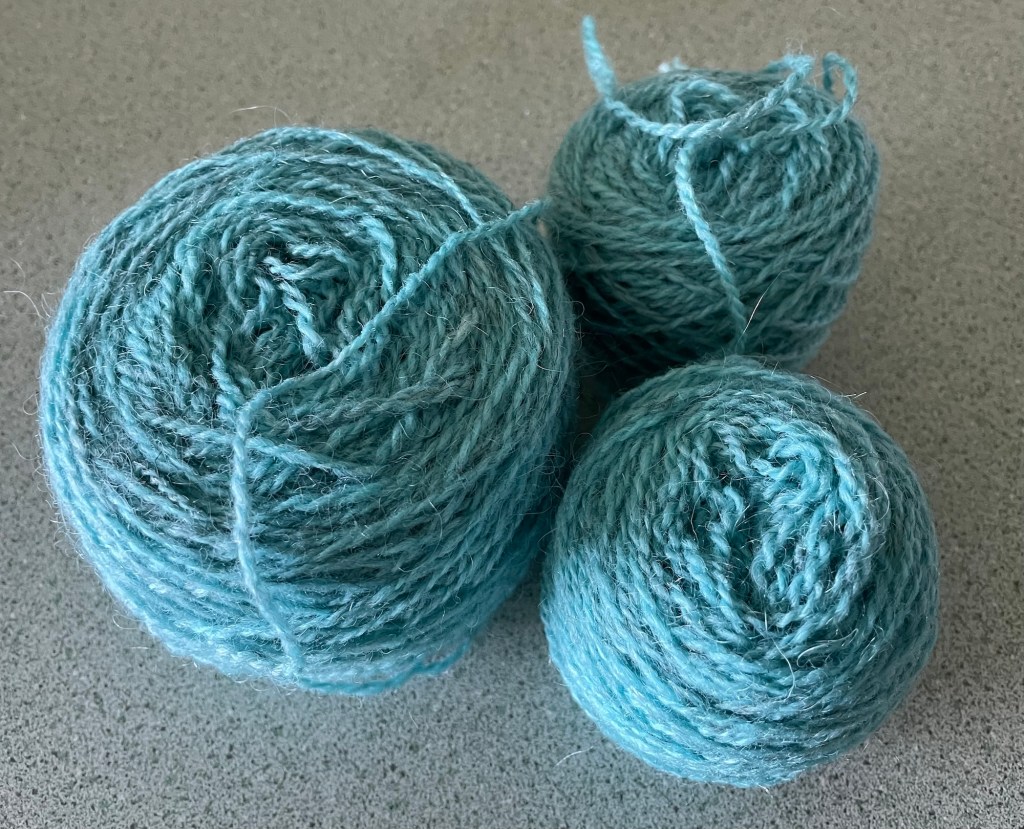
I had to loosen up the tension quite a bit, but it worked. I loosened the tension even more in the middle of cranking the longest tube. I cranked the pieces to assemble a gnome. The cranked “fabric” seemed a little rough, but I think it was just the yarn, rather than the density. The stitches per inch seemed correct for DK yarn.
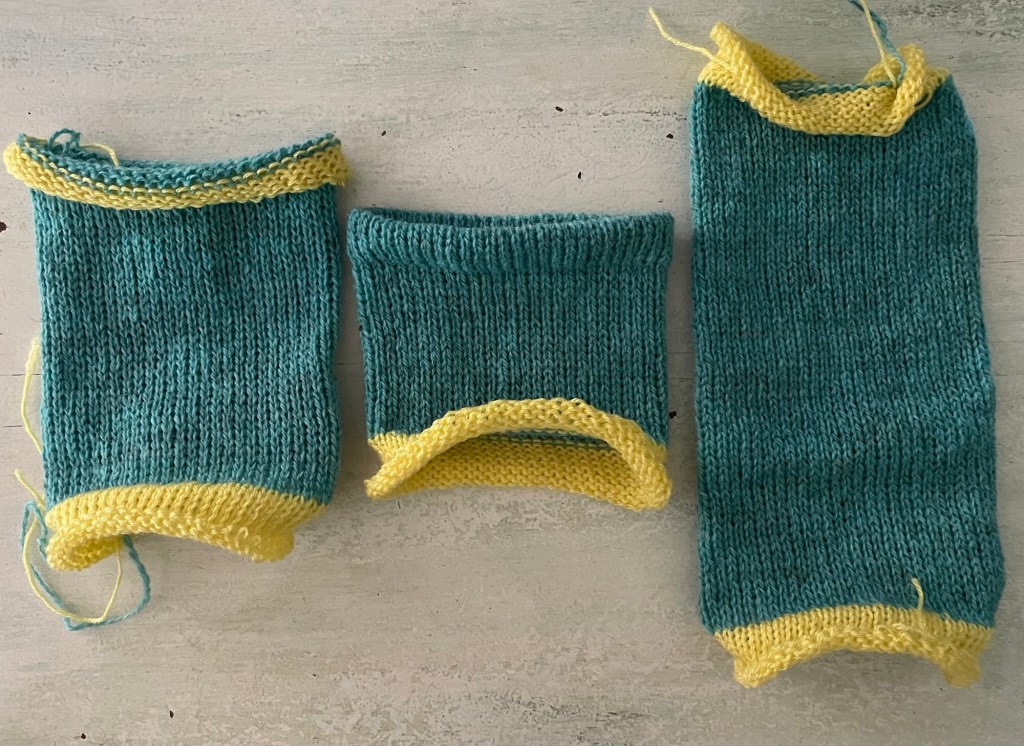
Instead of gathering the stitches up at the top of the hat, I picked up the stitches with a knitting needle and knitted on a pointy end. I also knitted on a ribbed cuff.
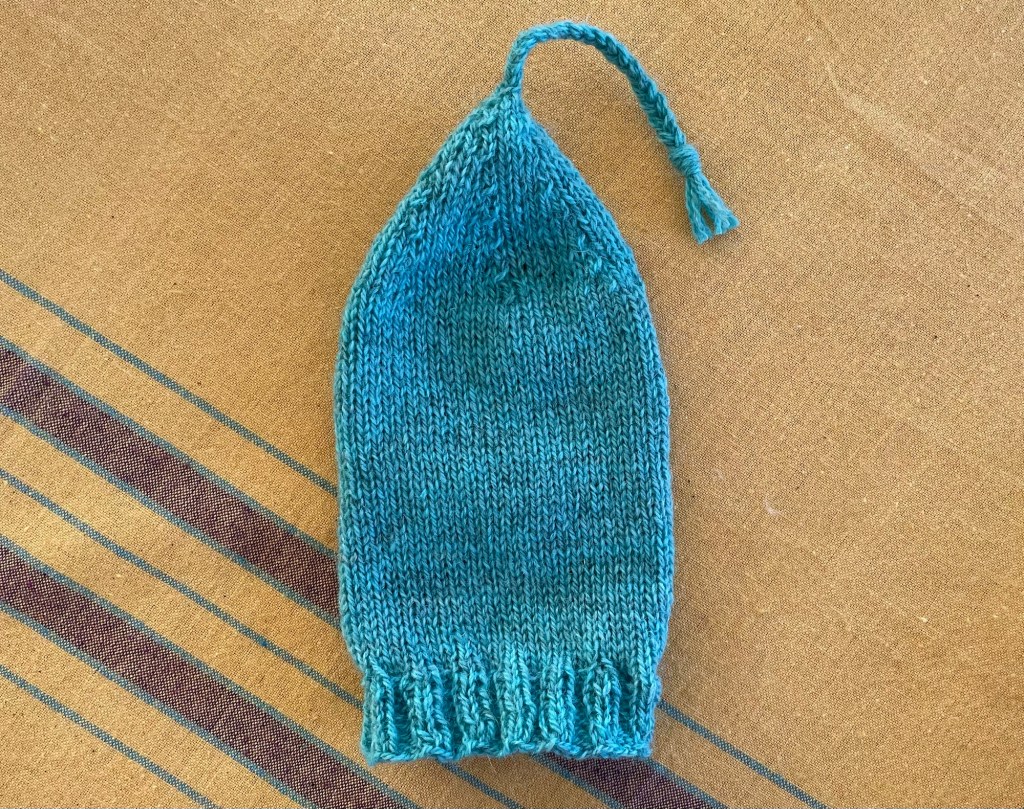
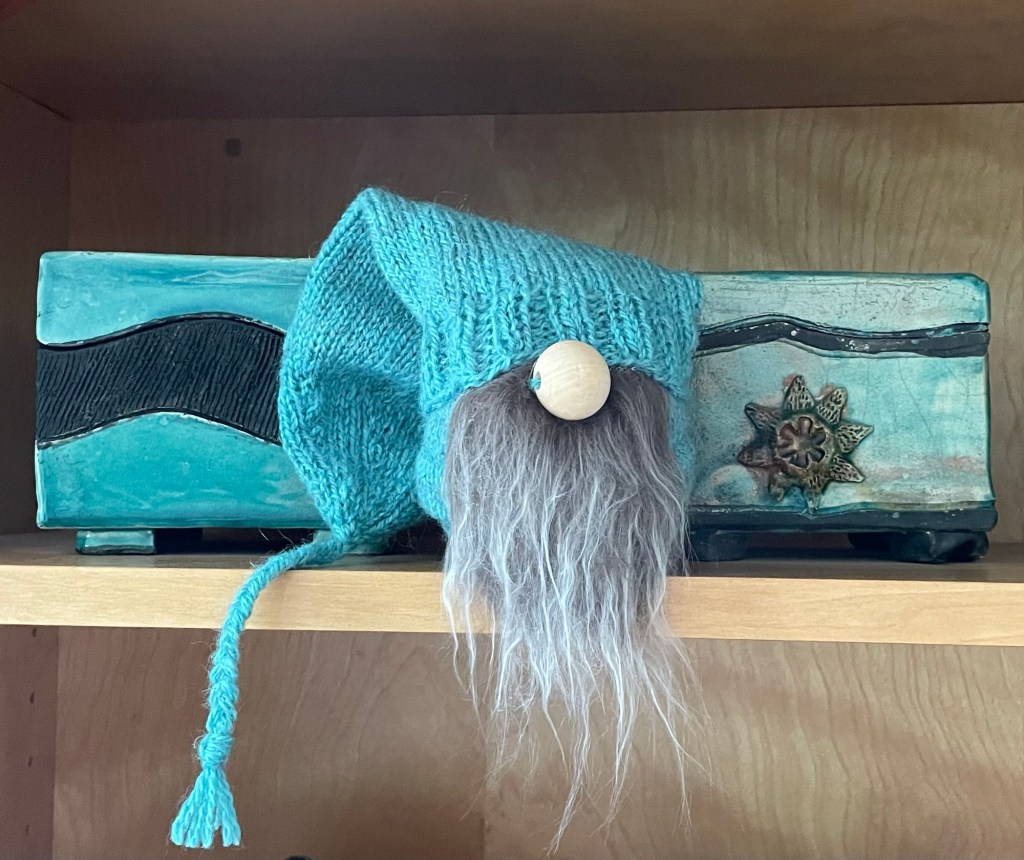
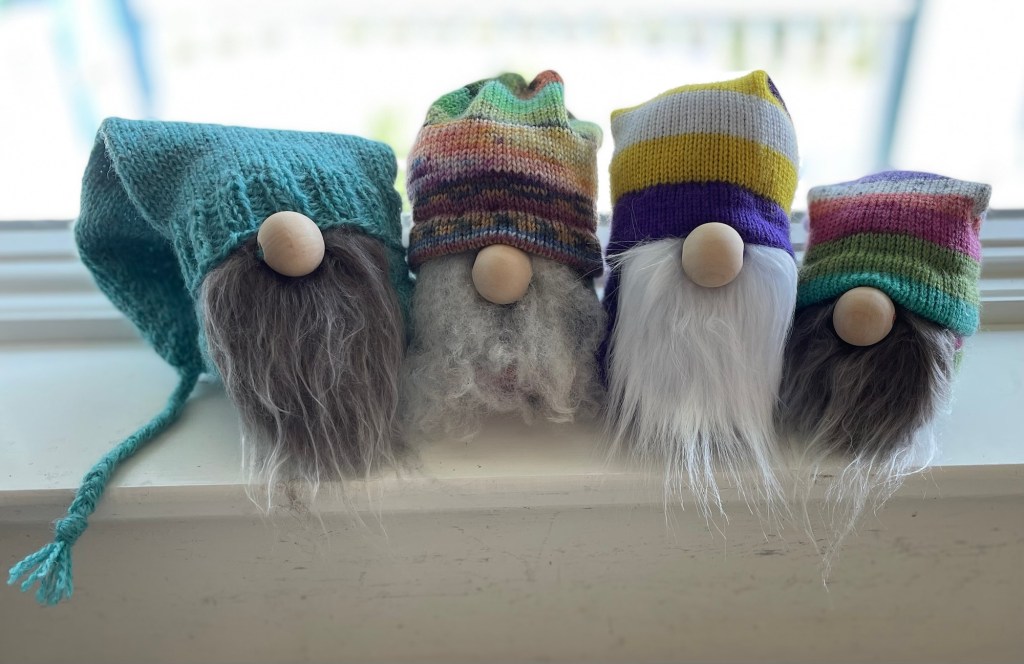
The first gnomes I made were following a pattern exactly. Since then I have become comfortable with making up my own version. I think this gnome turned out cute. I added him to the shelf in the kitchen where my other gnomes live, or at least the ones I have not given away.
I can’t believe summer is half over already. First we were having a drought at the beginning of summer, then we had some big rains, now it is dry again. It is currently very hot and we have to water the lawn. Our small vegetable garden is flourishing. The first produce are some zucchini that are growing several inches per day. The weeds are out of control too. This reminds of me a Gilligan’s Island episode where they grow some ginormous vegetables, but then figure out they are radioactive. Our zucchini and weeds are not radioactive, but they are growing fast and furious.
The longest days of summer when it is still light out at 10:00 pm here are behind us, and the days are getting shorter. And smokier. We have an air quality alert in effect due to wildfires in Canada and the Boundary Waters area in northern Minnesota.
This weekend is the beginning of our annual family reunion at the cabin. We have family coming, so I have been busy cleaning and child proofing. It is a special time, but I have to set aside any expectations of getting any fiber crafting done over the next week.
 Yarns from the Lake
Meg, you have become quite the expert cranking out socks. I can’t help but think you should put all your knowledge in a book (maybe an ebook). You could include all the info about the yarns and stitches, tips (think nail polish), and even show different craft projects. Of course, all that would be a project, too. I wonder what else you could make with the cranker – you’ve made the gnomes, headbands, and, of course, socks. But what about doll clothes? You do so much. I don’t really want to add to your list, but I am impressed with your expertise and think others could benefit. I can’t believe summer is half over either. It seems like the second half goes so fast – with all the back to school stuff starting up. Enjoy your reunion – and your fiber crafting!
LikeLiked by 1 person
Thank you for your encouragement! I will think about how I can share my ideas using the sock machine. Meanwhile, I tried to buy some beach noodles at Walmart, but at first all I could find was the back to school supplies where I thought they would be. That is a sure sign that we are on the second half of summer. I did find finally a few noodles on clearance shelf.
LikeLiked by 1 person
I really envy you your sock machine! I have a friend who is/was a local hand dyer and spinner. She has a WWII era sock machine that her grandmother used during the war to crank out many many socks. She uses it to knit up blank tubes that she dyes in long beautiful gradients and then unwinds and makes cakes of. Watching Hilori making the tubes was absolutely hypnotic and so fast! I have wanted one ever since but they are very pricey. Maybe serendipity will smile on me and one will come my way. I love the name she used for her yarns, I remember using a gorgeous pink, “Dirty Pirate Hooker” for a pair of socks.
https://www.facebook.com/photo.php?fbid=2647400805472956&set=pb.100063632170084.-2207520000&type=3
LikeLiked by 1 person
Cranked tubes is a great format for dyeing! I looked at the link, the yarns are gorgeous. Yes the metal CSM’s are expensive. After I went from thinking “those are cool” to “I really really want one”, I struggled with myself as to whether I could justify spending that much money if I was not going to sell socks. I had some money that could be used that way, so I ended up deciding yes. Here is the link for the first blog post I wrote after I bought the CSM. https://yarnsfromthelake.com/2024/12/08/another-journey/
FYI there is a guy in the Twin Cities, Pete Oswald, who restores and sells the antique CSM’s. Some of them have parts that are interchangeable with the new Erlbacher machines. His wife Deb is an expert at cranking. They have like 30 years of experience. There names come up if you start researching CSM’s. They usually attend a regular crank-in event in St. Cloud, Minnesota that is held 3 times a year at the Knit Shop at Rocking Horse Farm. The next one is the weekend of Oct 17. They used to be just one day, but lately they are trying to make is a 3 day thing, but attending only part of it is an option. We are going to be on a trip, so I won’t be at this one. I went to this event a couple of times to see CSM’s in action and ask questions. At the second one, Pete Oswald had some restored machines I could have bought, but I decided to go for new. I could not find Pete’s phone number, but here is the email for Deb if you wanted to contact them debsknits@aol.com
LikeLike
LikeLike