
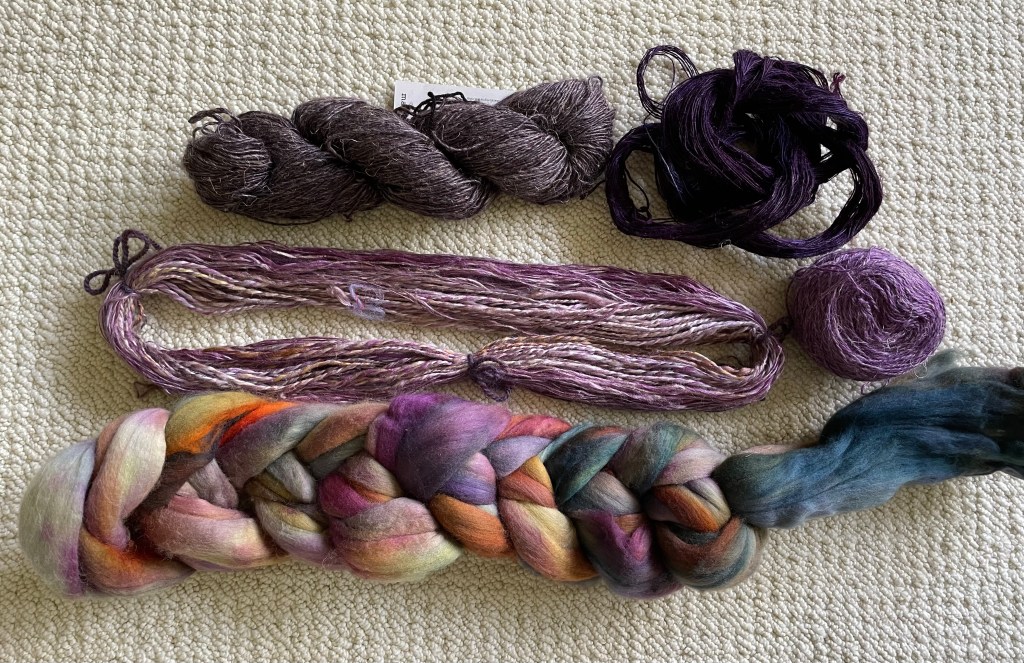
Three years ago when we were in St. Paul I bought a Malabrigo braid of Merino Wool fiber. Following is a photo I found from October 2023 showing the braid laid out on the floor with some yarn in coordinating colorways. Not sure what I was thinking at that time. Yes, I do like purple.
Fiber prepared this way is very densely packed. When I was a new spinner 20 years ago I had little formal instruction in how to spin, especially as it related to the different ways fiber can be prepared. More recently I have learned there is a whole category of instruction called “Fiber Prep”. There are entire classes at the School of Sweet Georgia on this topic.
Trying to spin directly off a tightly packed braid is possible, but the experience will be more pleasant and the results more consistent if it has been through some kind of process to loosen up the fiber. My method has been to peel off narrow strips and then do some pre-drafting (kind of like stretching it out) before spinning. I had heard that another method is to card the fiber. At Fiber Day in the fall of 2024 I tried doing this with the Ellison’s big electric drum carder.
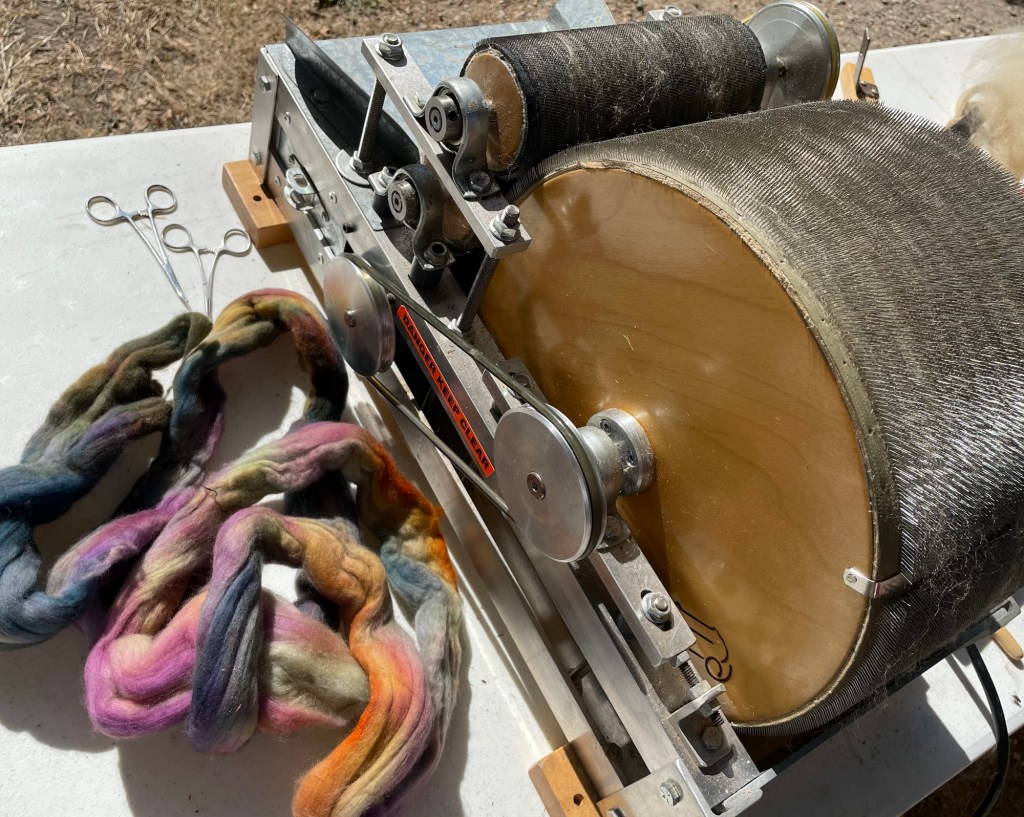
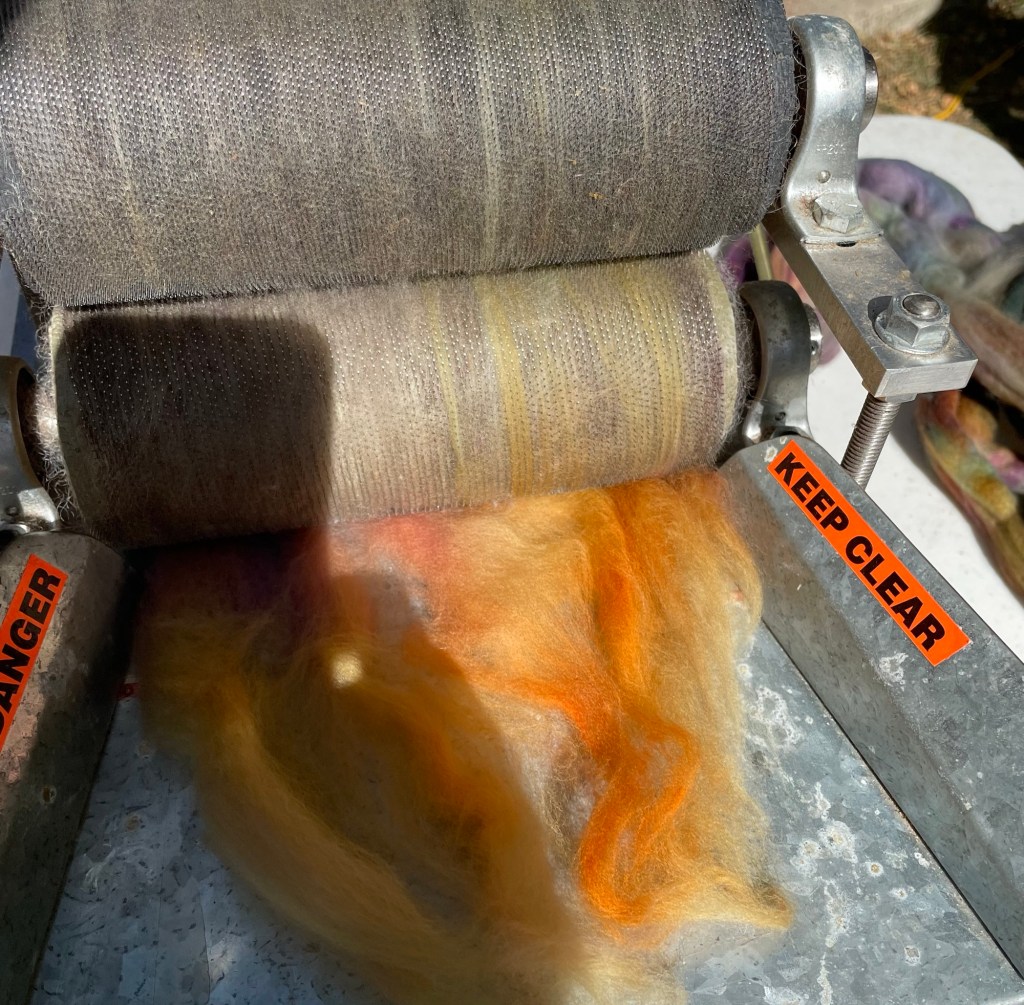
I learned quickly that carding this braid was not the right method if one wants to preserve all the pretty colors.
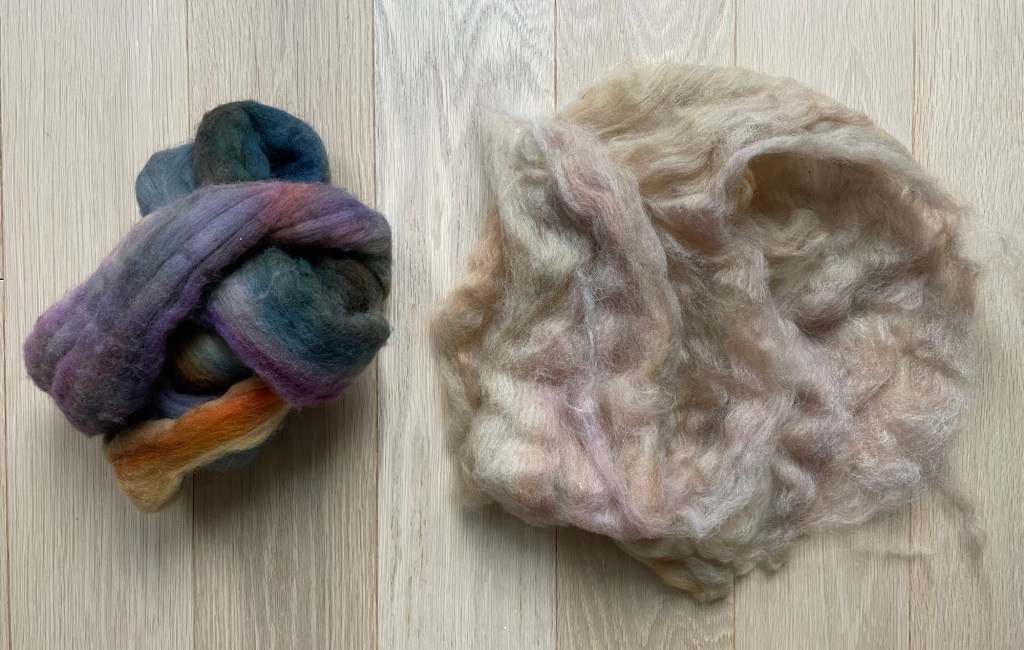
All the colors mixed together turn into a shade of gray.
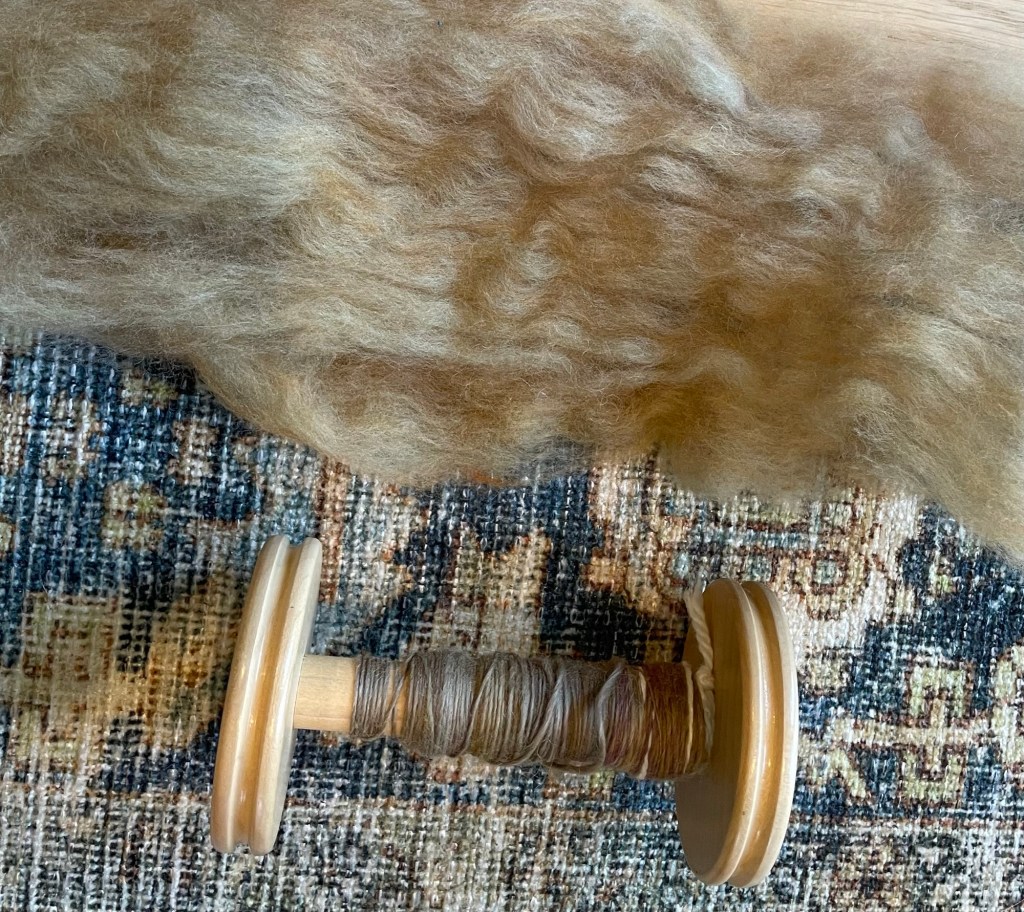
Following is a photo showing two bobbins of the fiber spun up with all the colors preserved, and part of a third one with the blended gray fiber. I have been working on spinning thinner singles, with the goal of creating yarn that can be used on my flat knitting machine, or even for knitting socks on my circular sock machine. It looked thin enough on the bobbins before plying.
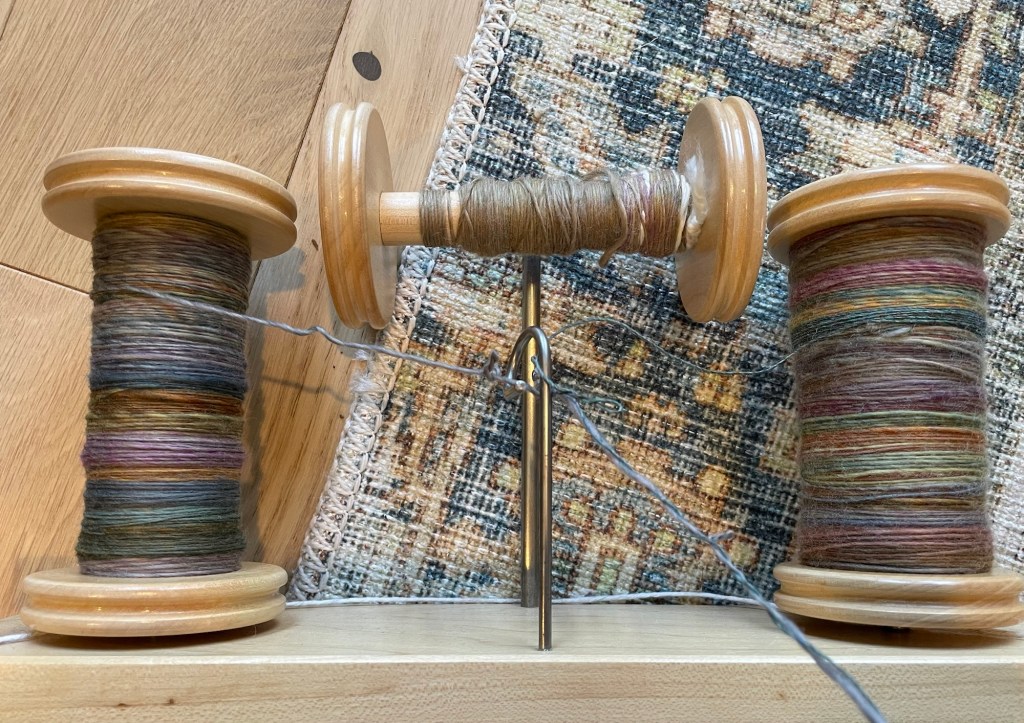
Plying the two colorful singles yarn resulted in a jumble of colors.
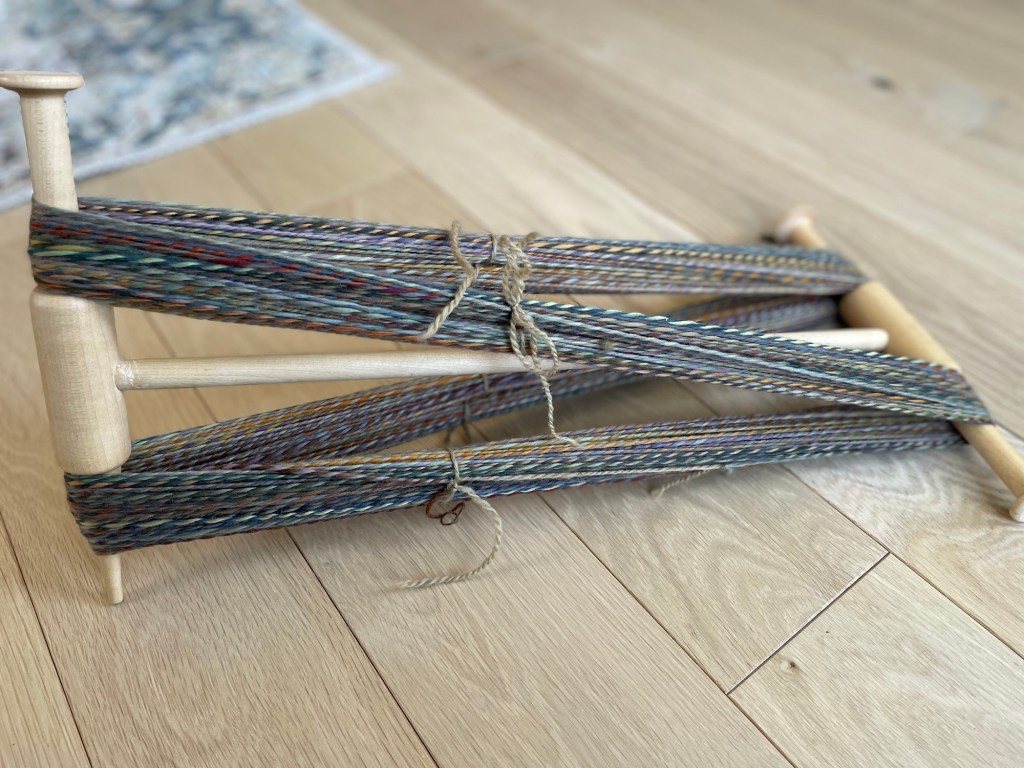
I gently washed the plied yarn to set the twist and hung it up to dry.
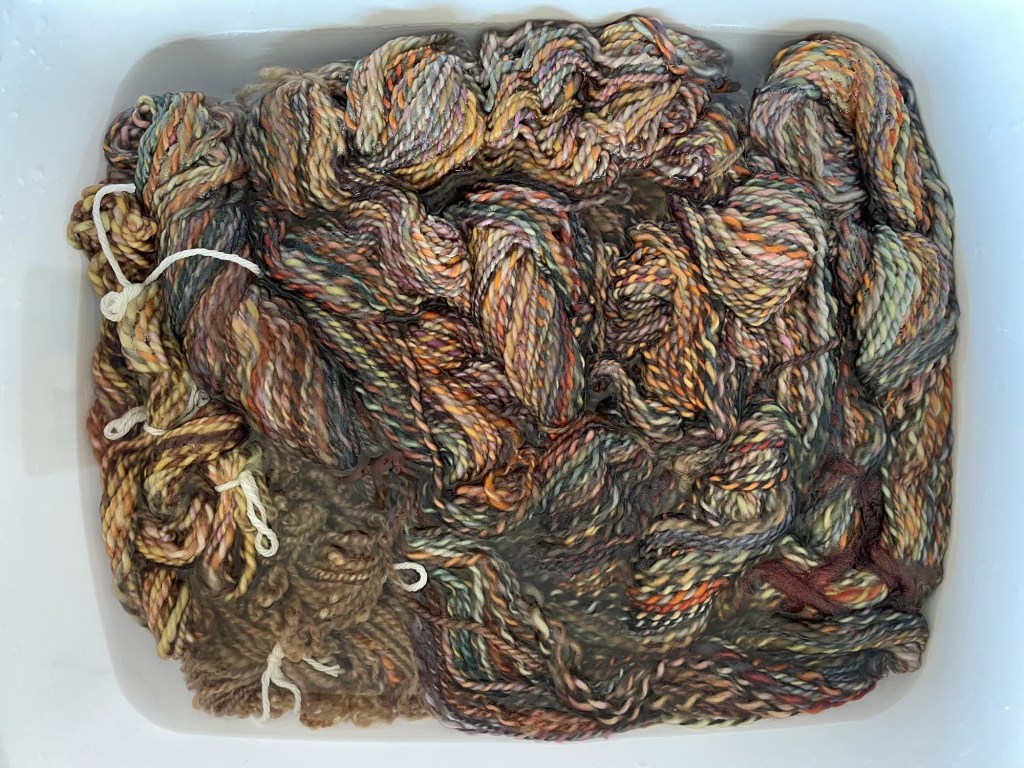
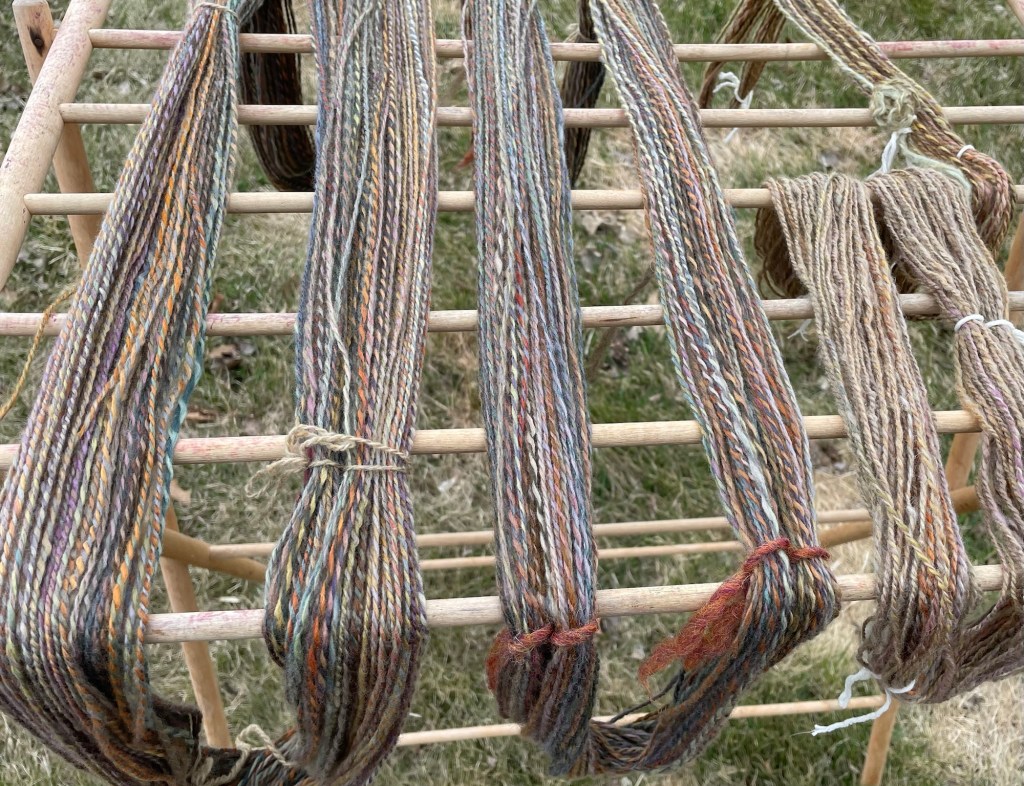
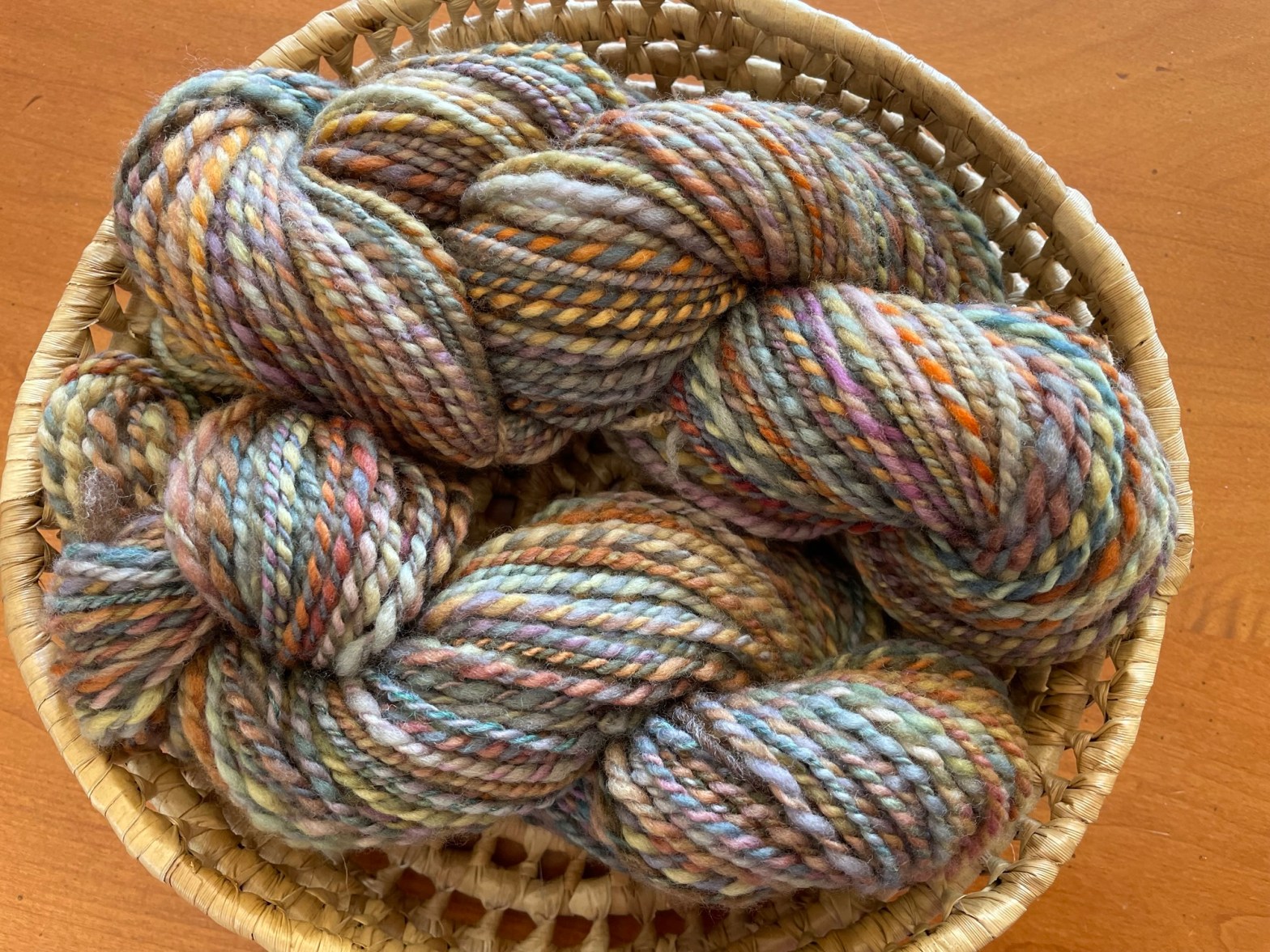
After washing and drying, the yarn “bloomed”. It was more like worsted weight or even bulky, thicker than I expected it would be. Also, the overall effect was more greenish gray looking than the original braid.
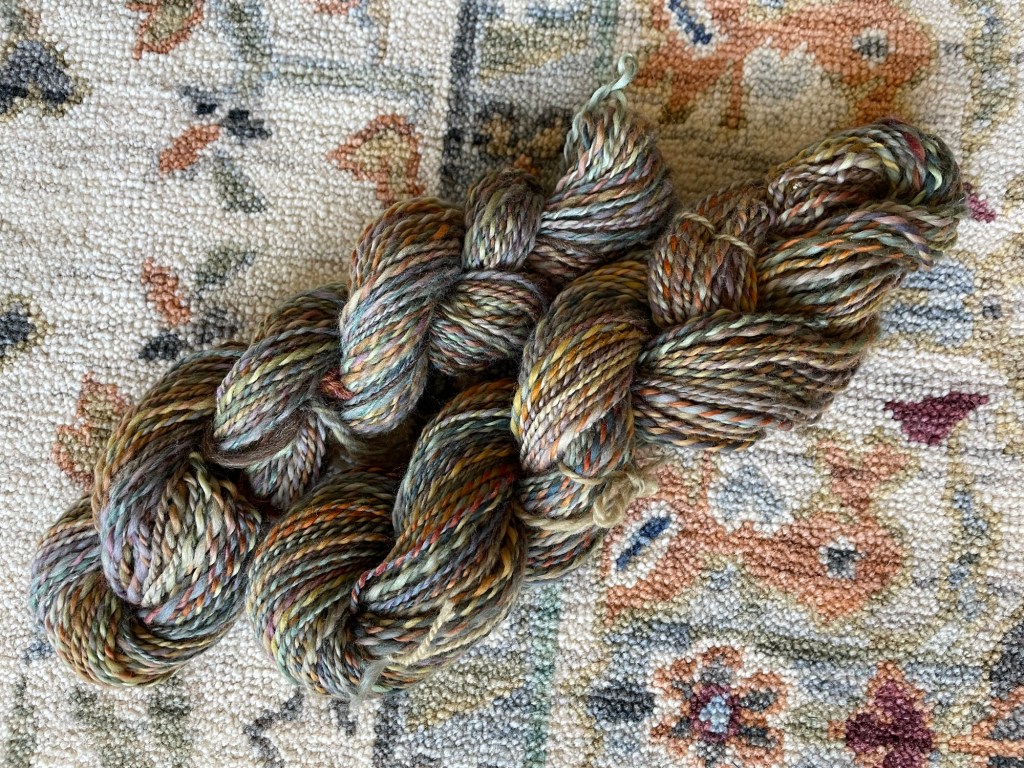
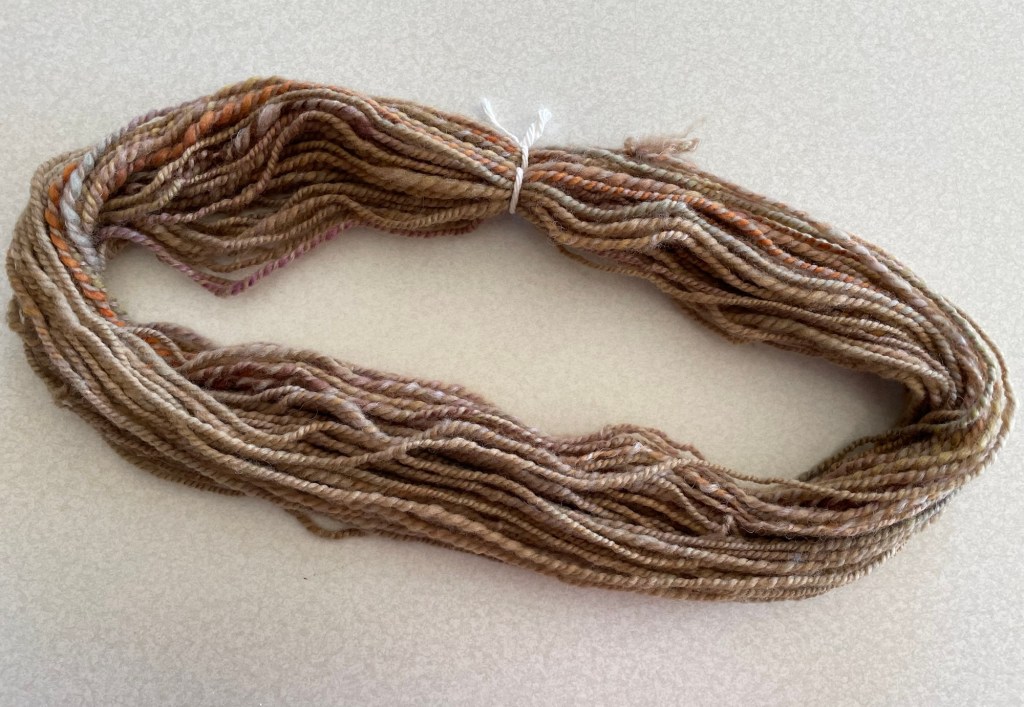
The part of the braid that I had blended on the drum carder looked very grayish when plied. It is nice too, but the original bright colors are lost.
Following is another photo of the more colorful plied yarn in a basket.
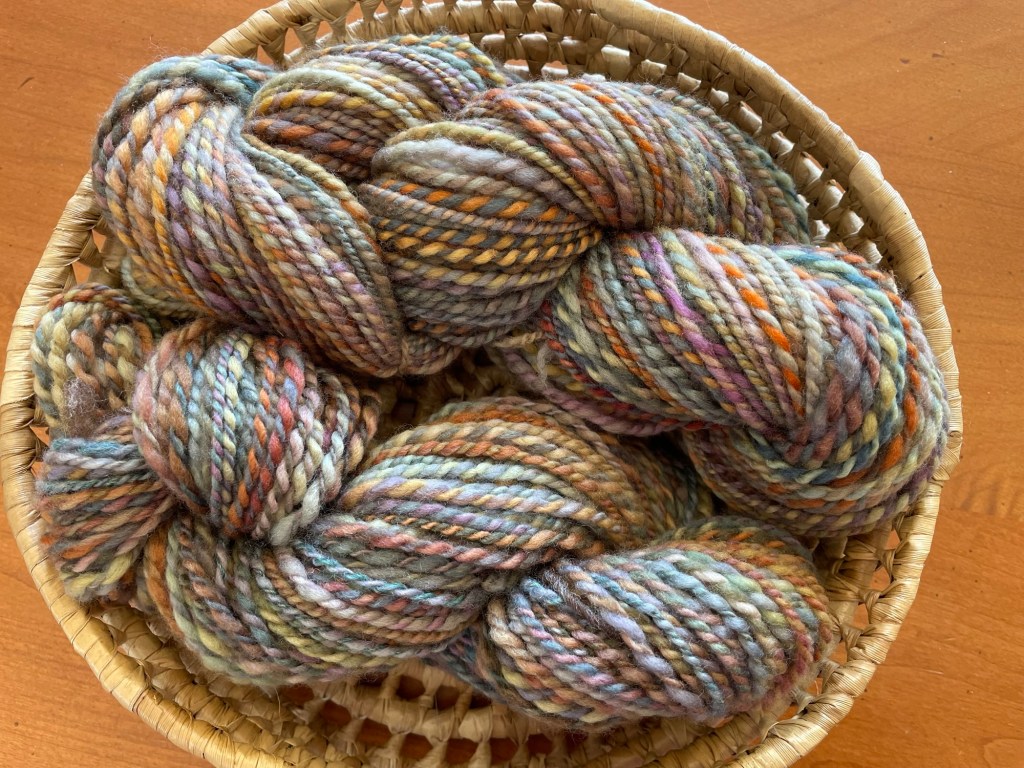
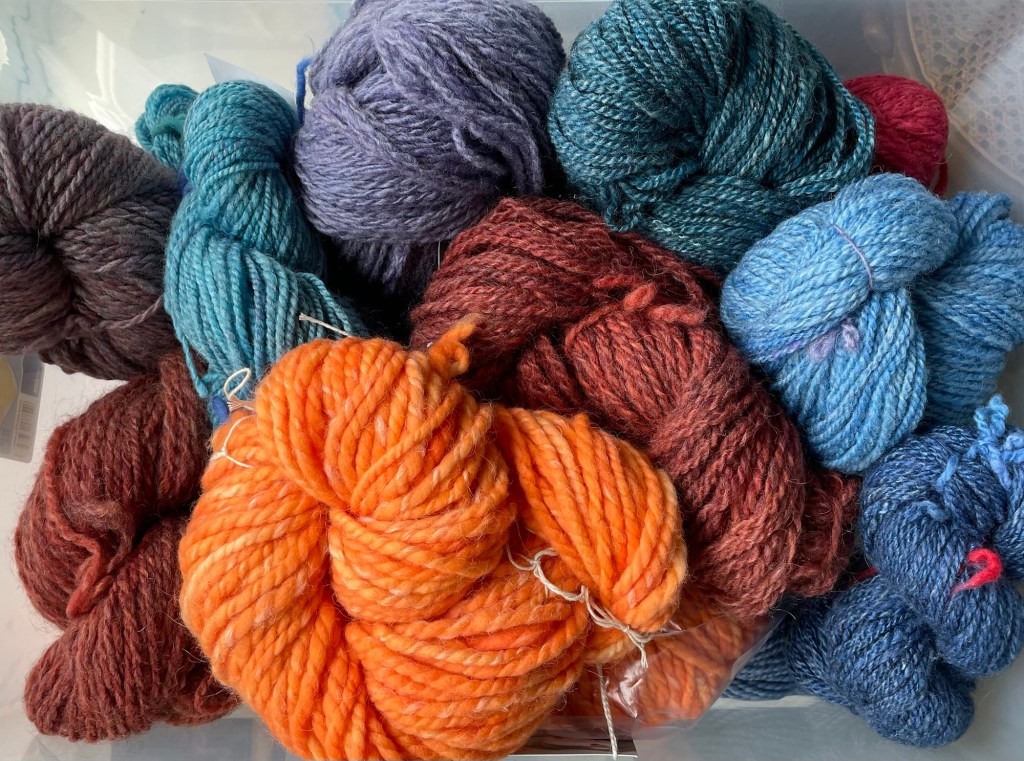
I was hoping I could use this yarn for the School of Sweet Georgia Machine Knitting Hats class, but it may be too thick for the LK-150 machine. I will try it, to see what happens. This yarn may end up in a tub with other hand spun yarn that I do not know what to do with from the last 20 years.
Since starting this project, I have worked through a School of Sweet Georgia Spinning up a Level class where I learned more about controlling the thickness of the final yarn. With that knowledge, I hope that my next spin will end up thin enough for one of the knitting machines.


Wow! Is there anything you can’t do? Beautiful! L.
Lauri Winterfeldt
LikeLiked by 1 person
Thank you! Well, yes haha. My sister has been doing oil painting. I for sure cannot do that!!!
LikeLike
The original colors are beautiful! I admire how you are always learning!
LikeLiked by 1 person
Thank you! Yes, there is always something to learn, no matter what we are doing.
LikeLiked by 1 person
I still have some of my early braid roving spins in my stash. Most of mine also fluffed up more than I was expecting (and more than my own fibre prep usually does despite being spun in the same way), but I didn’t know about chain plying back then to keep the colours in order, so I ended up with quite an extreme barberpole effect and wasn’t sure what to use it for, so it went in my stash. I’d completely forgotten about it until I came across it the other week when hunting for fibres to bring to a demo!
LikeLiked by 1 person
I have not delved into the world of fiber prep much. As you say, there are ways to make the colors do what you want. If you do not know what you are doing (me) you will probably end of with something different than you were expecting!
LikeLiked by 1 person
Ironically since I mainly work with fleeces in their natural colour I still find dyed roving daunting when it comes to deciding how I want to spin it (they always look so beautiful it’s a shame to spoil it)! You may have already tried, but a blending board might be a good option for separating out your pre-dyed rovings as opposed to a drum carder – you can ‘paint’ your colours on to your preference, rolling the fibre into rolags or batts and they don’t blend together unless you want them to. I DIY-ed my own by stapling a square of carding cloth to the back of a wooden tray and used two dowls which made it a bit cheaper than buying one new.
LikeLiked by 1 person
I do have a blending board, and that is a good idea. I would still have to figure out what final effect I am going after, and how to make that happen with the individual colors. Also just thinking years ago I dyed some natural color fleece into 3 batches with 3 different colors (purple, green and blue I think), and then blended it. It turned out beautifully.
LikeLike
I have never used Malabrigo roving, but I have heard that it is very dense and can be difficult to spin. I think it is popular in the US and have heard also that it is better to steam it to loosen the fibers for drafting. I usually split my roving and draft those. I think the colors came out nicely. I never use the licker in on the drum carder when blending tops, but then you had an experience. 🙂
LikeLiked by 1 person
I have also heard of steaming the fiber to loosen is up. Everything is a learning experience for sure!
LikeLiked by 1 person