
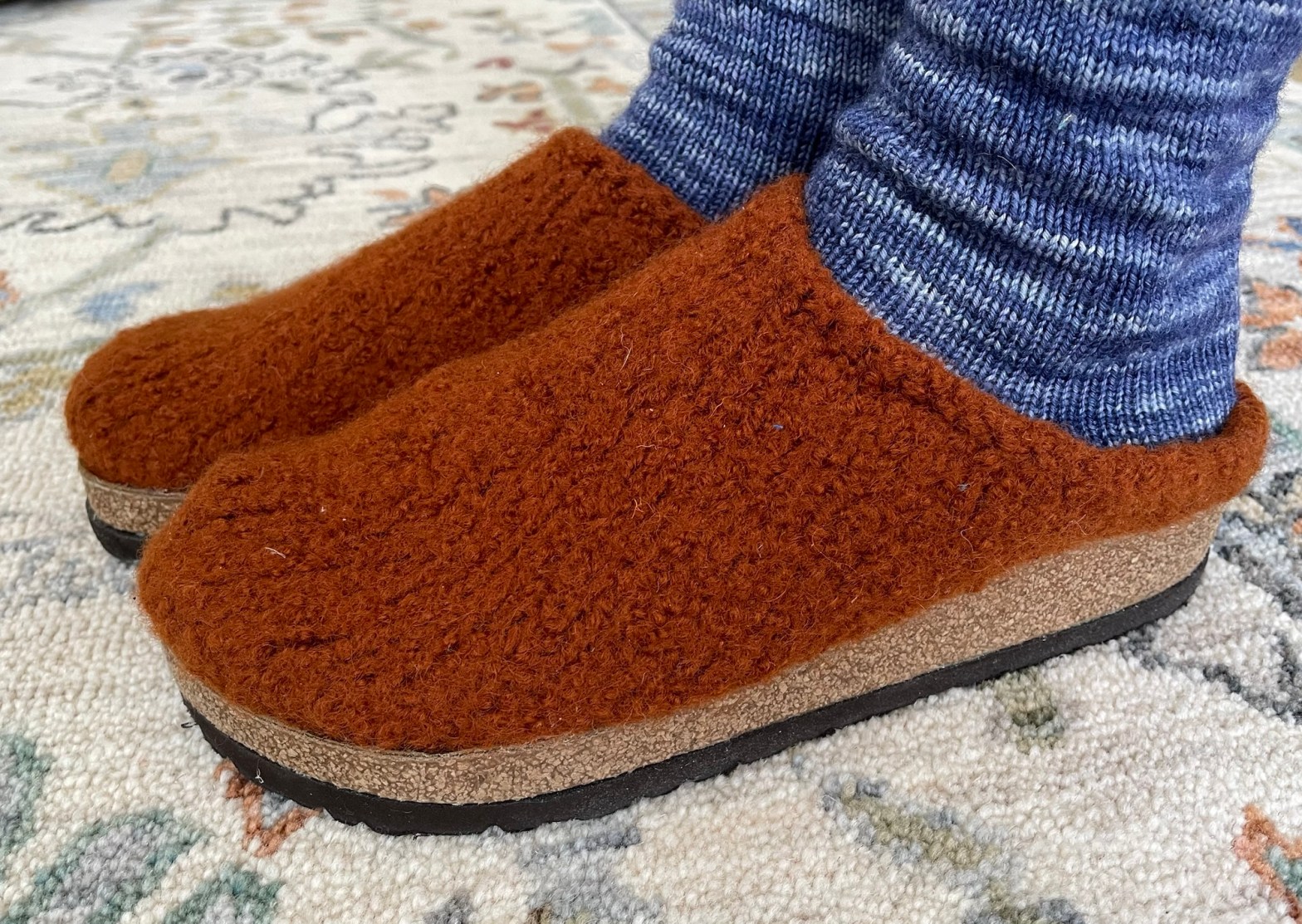
This is a long rambling account of a knitted and felted slippers project, reflecting how it actually played out starting over a year and a half ago. The story begins in 2016 with an earlier related project.
Around 10 years ago I knitted and felted myself a pair of slippers. I remember knitting while riding the train from Minnesota to Glacier National Park, to celebrate my parent’s 60th anniversary. That seems like a lifetime ago when my parents were still alive, before we moved to the lake, and before covid.
Wayne was planning on taking the train to Glacier with me and my parents. At the last minute he decided to drive instead, in order to have the use of the car once we got there. The sleeping compartment we reserved on the train would have been very crowded with both of us in there. It was just big enough for two seats facing each other next to the window. The seats folded down, meeting in the middle to make a single bed. The second bed was an upper shelf that folded down for the night. There was barely enough room for my suitcase in the space between the seats and the door. The bathroom was down the hall.
I knitted while riding on the train, looking at the scenery across North Dakota and Montana. After I finished the second slipper it was somehow twisted with the center front in the wrong place. I had to rip it out and start over.
After the knitting was complete, I felted the slippers by running them through the washing machine and dryer. The finished shape was not ideal, being very wide at the toe, too tight around ankle, and a bit short. Later I hand sewed leather soles on the bottom. Every time I tried to wear them, they did not feel right and they went in the back of the closet.
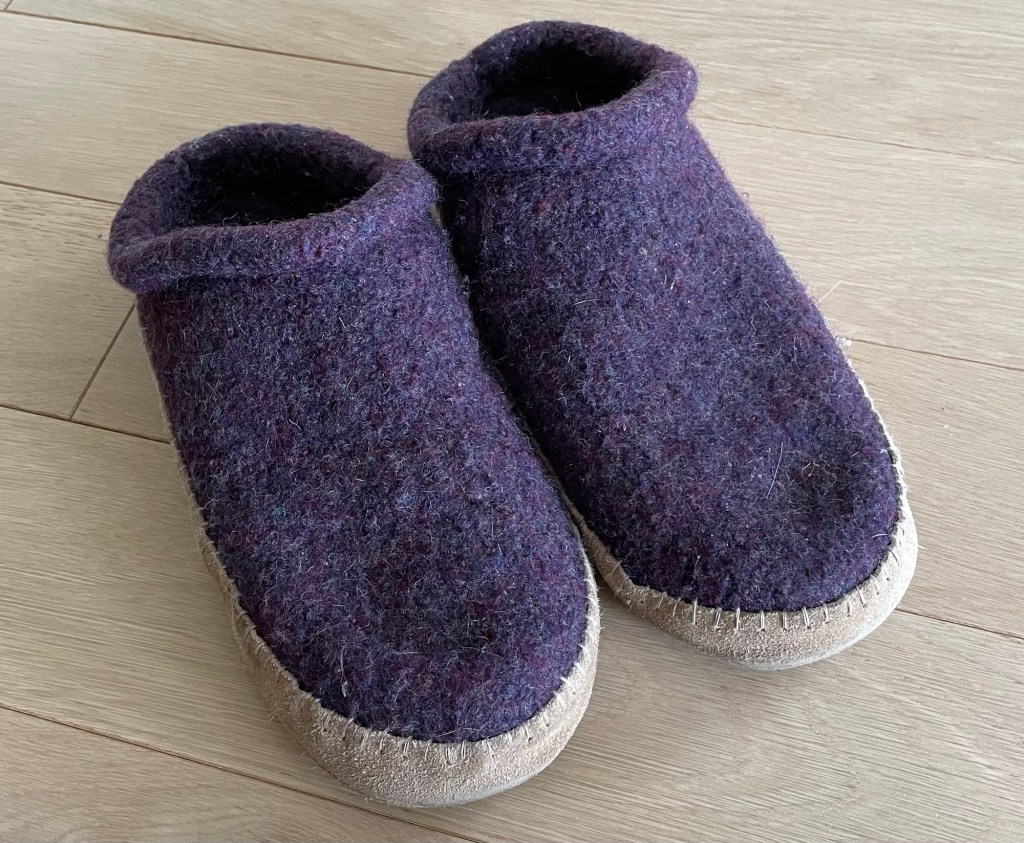
When a different pair of slippers I had been using instead wore out, I decided to try wearing the felted slippers again. After walking around for a while they stretched out to fit my foot better. Following is a photo of the slippers on my feet, while wearing socks I cranked on my circular sock machine, using self striping yarn.
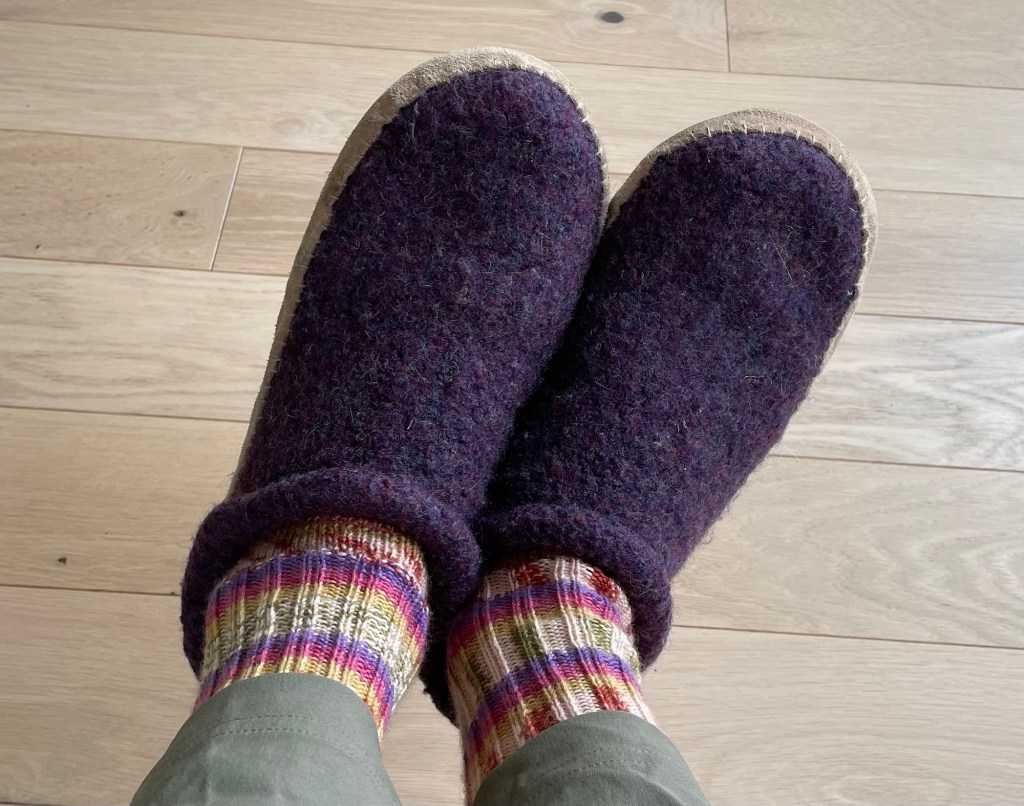
There is a photo on the label of what that sock yarn is supposed to look like. Notice that the reddish and greenish patterned sections look different from each other on the two socks. I am not sure how that happened.
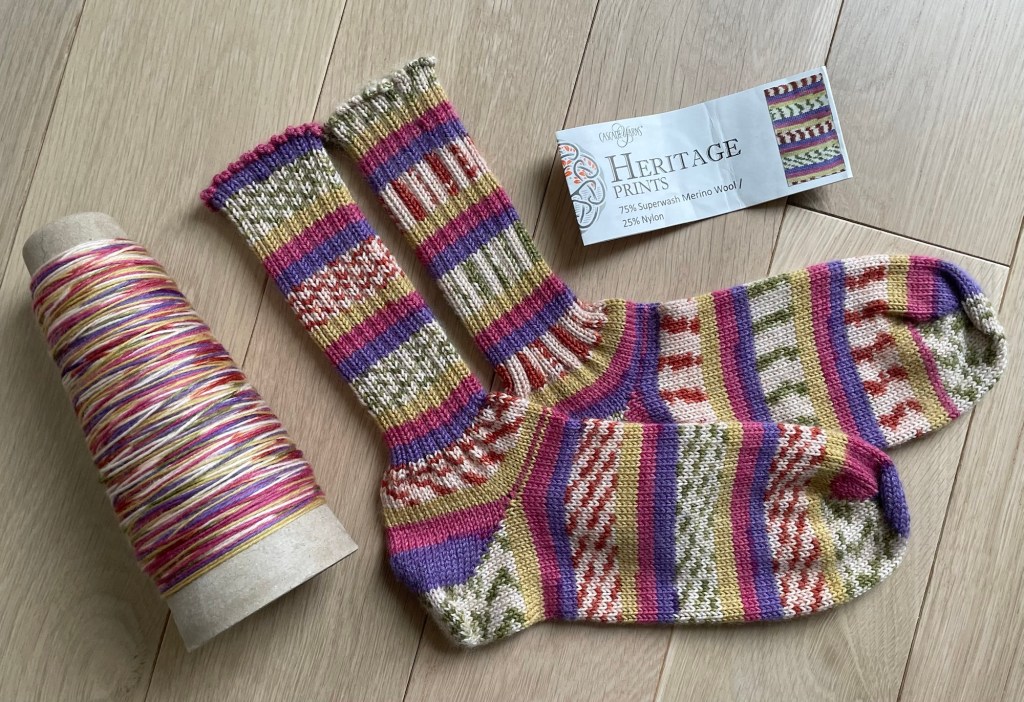
My sister has some Haflinger clogs with good arch support that she wears inside the house. I have admired them and thought about getting some, but they are pricey. She actually has a couple of pairs, including a barely used pair she bought on ebay.
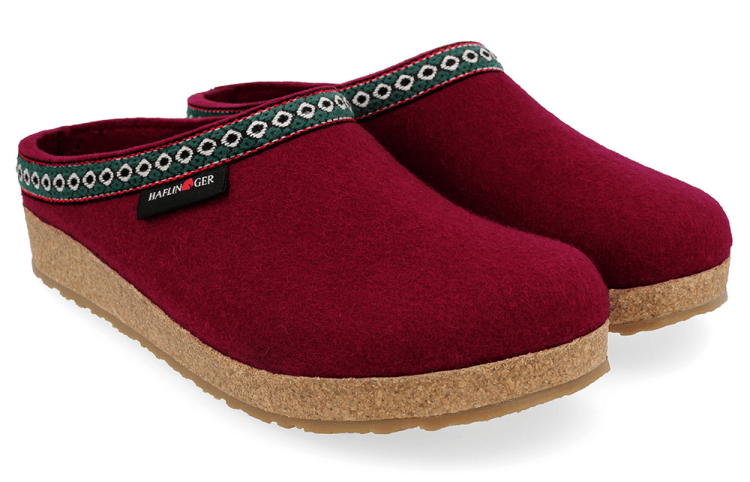
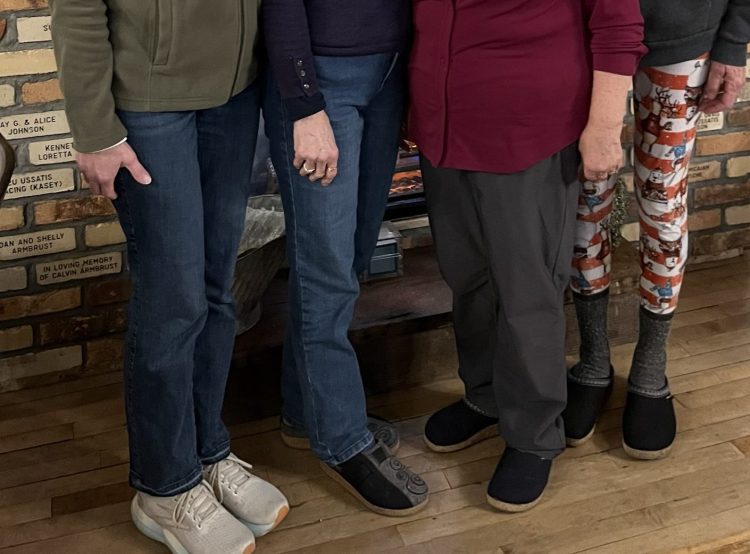
Two good friends also have Haflinger shoes. In the next photo my sister and the two friends are wearing their Haflinger slippers, and I am wearing sneakers.
In the spring of 2025, when I was thinking about possible knitting projects, I looked up patterns on Ravelry for another pair of felted slippers. I found one that was similar to the one I used before, that I hoped would fit my foot better.
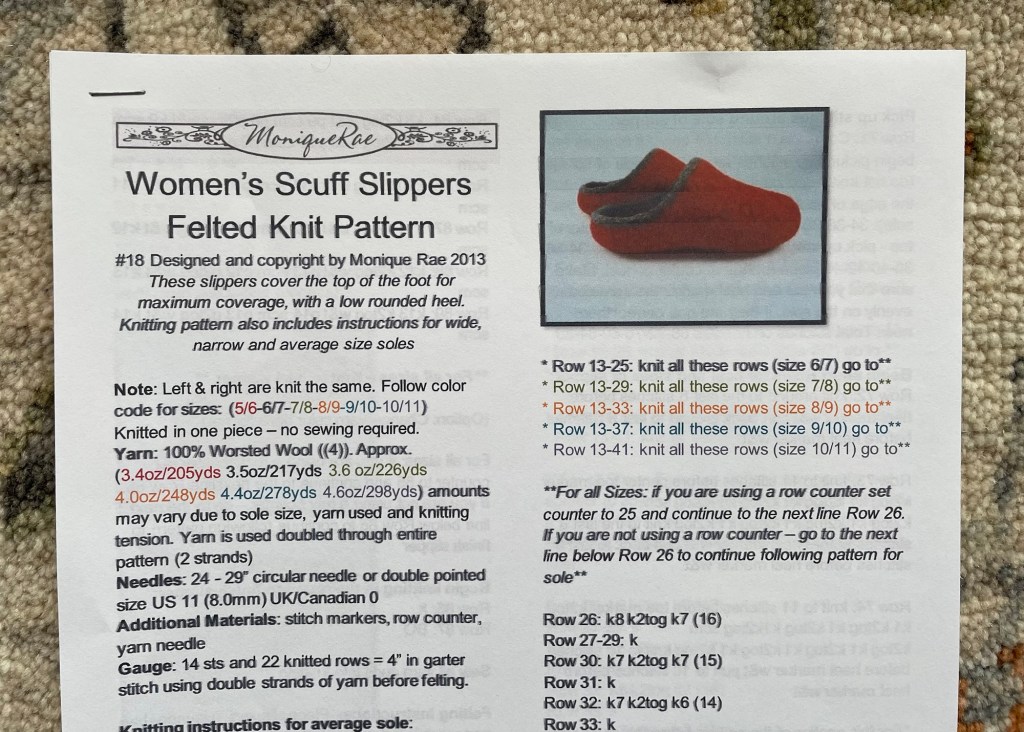
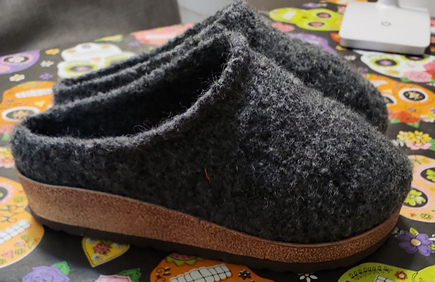
When picking out a pattern on Ravelry, I always look at photos other people posted of their project. I was excited when I saw a pair of the slippers made from the Monique Rae pattern attached to a cork sole, like my sister’s upscale commercial clogs. The image below is from the Ravelry post, which can be found here.
Ideally I would be able to make the slippers with yarn I already had on hand. Hahahaha. It was a nice thought. My first idea was that it would be fun to dye some skeins of white Nature Spun 100% wool yarn by Brown Sheep Company that I had bought at a thrift shop.
I knit a swatch to make sure it would felt OK, using two strands according to the pattern. Following is a photo of the the swatch before I tried to felt it.
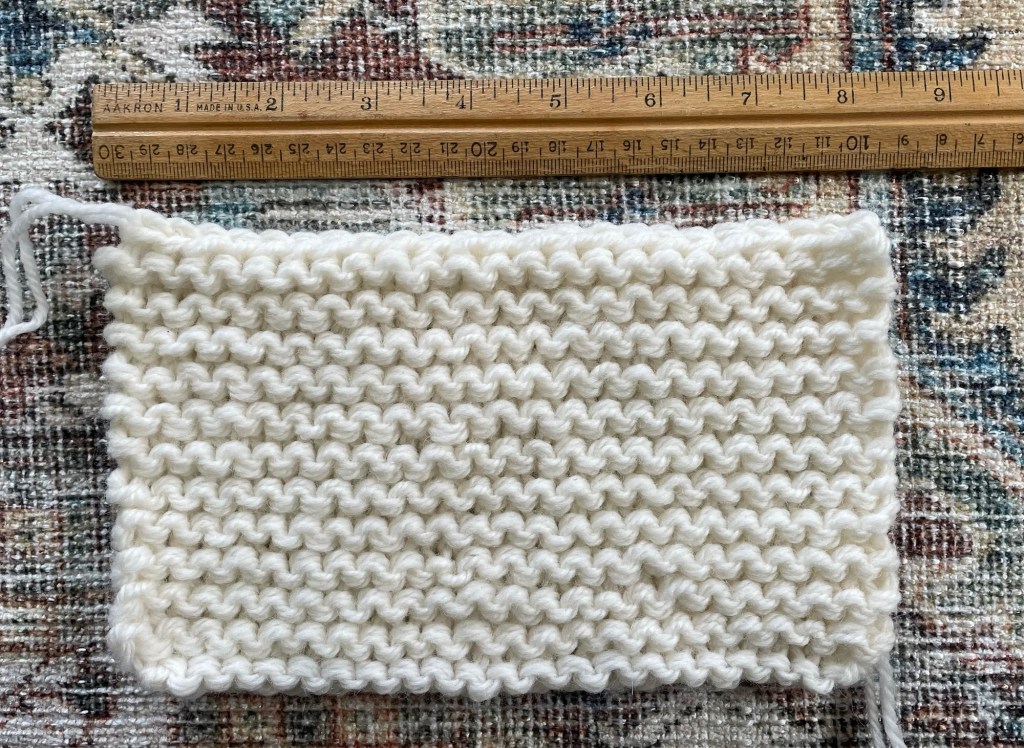
The sample would not felt, and then I remembered from past felting projects that white or light colored yarn is sometimes treated, which results in not felting well or at all. I ended up dyeing this white yarn purple at Fiber Day, and later knitted a baby sweater with some of it.
I made more swatches with different yarns I had on hand, including some yarn from Joanie Ellison’s sheep that I bought at fiber day, some yarn I spun myself, and some leftover Brown Sheep Company Lamb’s Pride yarn. They all felted, but I did not like the results for various reasons.
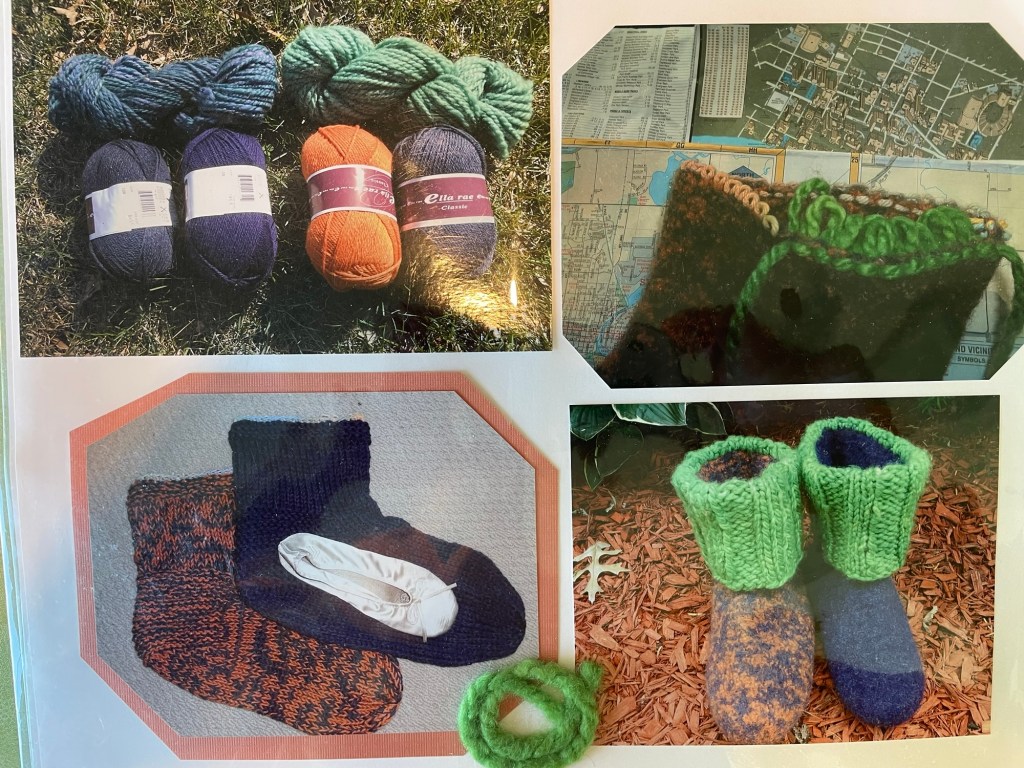
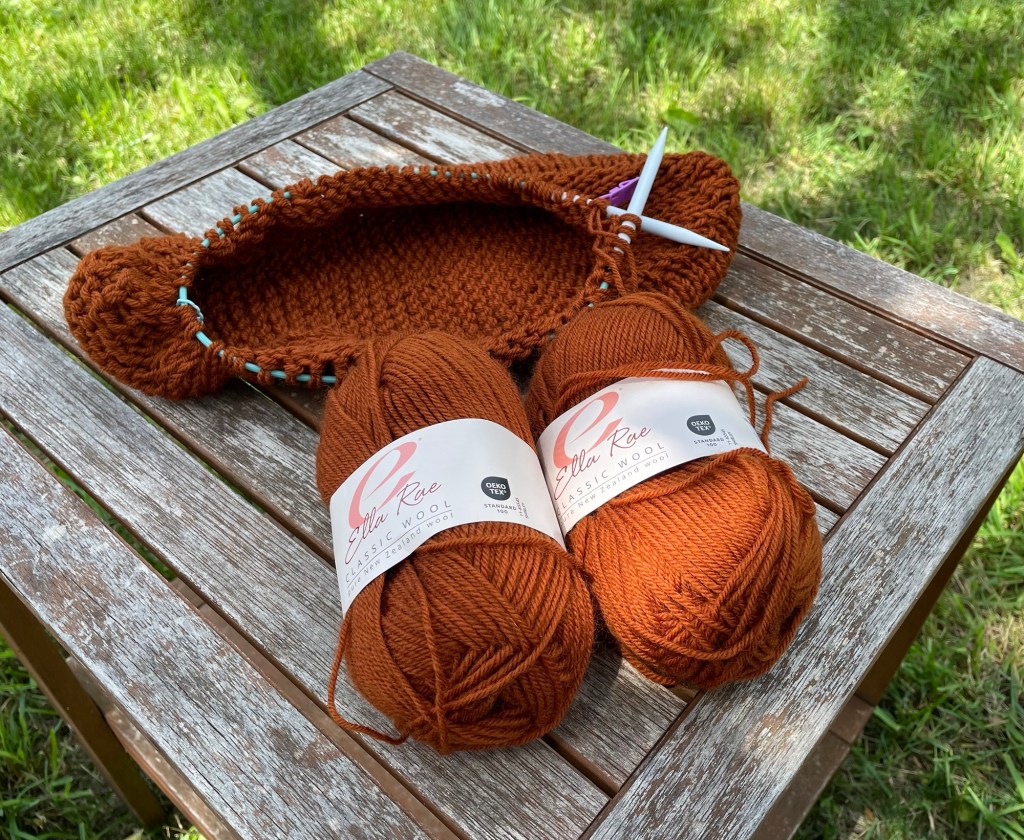
Years ago I had made multiple pairs of felted boot type slippers for my daughter, a couple of her friends, and my niece. I have a scrapbook with some spinning and knitting projects from those days before electronic photos, with pictures of one of those pairs of slippers. I made the slippers in the photo below for my daughter. She specifically wanted each slipper to be a different color. I knitted the slippers using two strands of Ella Rae Classic Wool yarn, using a pattern that was the same construction as a giant sock. In this case, I hand knitted on cuffs by hand after the slippers were felted. These slipper boots tend to wear out, and all the pairs I made at that time are long gone.
I liked the way the Ella Rae yarn felted, so I finally gave up on trying to use yarn I already had for a new pair of slippers. I found a yarn shop in the Twin Cities that carries Ella Rae yarn, so when we were in the area I bought some.
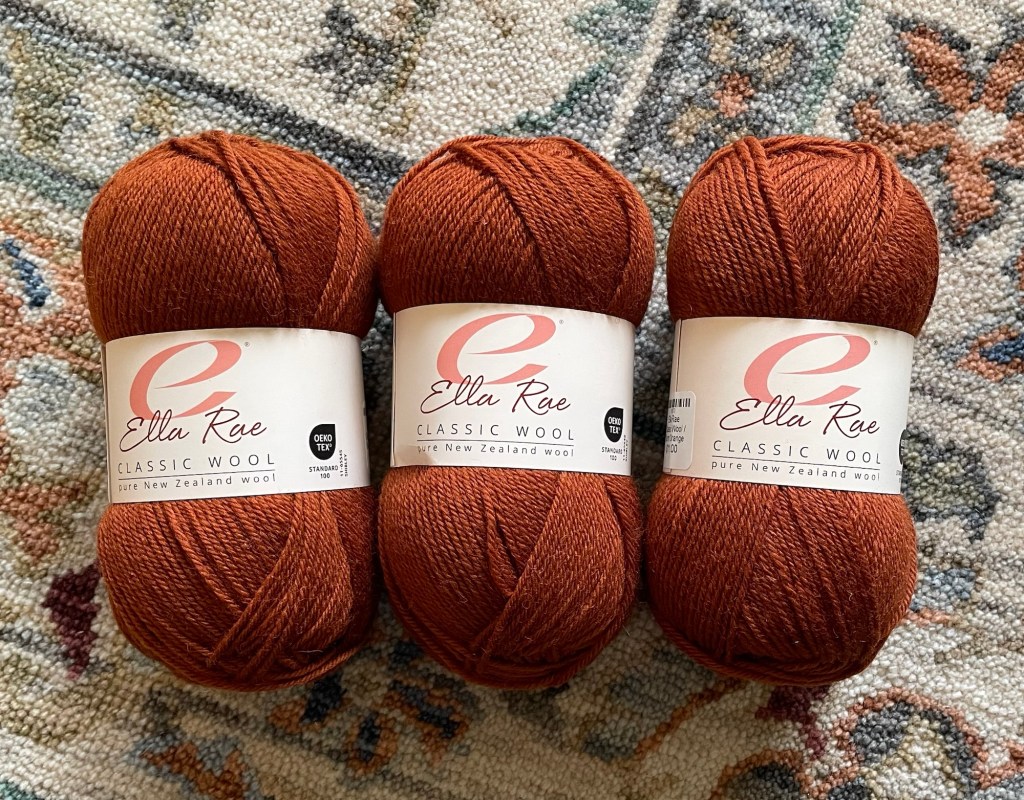
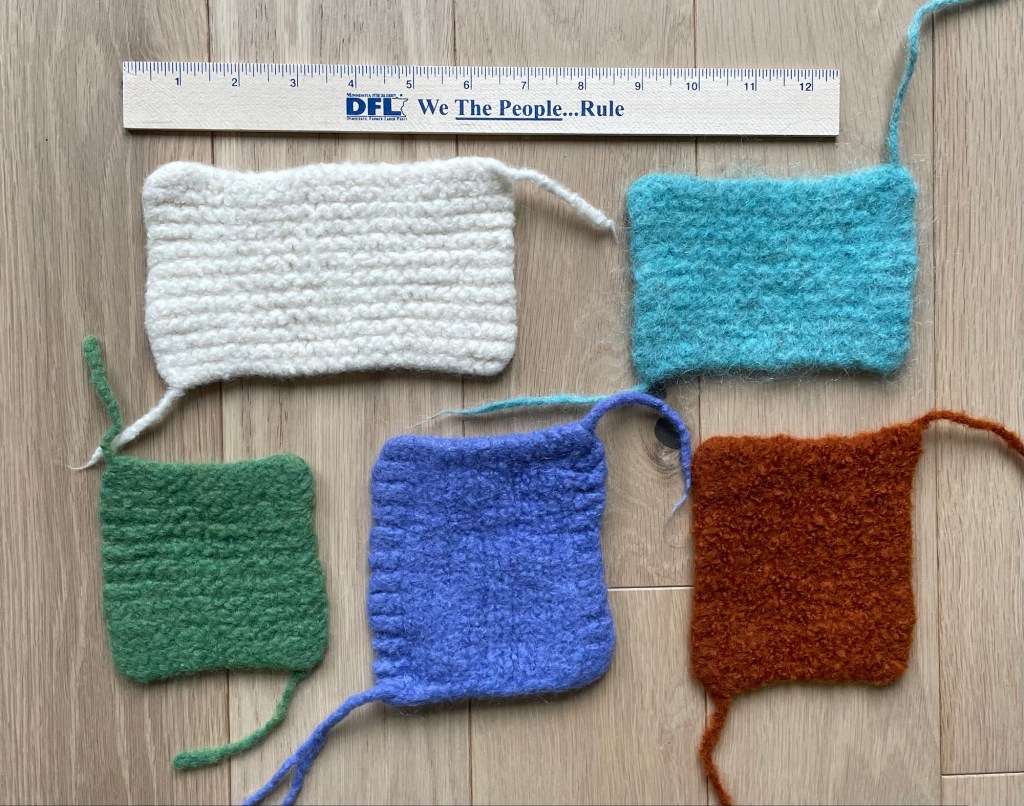
I was pretty sure it would work, but I knit a sample and felted it in the washing machine. Following is a photo of all the felted samples from different yarns I tried for this project. The Ella Rae yarn was by far the best.
Once I had the right yarn, the first slipper knitted up quickly.
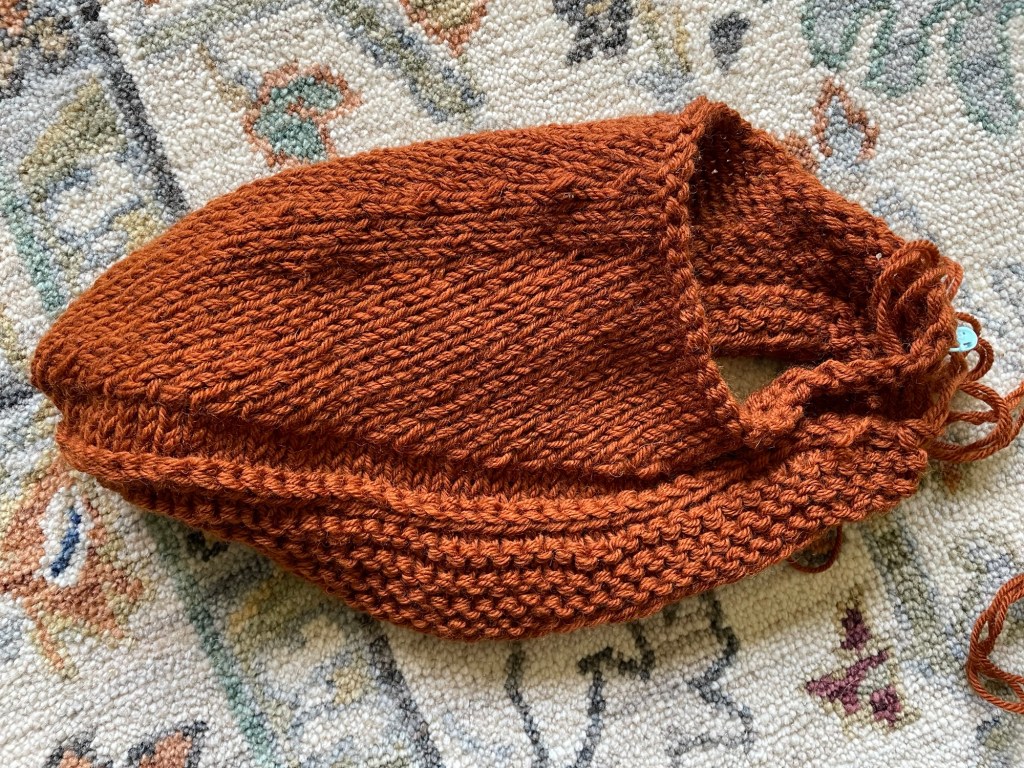
I worked on the project while I was on a friends trip to Seattle at the end of May 2025.
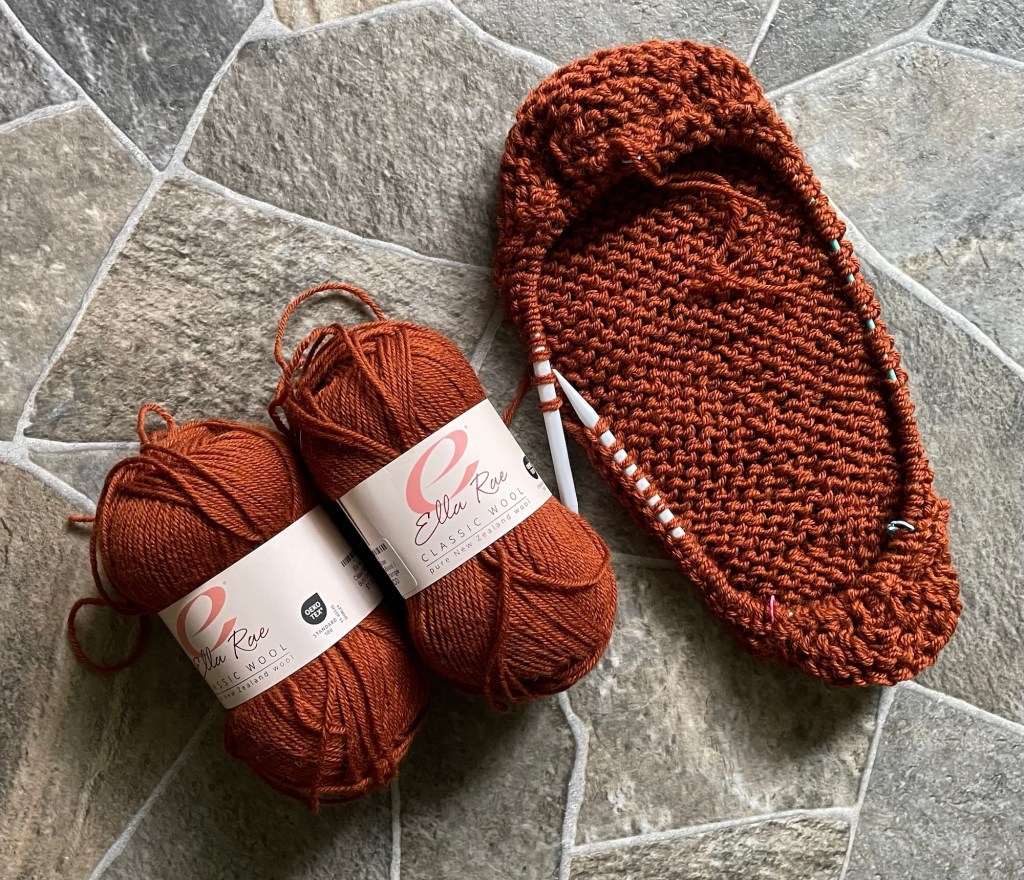
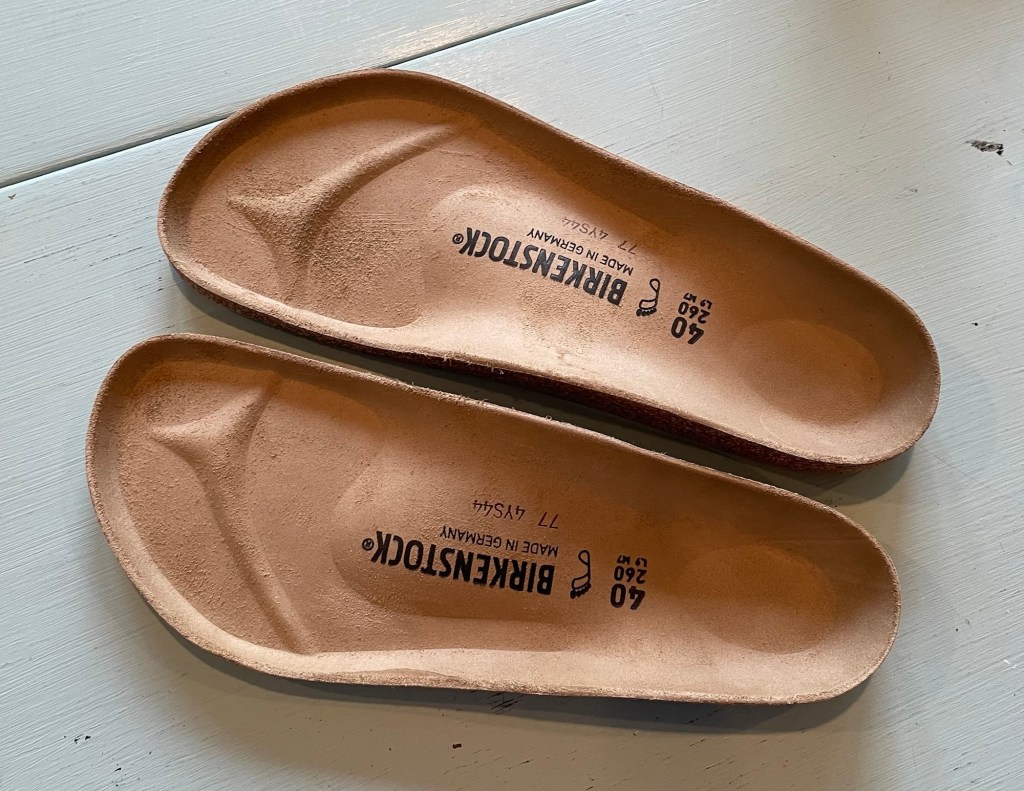
Meanwhile I tried to order the Haflinger cork soles online, but my size was out of stock. I found Birkenstock soles instead.
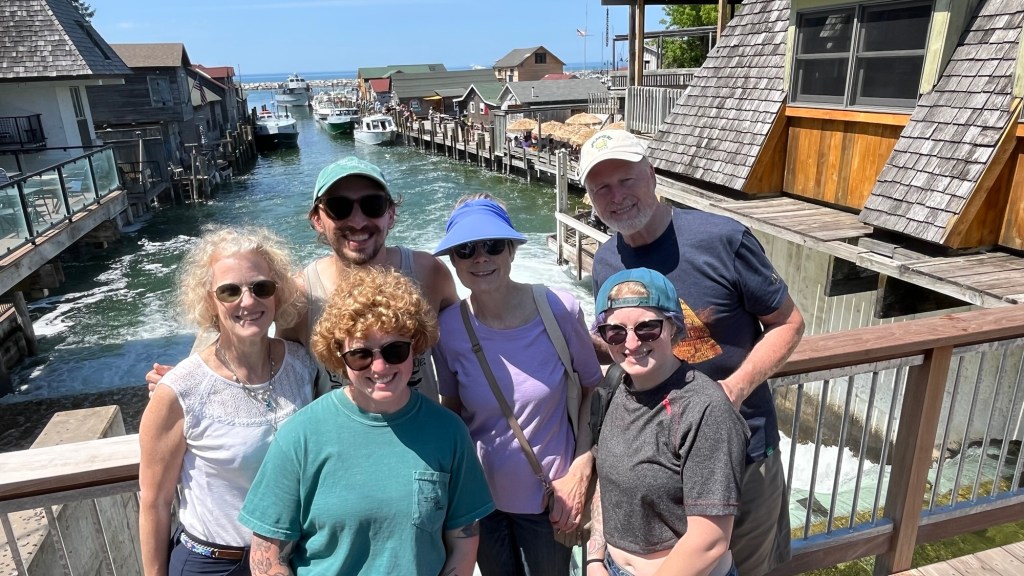
A month later, in the summer of 2025, I brought this project on a road trip to the Traverse City area of Michigan. Wayne and I drove there with my sister and her husband for our cousin’s wedding celebration. My sister’s daughter and her husband run Falling Waters Lodge in Leland, Michigan. We did not stay there, but we took this photo.
My niece lives nearby in Cedar, Michigan. We hung out at her house, which included some knitting time in her yard.
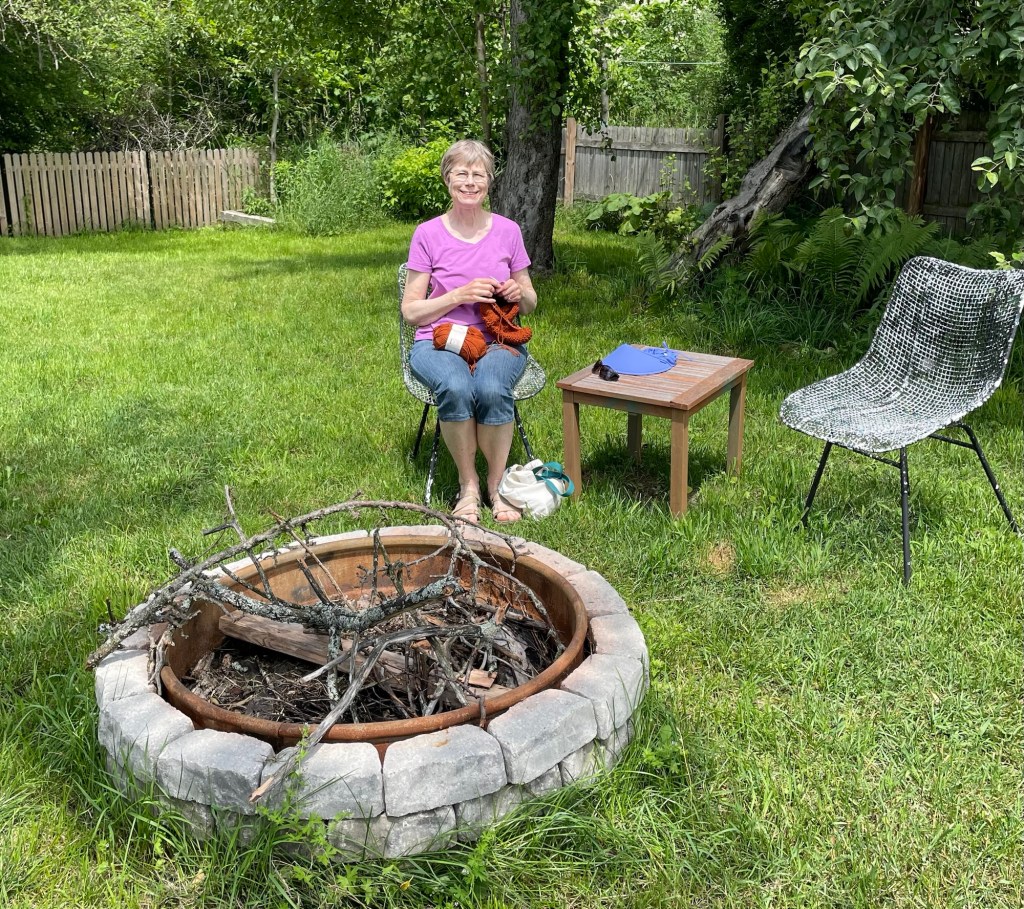
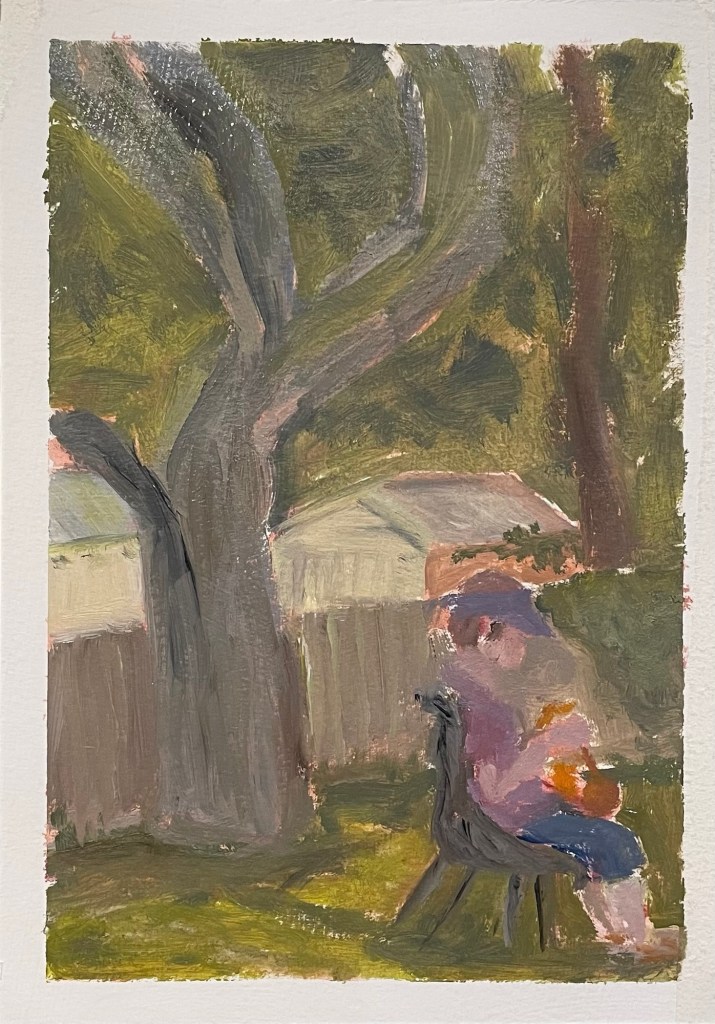
My sister painted while I knitted. She painted me knitting.
Cedar is a very small town, but it has a local yarn shop, Wool and Honey, where I bought some sock yarn.
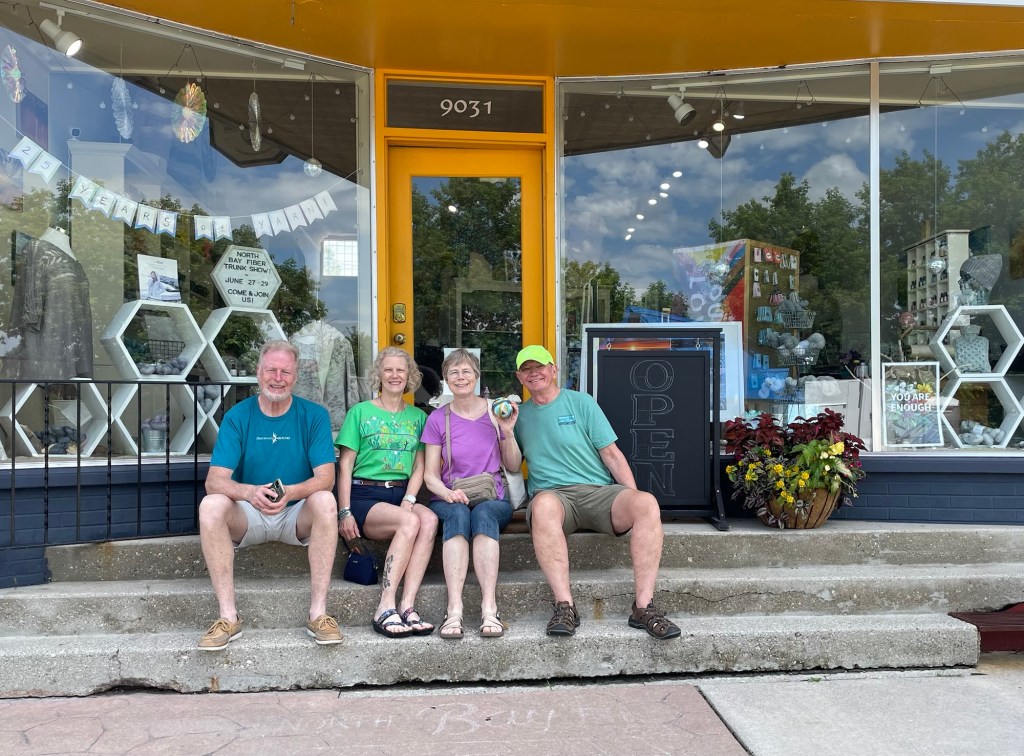
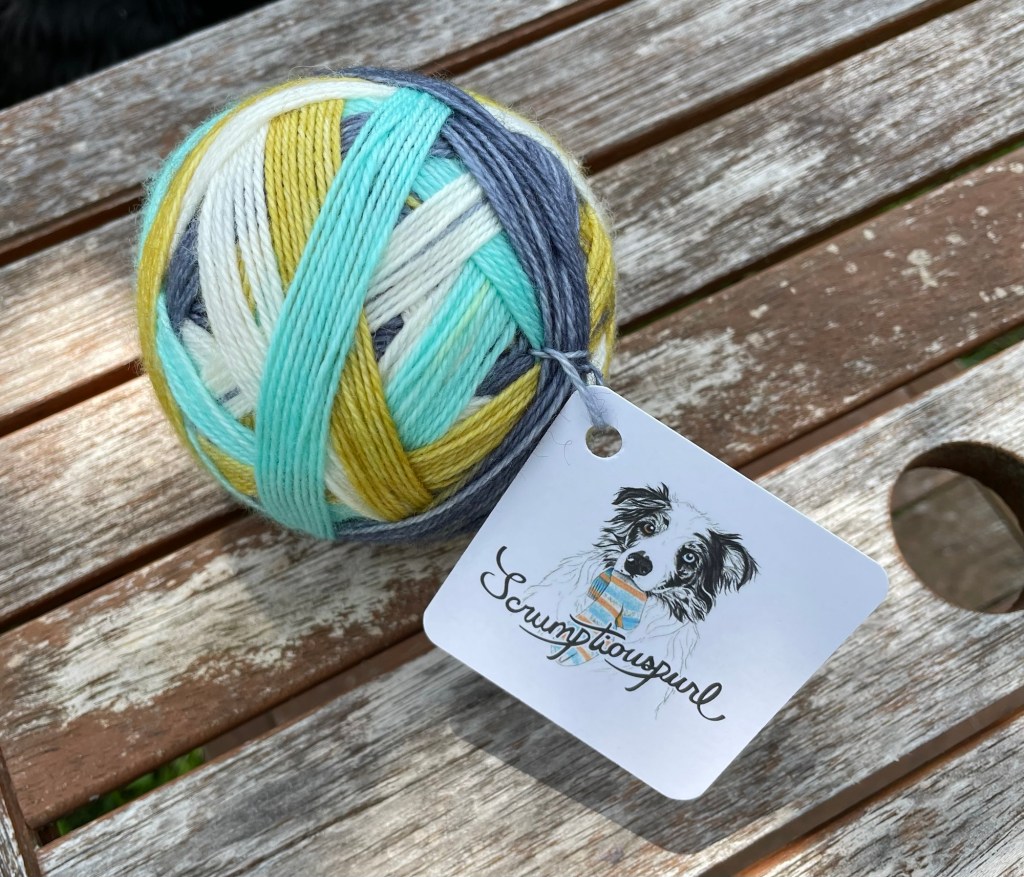
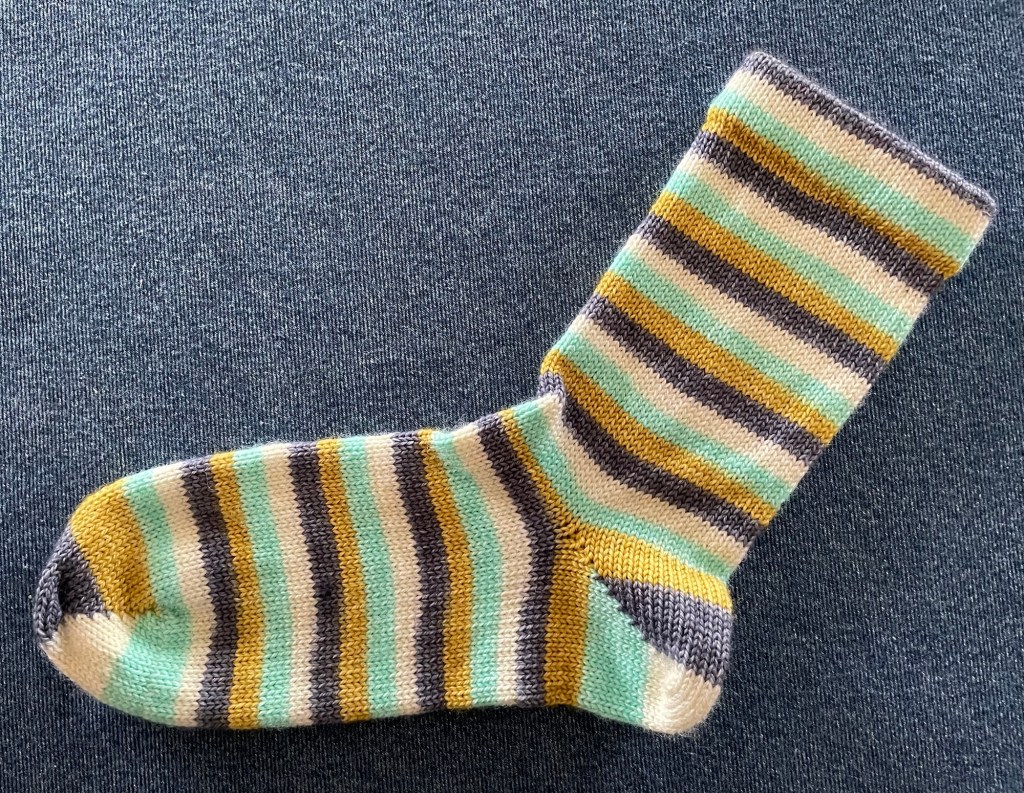
The next photo is out of order, but this fall I cranked a pair of socks using the yarn from that trip.
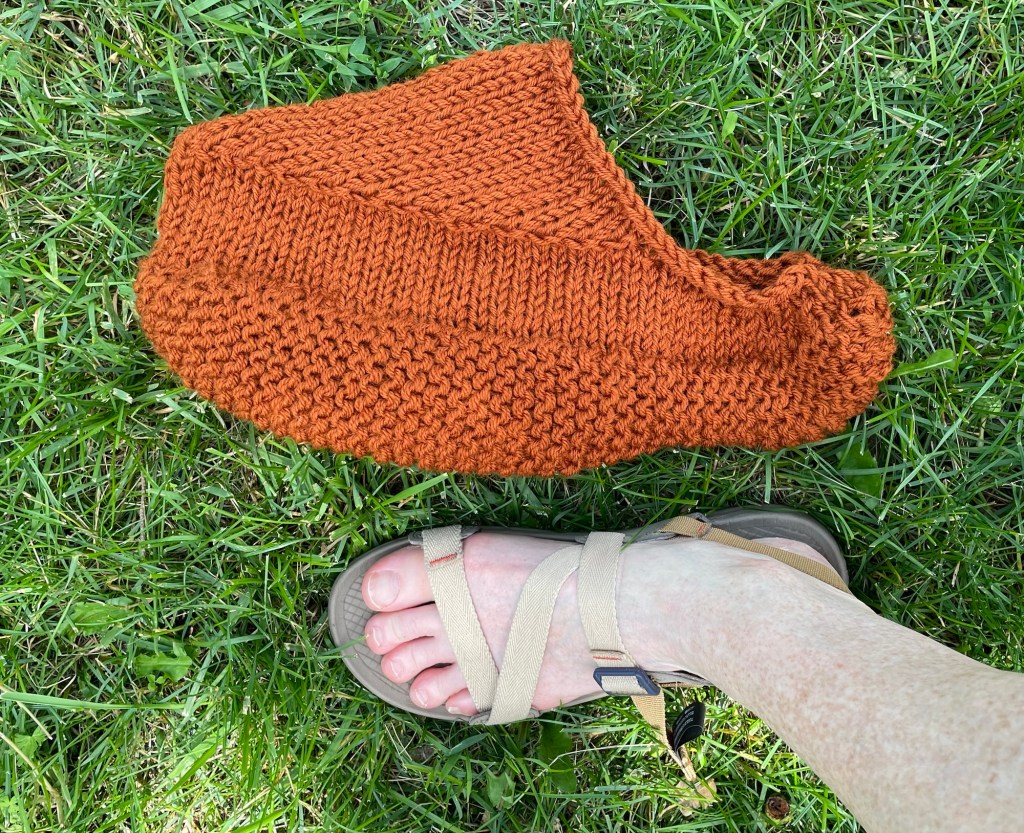
I finished the knitting part of the slippers in the car on the way home from Michigan. After we were back home I felted the slippers, first in the washing machine, and then by hand with hot soapy water. They were not right at all. They were way too big around my foot. I was disappointed, but decided to try again using the pattern I had made before, Felted Clogs by Bev Galeskas. You can find it on Ravelry here.
The project was on hold for awhile while I waited for more yarn ordered online, and while I was busy with other projects and activities. I brought the slipper take two (or three?) project on the RV trip to Yellowstone in August 2025. The knitting went fast.
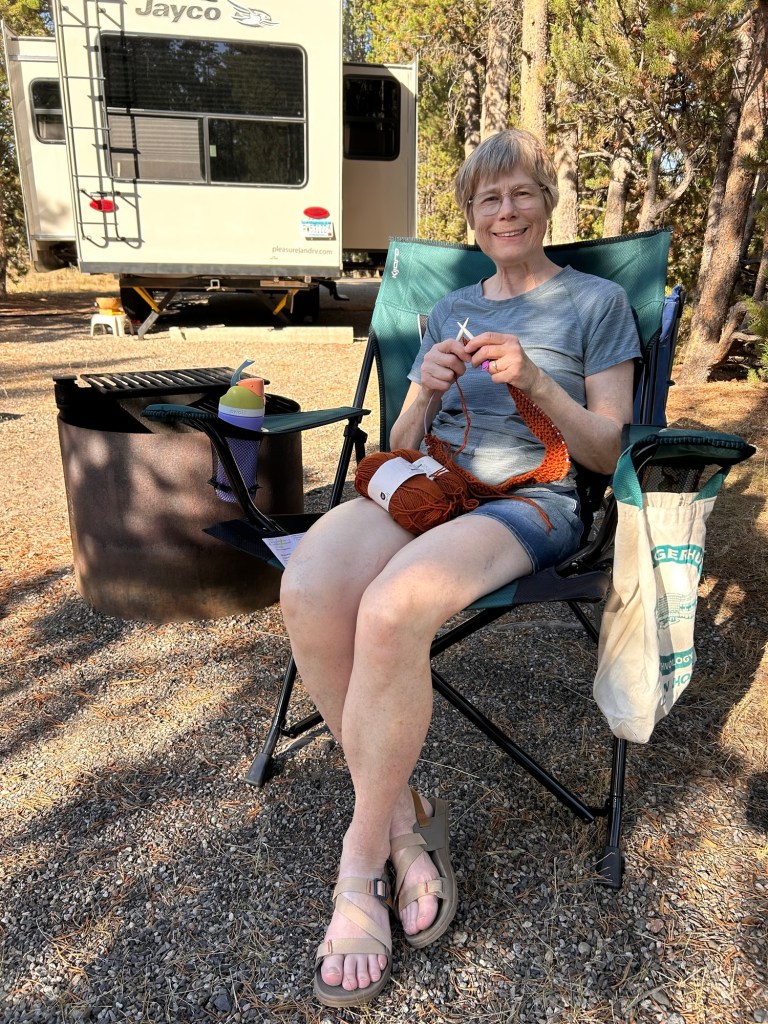
I made a few adjustments to the pattern. I skipped the last couple of rows around the top of the foot, so it would not be so tight. The pattern has a folded over ridge around the top of the foot. I did not like the way it was looking, so I eliminated that.
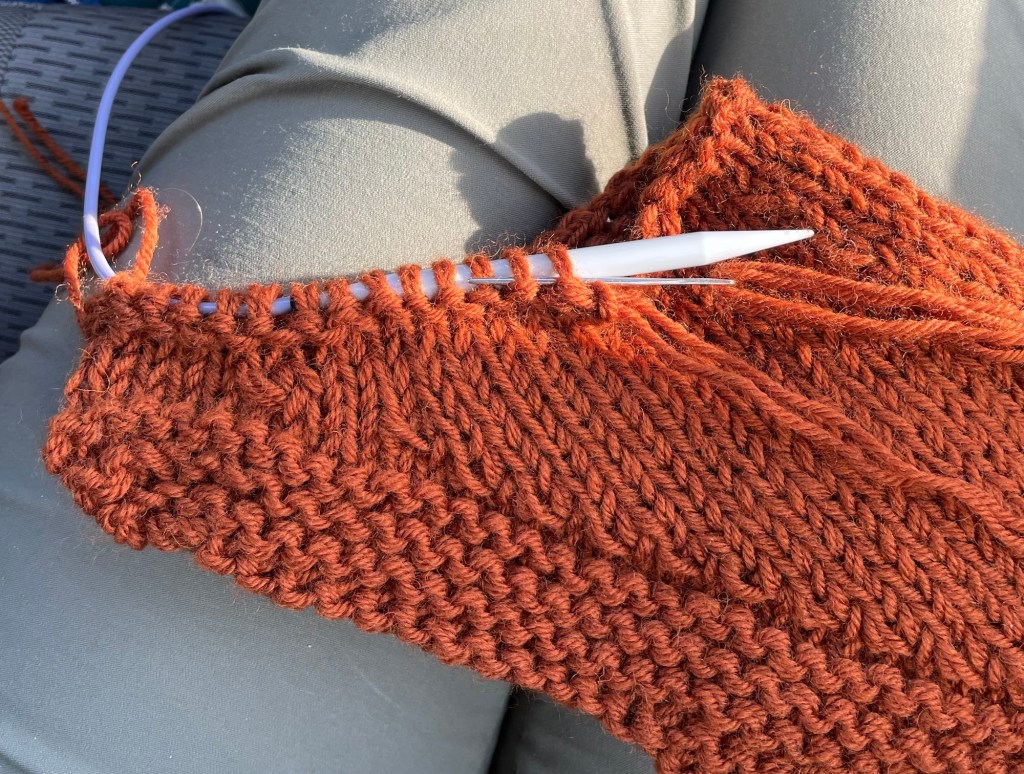
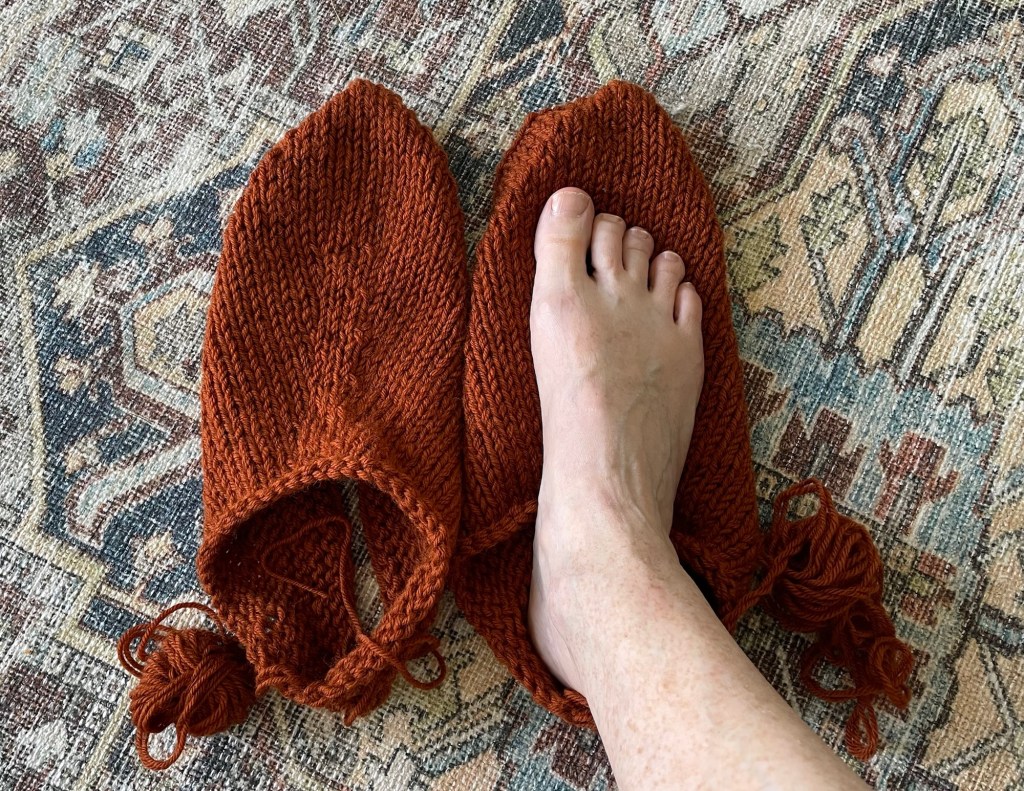
The pattern has two layers on the bottom, but I only made one since I was going to have the cork base.
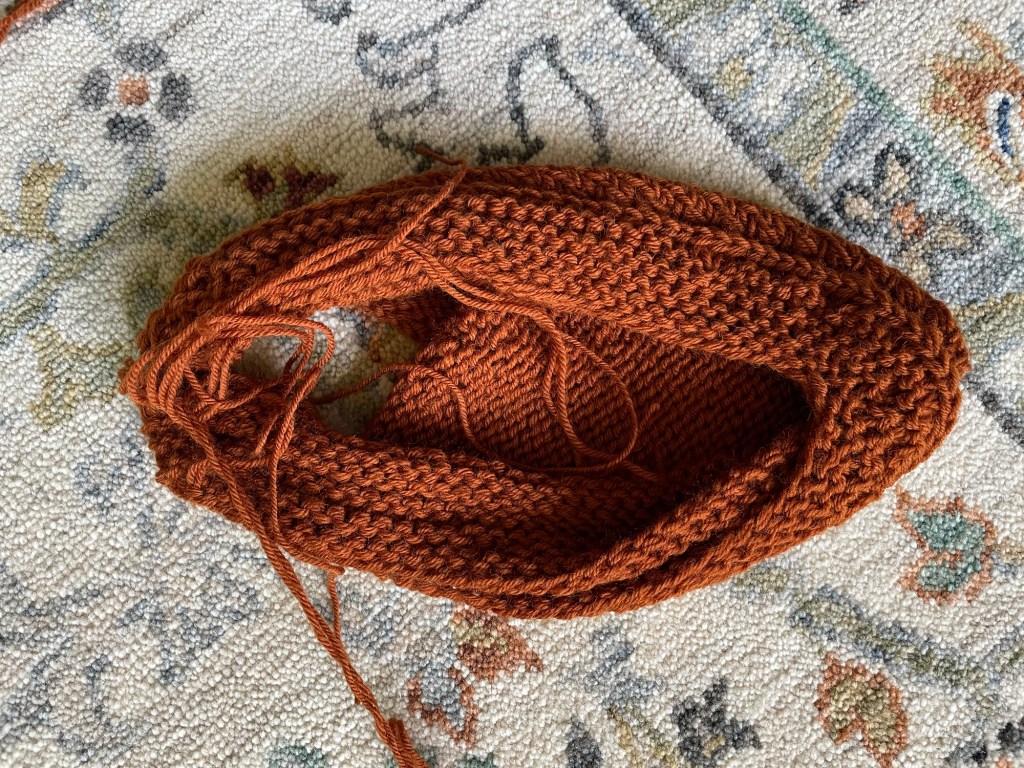
They looked pretty good after whip stitching the bottom together, weaving in ends, and fixing up a couple of loose spots.
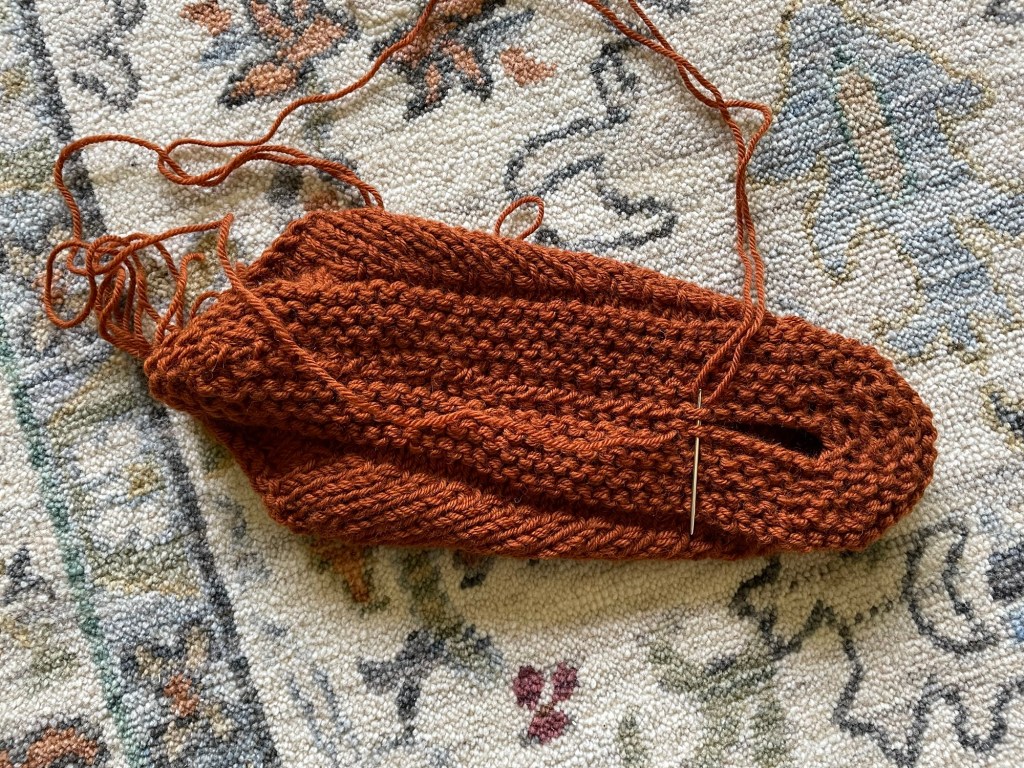
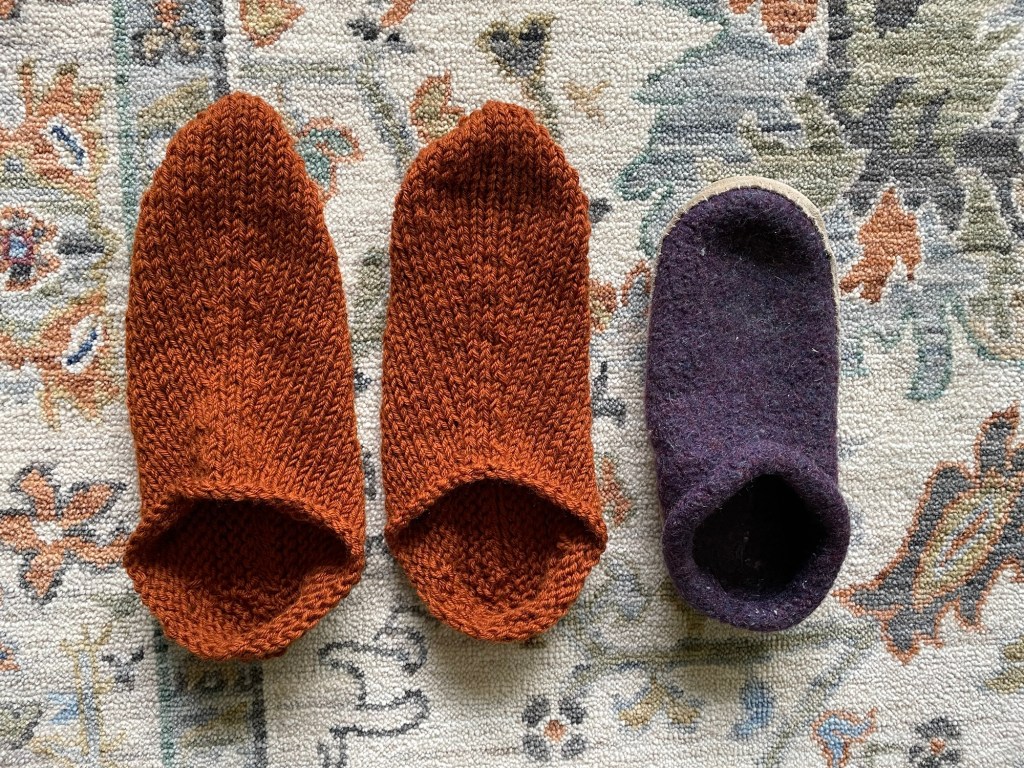
Knitting can be undone if it does not come out right. Felting can be a crap shoot. Once it is felted, you cannot change it.
I ran the knitted slippers through one load in the washing machine, but did not put them in the dryer. In the past I have found that they come out with creases from the dryer that I cannot get rid of. After the felting process was started in the washing machine, I did the rest by hand with hot soapy water in a washtub.
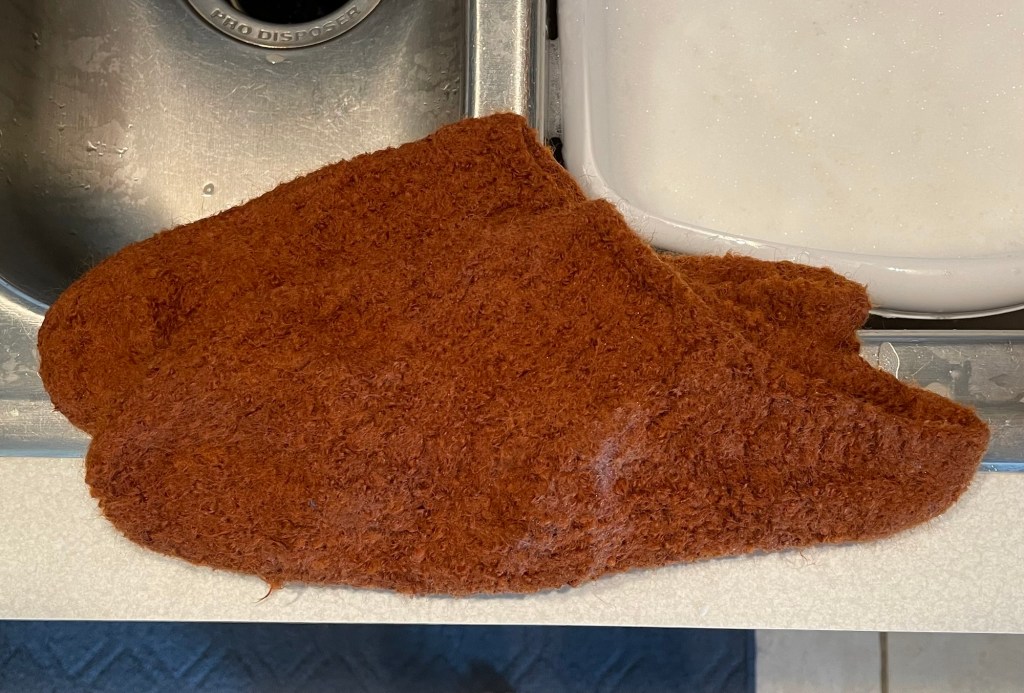
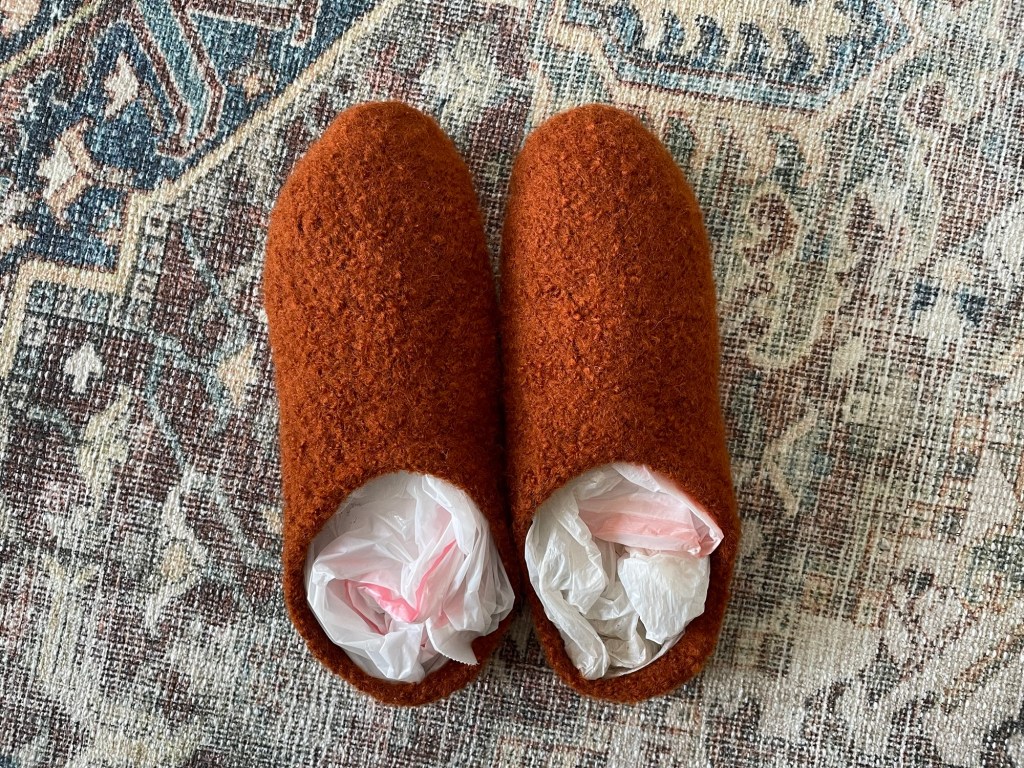
I was relieved that they turned out looking nice and fitting my foot after felting.
Later I realized that there is another layer that goes on the bottom of the Birkenstock sole that I did not have. A pair of Birkenstocks has the leather upper part attached in between the two layers of sole. I placed another order online for the rubber bottom layer. It only comes in one size, to be cut down.
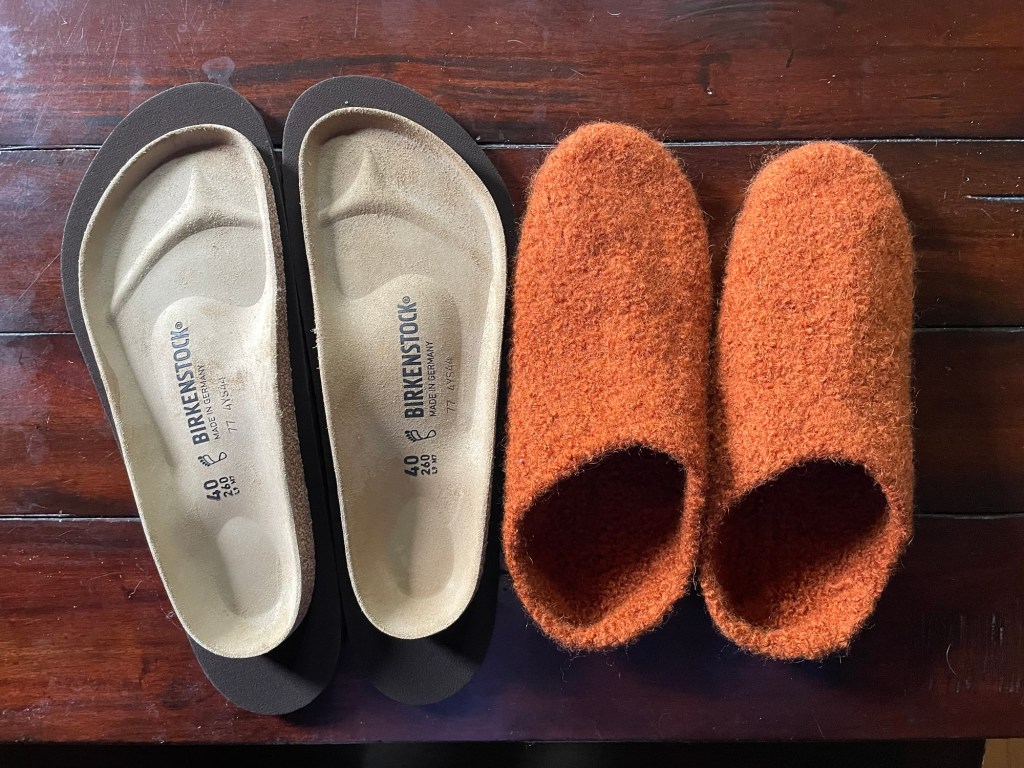
I brought the slipper parts to George’s Shoe and Leather Repair near my son’s house in St. Paul, to see if they would glue the slipper on to the base for me, and cut and glue the bottom layer on. This shop on Grand Avenue has been operating since 1905. They have a lot of business repairing hockey skates and gloves. It was featured in the movie “Mighty Ducks II”, and provides service for NHL teams as well as individuals.
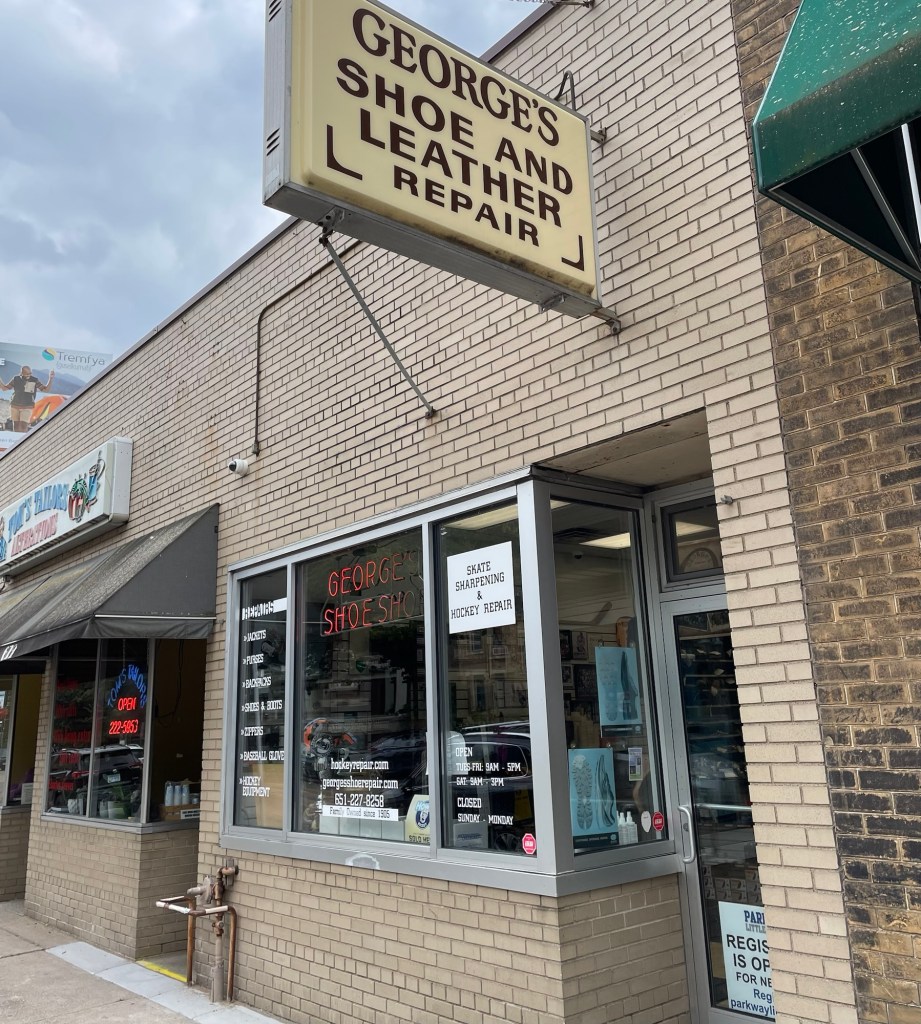
When I went into the store, there was a row of hockey gloves lined up on the counter. I wanted to get a photo but they were cleared away while I was looking around.
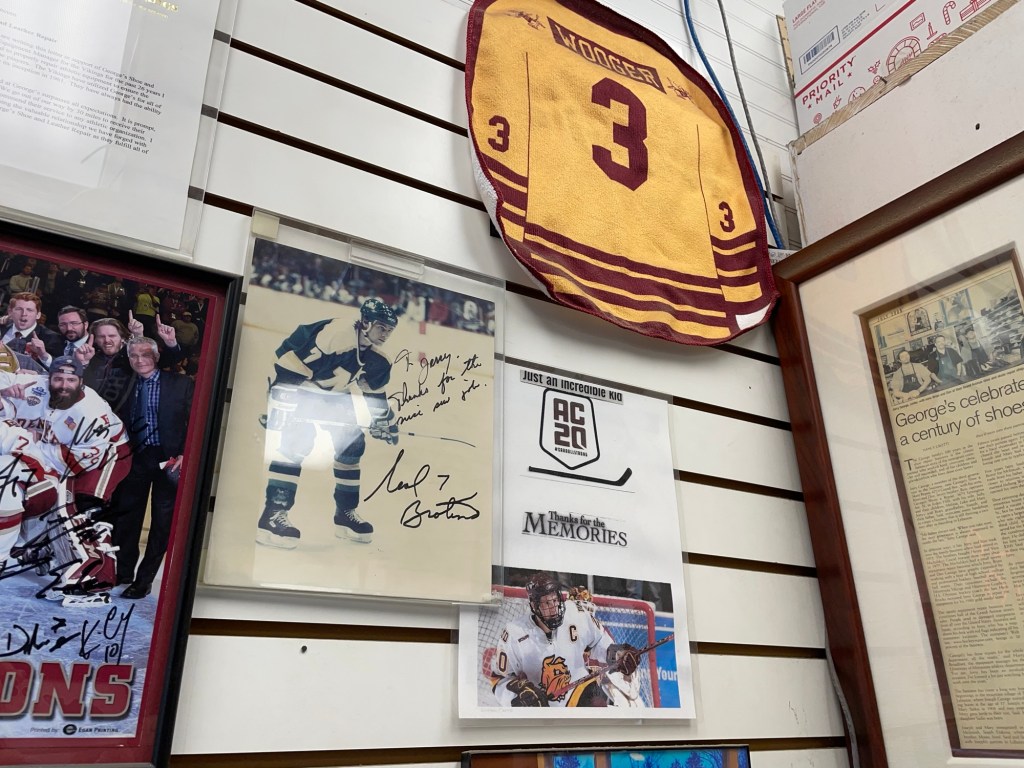
There is a lot of hockey memorabilia all over, including an autographed photo of Neil Broten, former NHL player from Roseau, Minnesota, near the Canadian border. Neil played on the famous 1980 Olympic hockey team that beat Russia, and then won the Gold Metal. More importantly (haha), his high school team also played in the 1977 Minnesota State High School Hockey tournament against my school.
I explained my project to the proprietor, and showed him the slippers and the base. He told me that it would not work, that the glue would seep through the wool. I showed him the photo of the slipper made in exactly this way, but he was not convinced. I was not going to argue with the shoe repair expert, so I left feeling disappointed.
Back at home I messaged the woman who made the felted slippers I had seen on Ravelry. She told me what kind of glue she used and how she glued the felt upper on to the base. I decided that if she could do it, I could, so I ordered the same brand of glue that she used.
This project sat on the back burner for quite a while. I was busy with other things, and I was intimidated about the gluing part. If it did not work or I messed it up, I would have to give up or start over (again).
On another trip to the Twin Cities I went to S.R. Harris, a very huge warehouse style fabric store, looking for ribbon and boning for a woven top project, and something to use for a second layer inside the slippers if the glue seeped through. This place is massive. I hardly ever go here, but now that Joann Fabrics is gone, there are not many other options.
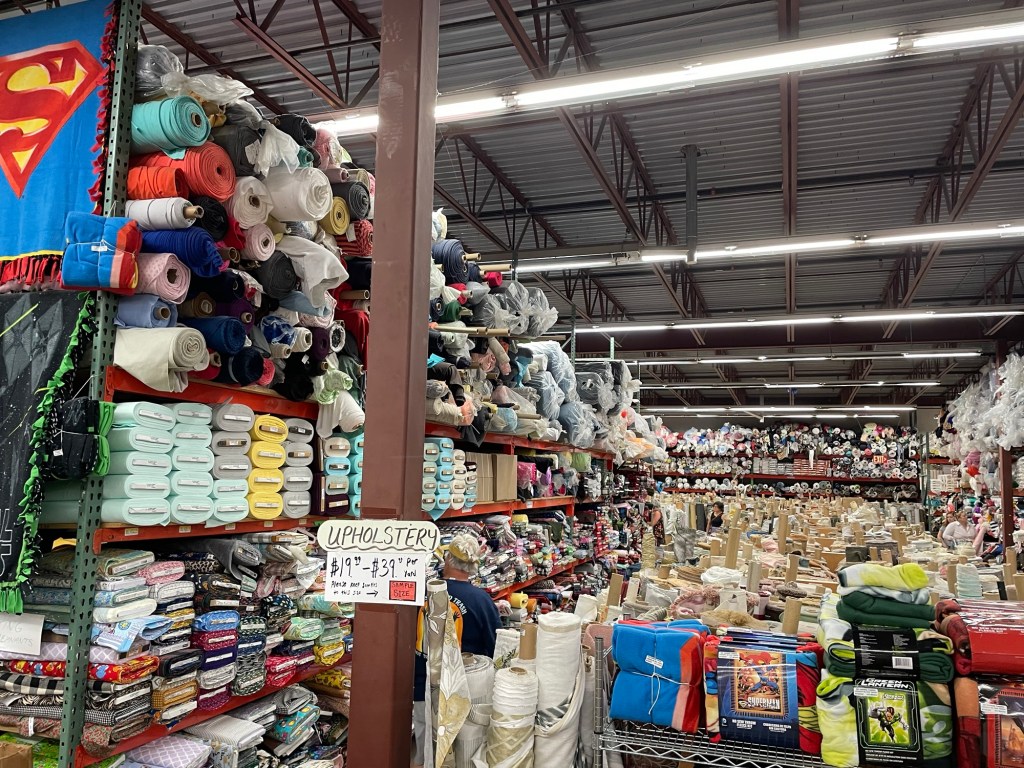
Near the checkout area I happened on a bin of scraps of leathery type materials with no labels. I bought two different small remnants that could possibly be used for another layer inside the slipper.
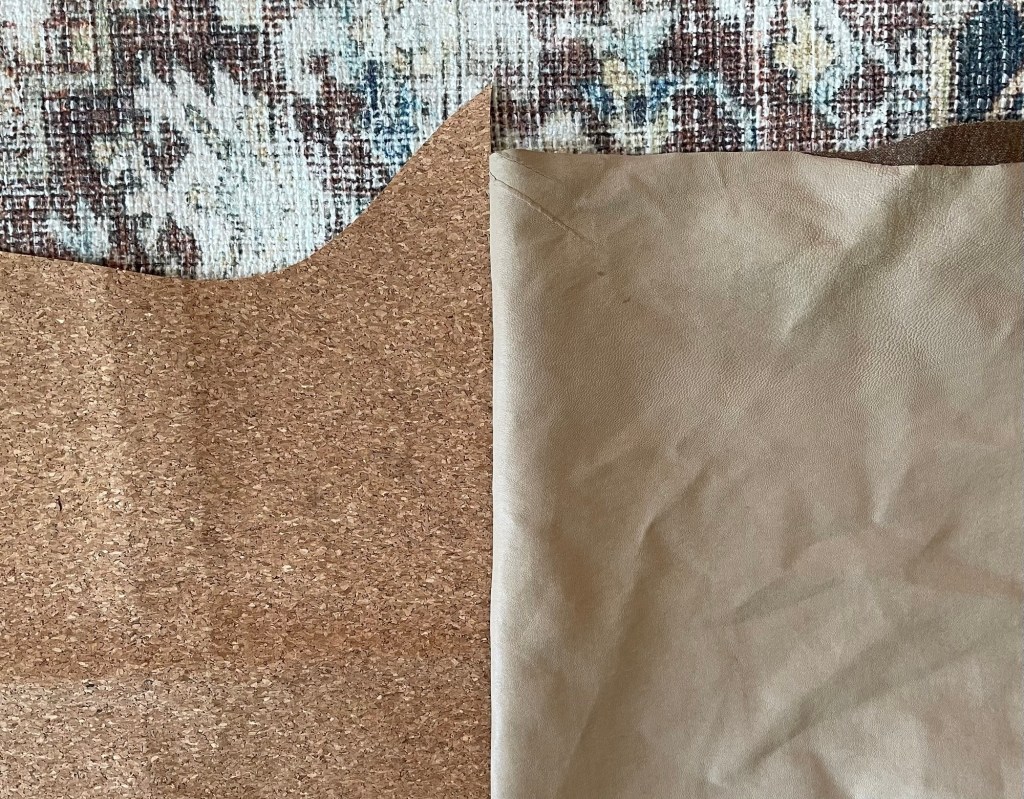
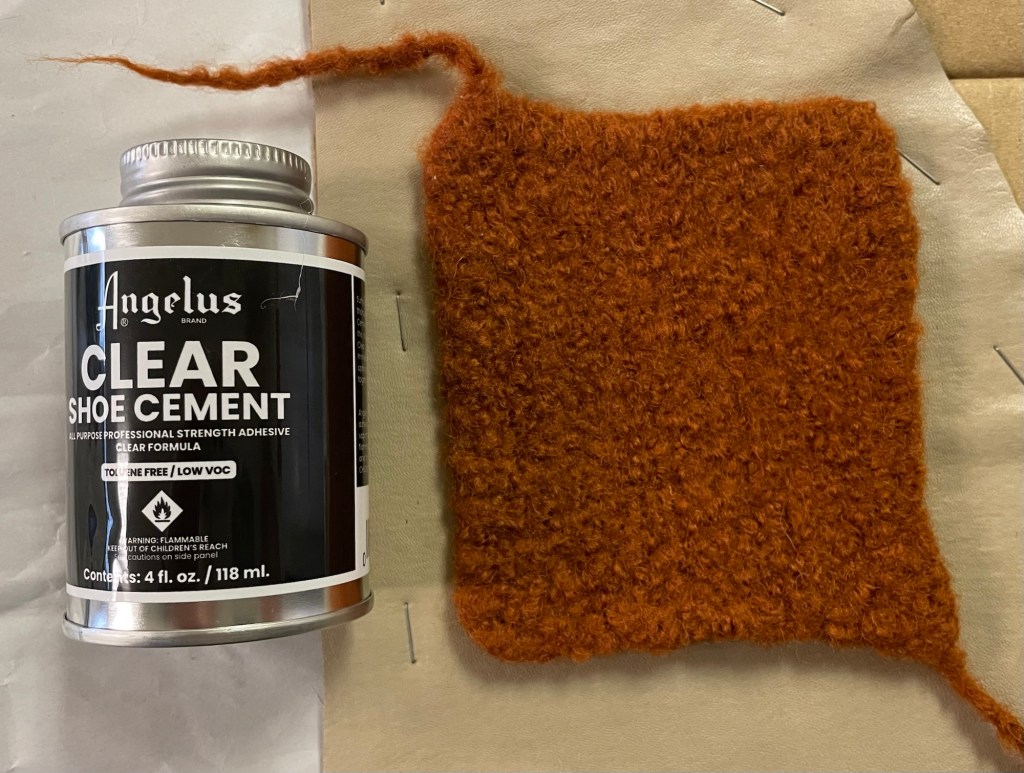
Everyone had ideas about how I should attach the felted slipper to the base, including sewing a layer on the bottom so the glue would not seep through, and putting a layer inside the slipper to cover up any glue that seeped through. I kept thinking about it and stalling, until finally I had the idea of doing a test, using the sample I had felted at the beginning. For several days I thought about what I could glue it on that would be similar to the Birkenstock base. I ended up stapling a piece of the fake leathery fabric on to a piece of corrugated cardboard.
The container of glue had a brush attached to the lid, with instructions to apply glue to both layers to be glued together, and then to clamp them together. I did not think it was going to be practical to clamp together the felted slipper to the Birkenstock base, so that was worrying me. I brushed the glue on to the fabric bottom layer and the sample of felted fabric and stuck them together. I held it down with my hand for about 20 minutes (while watching a youtube video). The glue did not seep through. I did not clamp it down, but left it to sit until the next day.
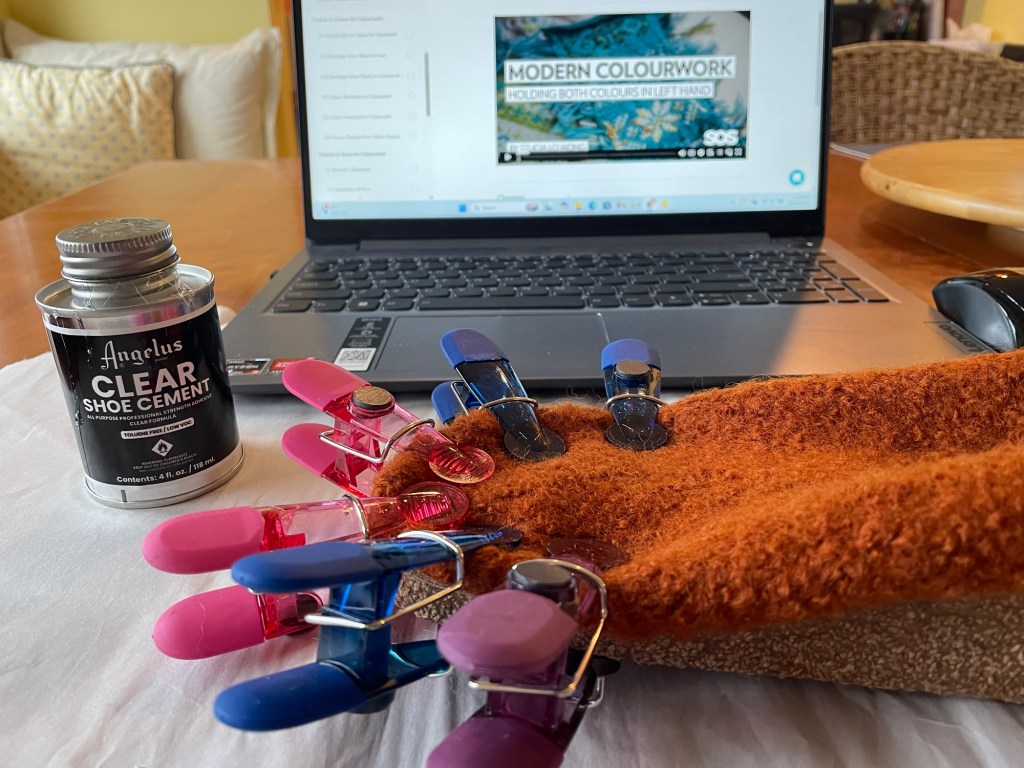
The woman who made the slippers I saw online said she glued the toe of the slipper on first, and after it was dry glued on the rest. I followed her lead. I applied the glue and held it down for 20 minutes (while watching a Modern Colourwork class from the School of Sweet Georgia), and then used some clips to hold it down.
The next day it seemed to be secure, so I glued the middle section.
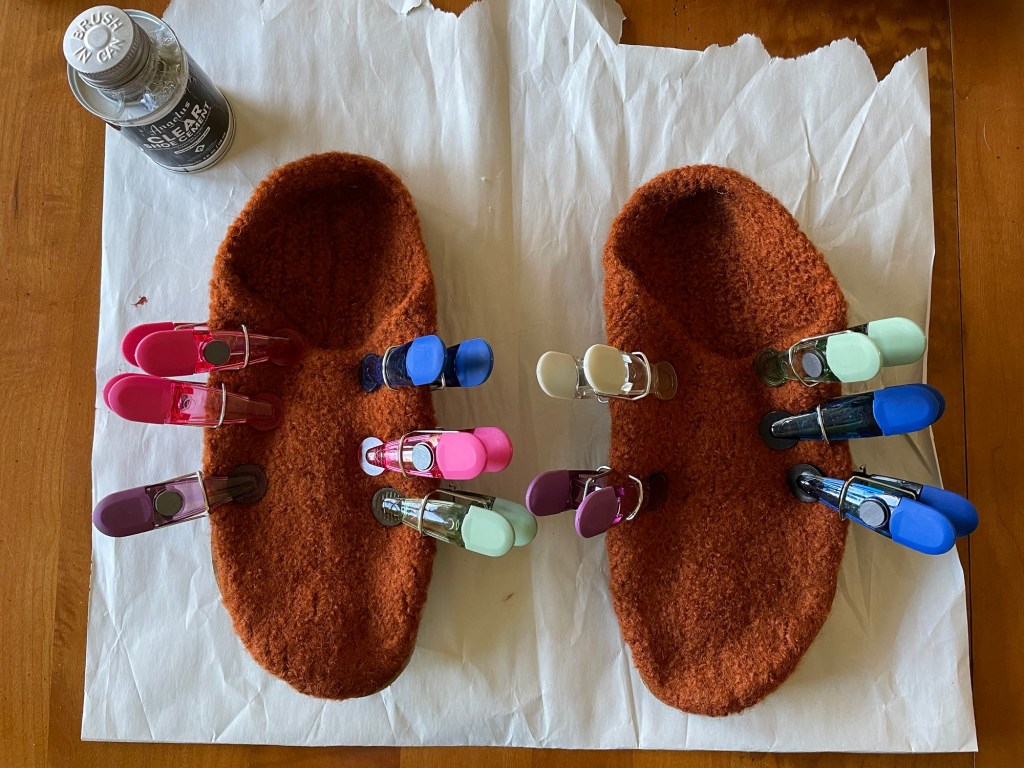
The third day I glued the heel part down. They looked good, but I was not sure if the glue would hold.
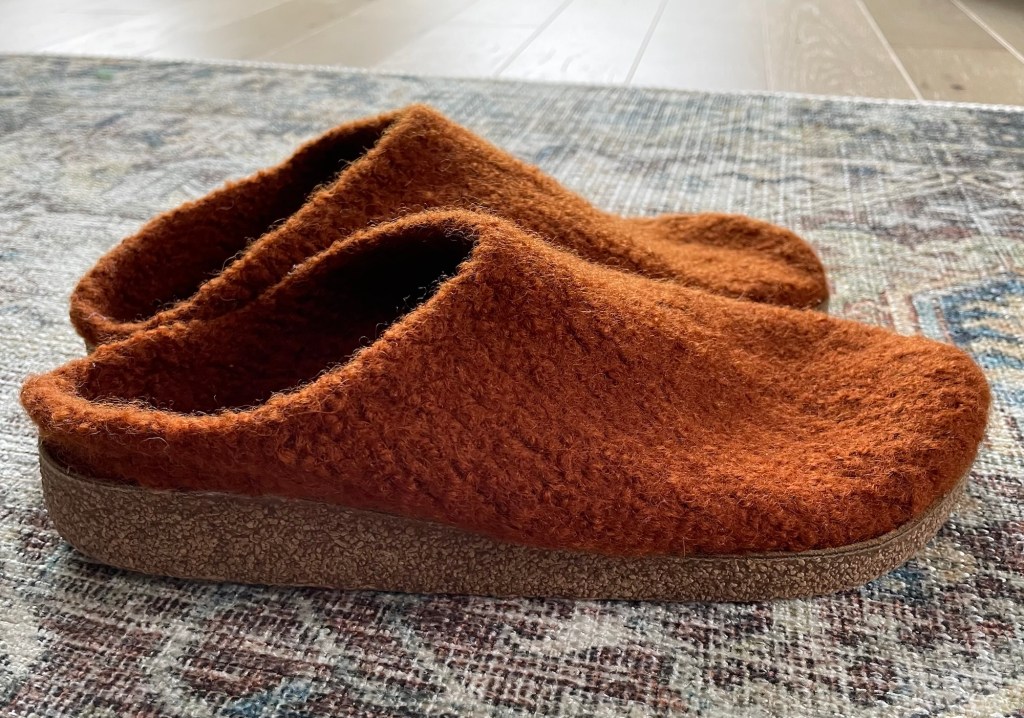
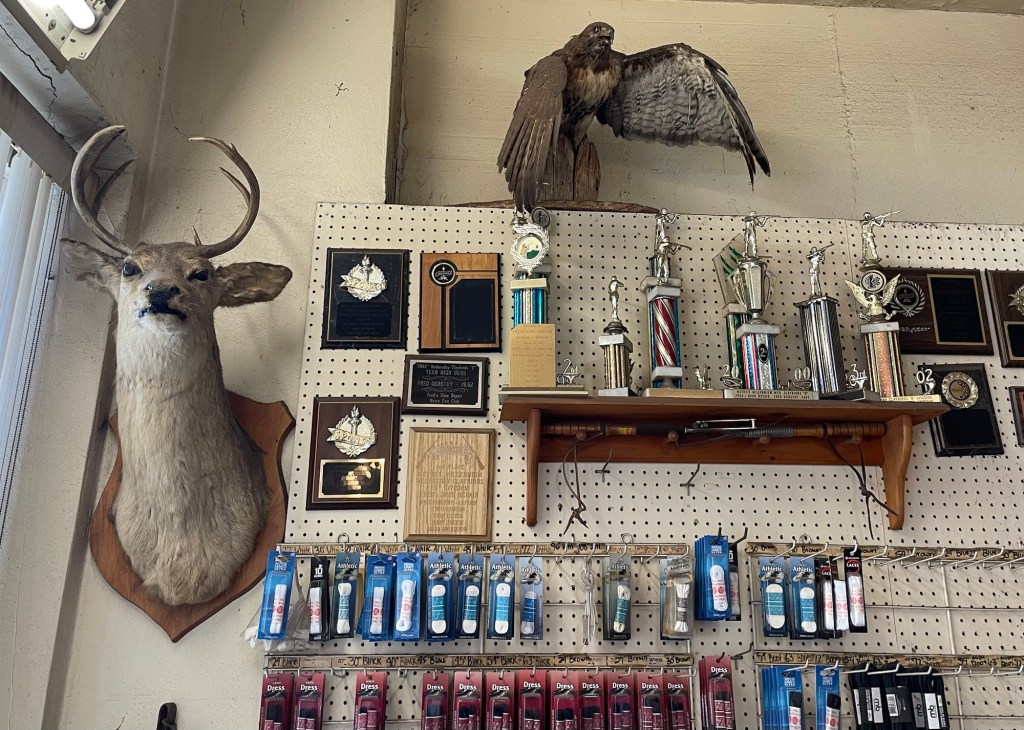
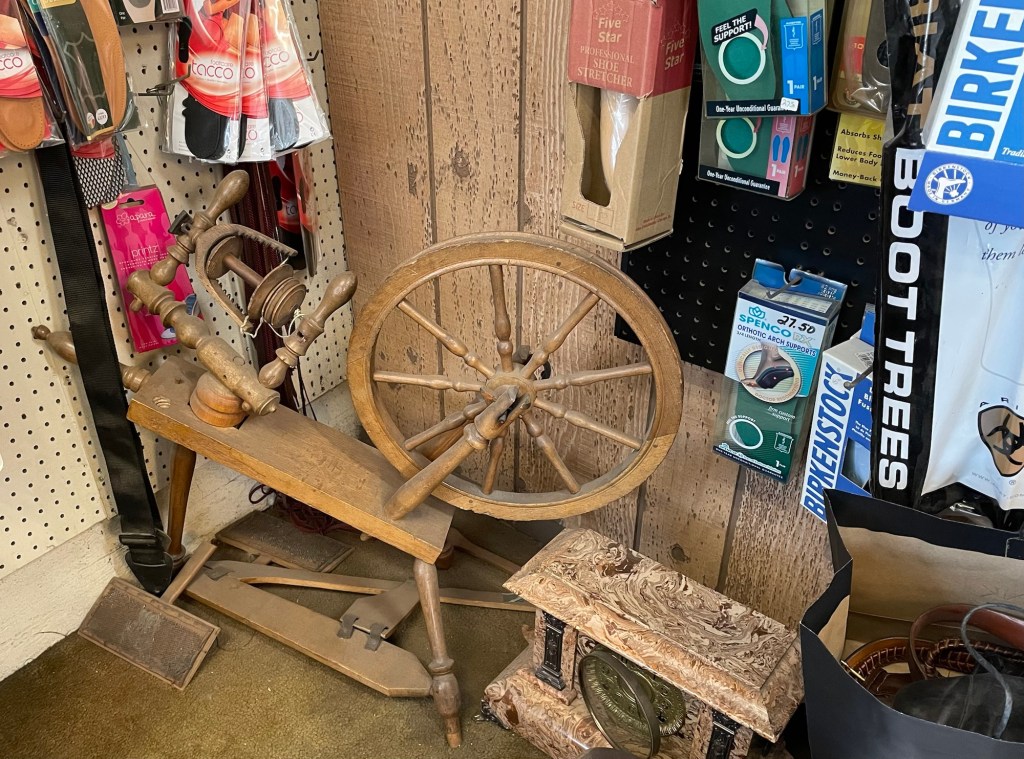
I used up most of the glue. I did not think I would be able to cut down the additional bottom layer on the Birkenstock base in a professional looking way. On yet another trip to the Twin Cities, I took the slippers to Fred’s Shoe Repair shop in Hopkins, near my sister’s house where we were staying. This place had a different vibe than the place in St. Paul, with an antiques and hunting theme, and an old spinning wheel in the corner. They did not question whether it was a good idea, but said it would take two weeks and cost $30.
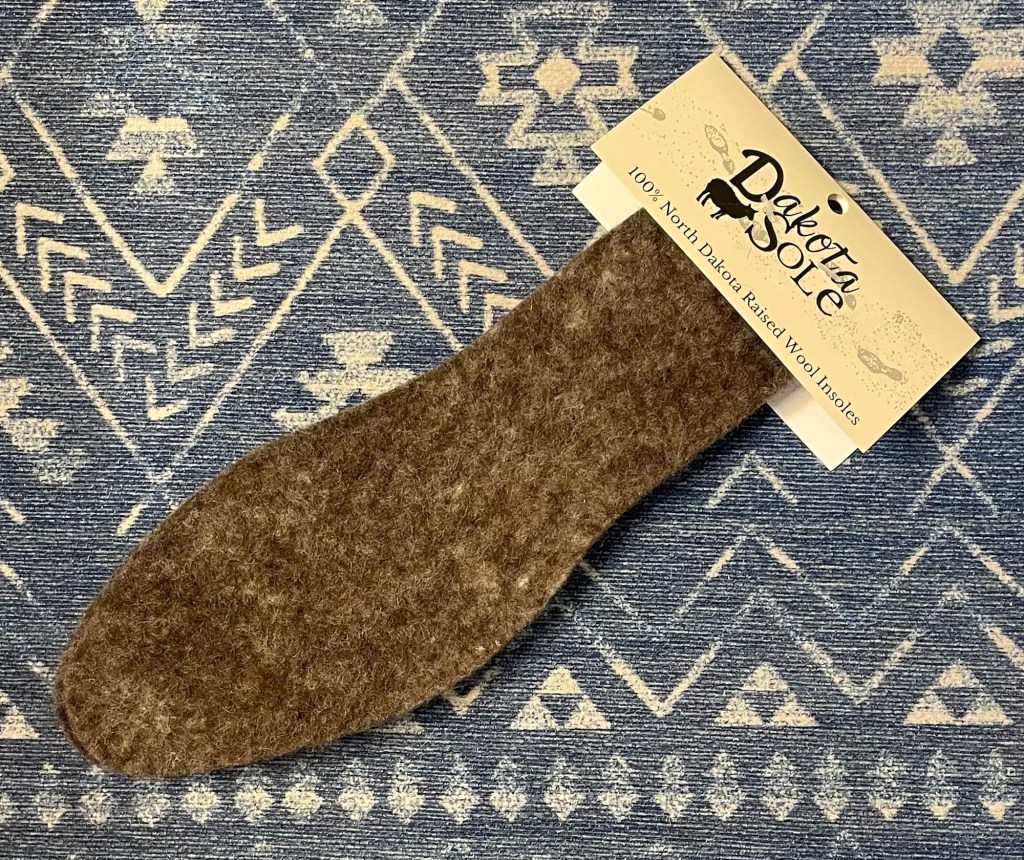
The giftshop at the Nome Schoolhouse had wool felt shoe or boot liners for sale. They come in one size that can be easily cut with scissors for a custom fit. I bought a pair to as an option for another layer inside the felted slippers, if needed.
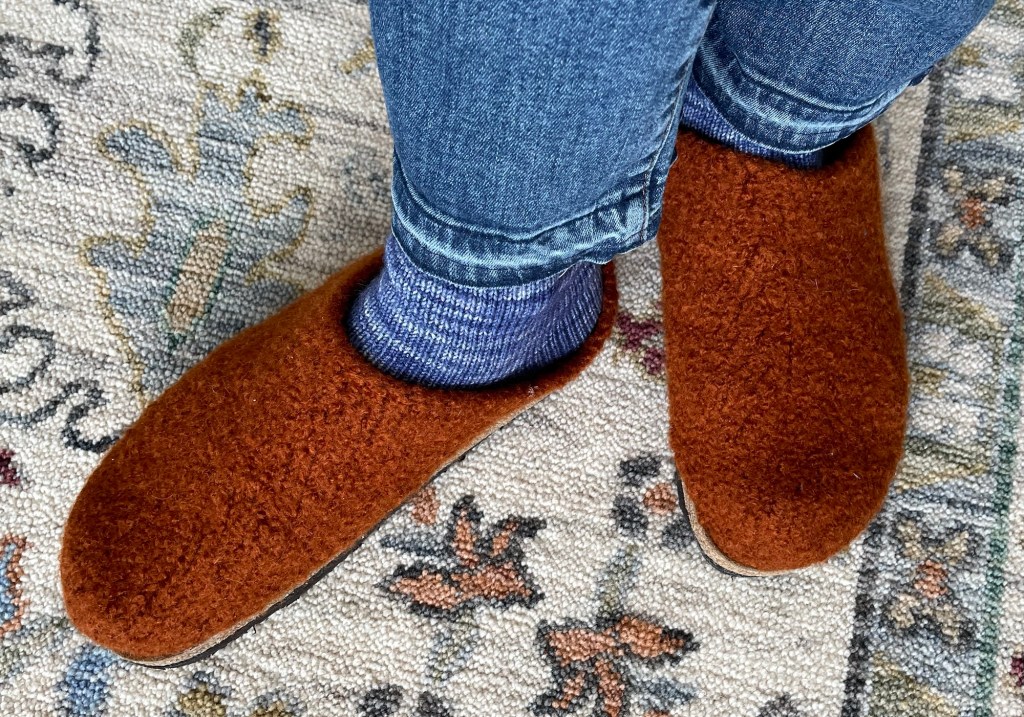
The shoe repair shop did a nice job cutting and gluing on the bottom layer of the Birkenstock soles. The slippers are comfortable on my feet, especially while wearing socks I cranked on my circular sock machine.
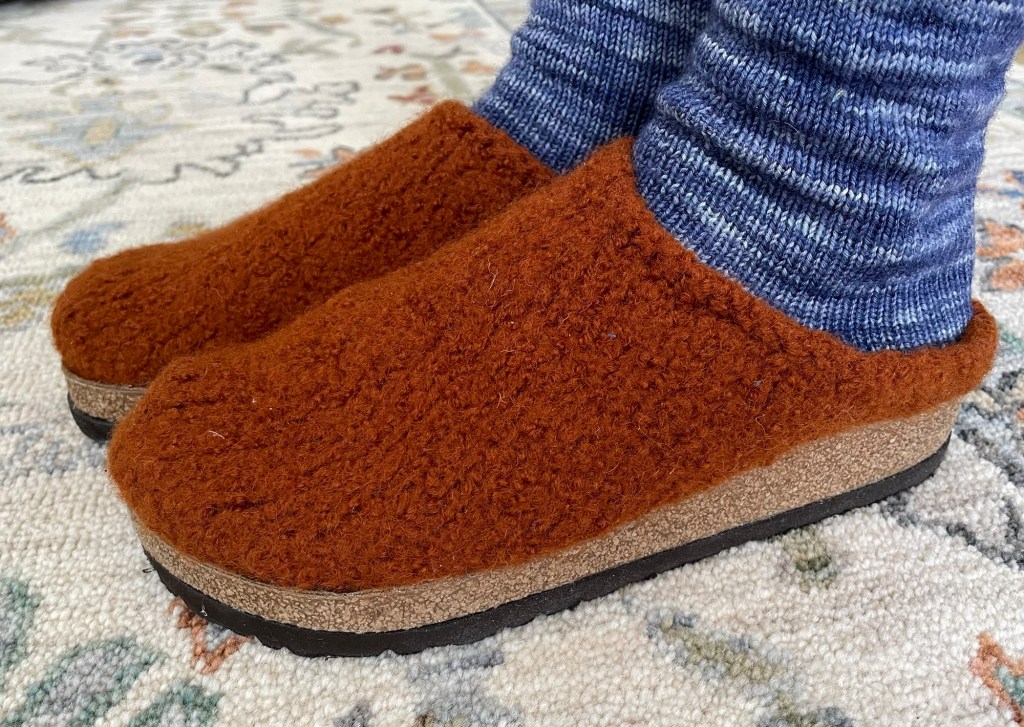
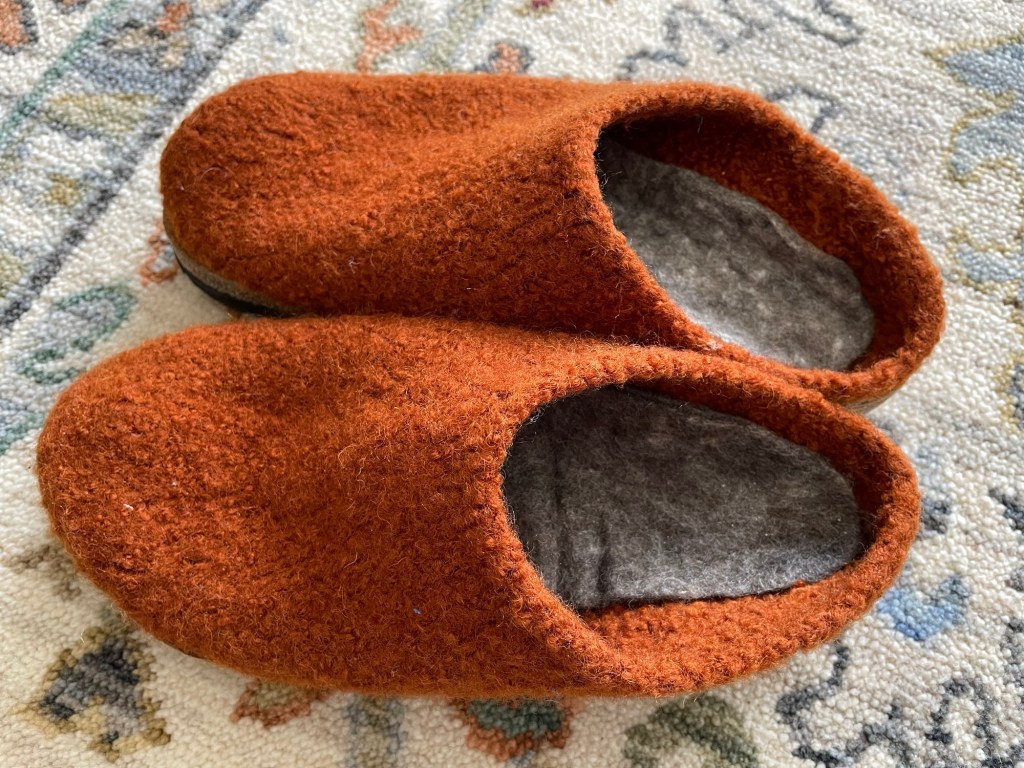
The slippers feel great if I am sitting still, but my foot slides around if I am walking around the house, or going up and down stairs.
I tried some different additional layers to fill in some of the space and make the slippers fit tighter.
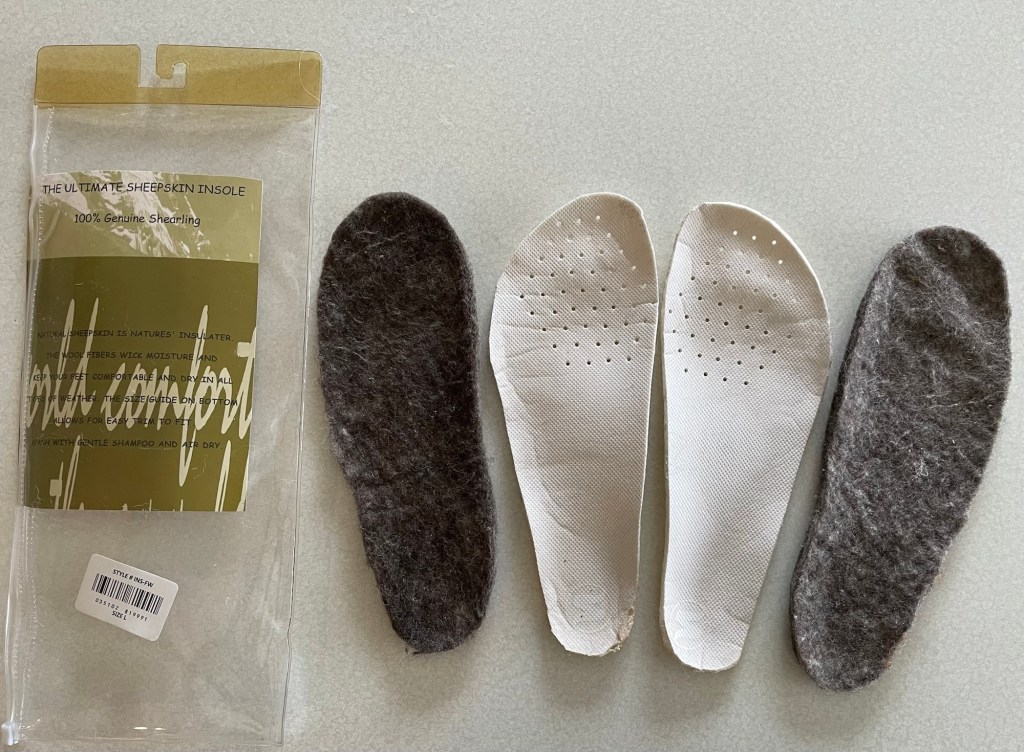
No matter what extra layer I added, my feet still slid around in the slippers. They sat in my closet for a long time.
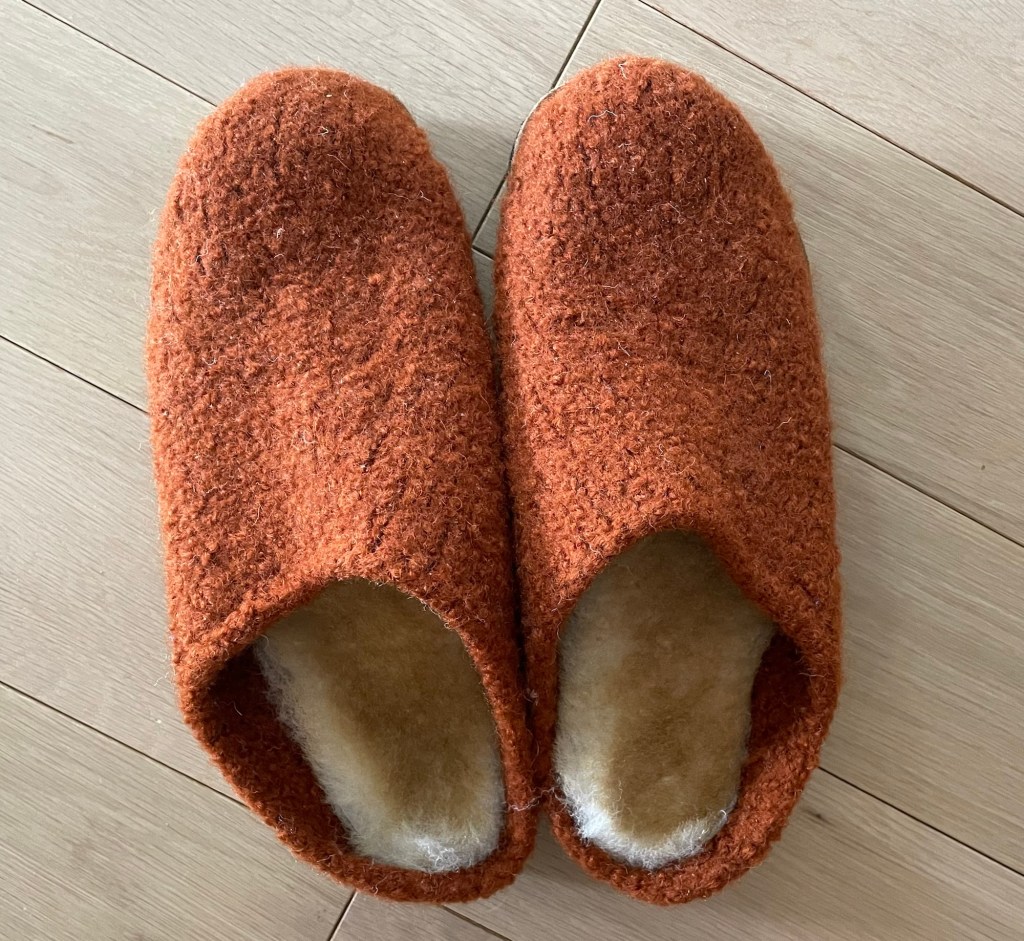
My daughter’s feet are the same length as mine, but wider. I packed the slippers in my larger than usual suitcase when we would be seeing her for a wedding in San Diego this fall, in hopes that they would work for her. I was happy that Britta loved the slippers and they fit her well.
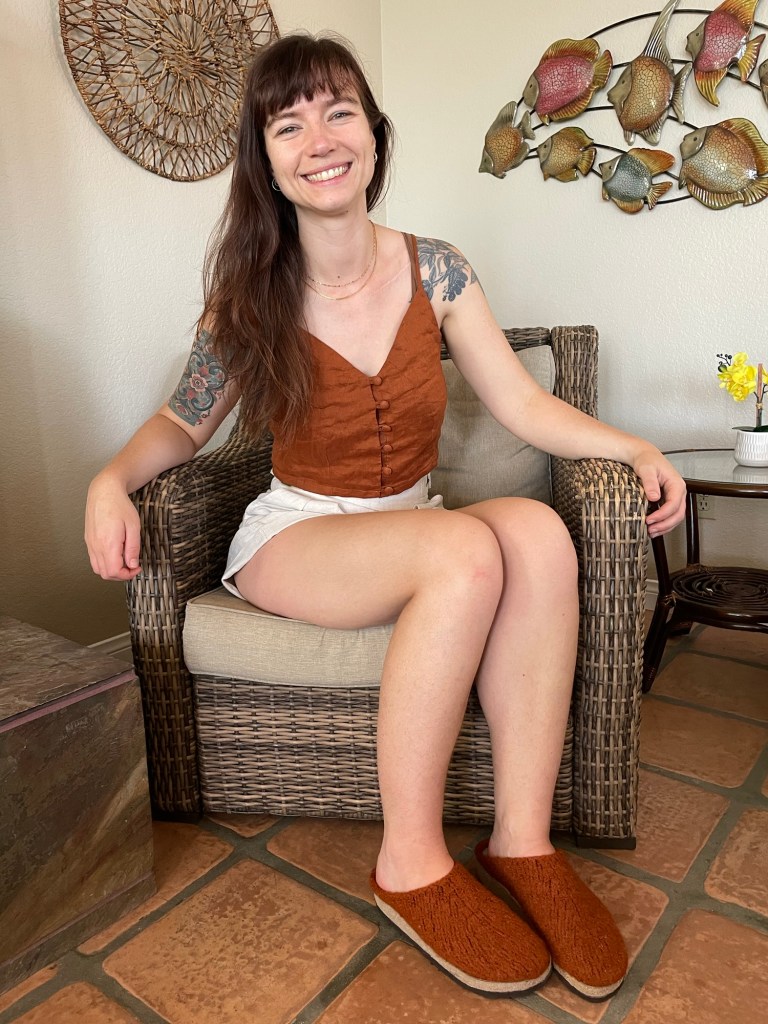
After taking into account all the costs, time, and hassle of making the slippers, it would have been cheaper and easier to buy a pair of Haflinger slippers already made. I wonder if they would slip around on my narrow foot too. Maybe the handmade slippers would have fit me better if I had not skipped the last decrease row. I will not be trying again any time soon.
The problem with making things by hand is that sometimes they do not fit or work out the way you expected. In this case the slippers were not right for me, but I hope my daughter will get some use out of them. Whatever the outcome, one has to enjoy the process knowing that every project involves experience gained and lessons learned.


Whoa, I am very impressed you took on such an ambitious project! And made it work! I hope Britta gets a lot of use out of them!
I have always found scuff slippers to “slippy” too. I wonder if a strap on the back, like for a clog would help? The slippers look amazing as is though 🙂
Great post as usual!
LikeLiked by 1 person
Thank you! I thought about a strap on the back, or somehow attaching elastic or a band around the top to tighten it up. When I originally imagined this project, I thought I would be cool to weave a band for a border. I did not image it would take so many twists and turns. By the end I was just done and did not want to put in any more effort!
LikeLike